My daughter asked why I couldn’t just roast the acorn squash with the skin on. I started to explain why that wouldn’t work—the skin gets tough, it’s not pleasant to eat, everyone knows you peel it first. Then I stopped. Honestly, I had never actually tried it. I was about to lecture a seven-year-old on a kitchen rule I’d never tested myself. So I did the only thing a humbled food blogger could do. I handed her a squash and said, “Show me.” She scrubbed it clean, sliced it into rings, and tossed it with oil and salt. Twenty minutes later, I was eating my words—and the tender, caramelized skin—with a side of genuine surprise. She was right. All those years of wrestling with a peeler for nothing.
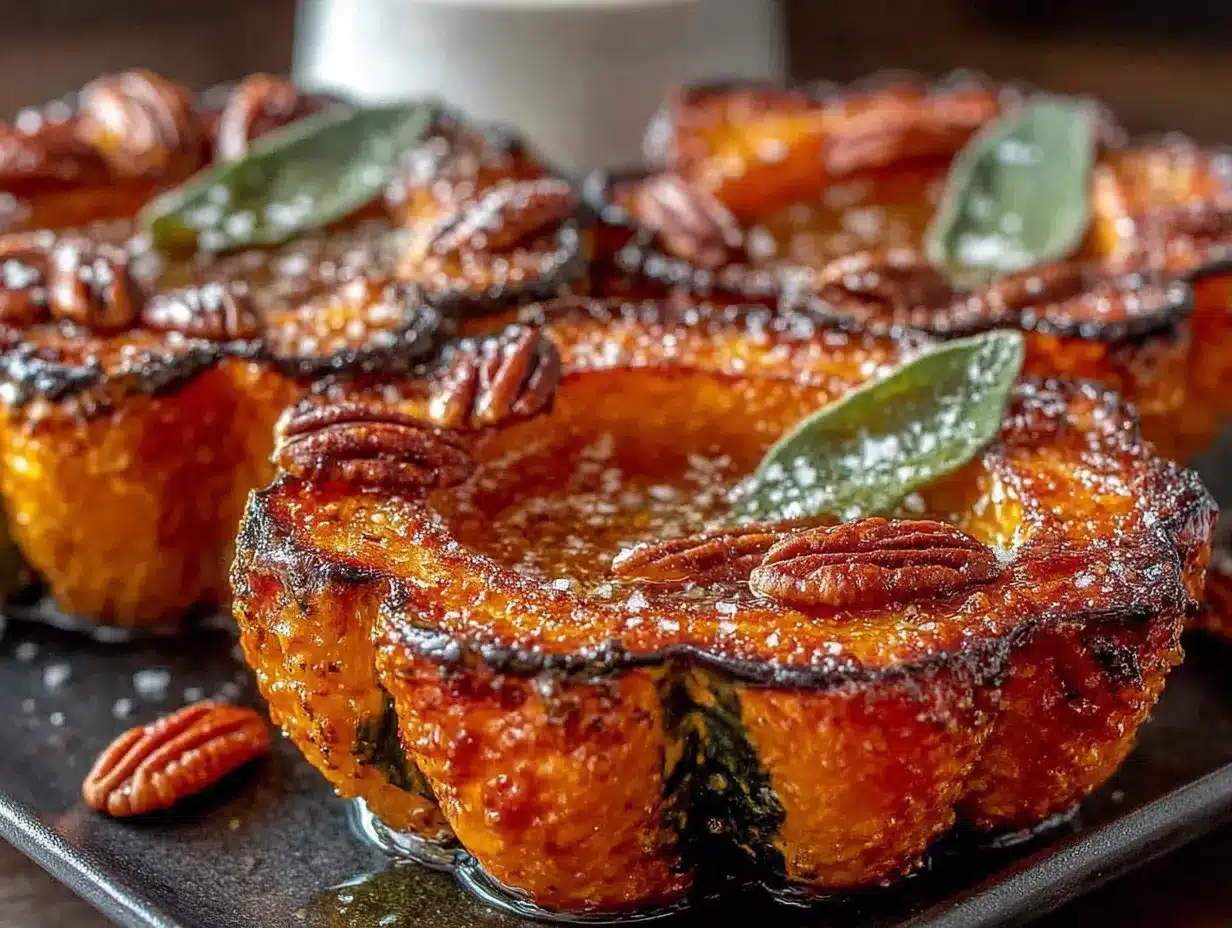
That evening turned into our new favorite way to make this kid-friendly roasted acorn squash with brown butter. The skin crisps up beautifully in the oven, and the natural sweetness of the squash pairs perfectly with the nutty, rich brown butter and toasted pecans. It’s one of those recipes that makes you feel smart without trying hard—and honestly, it tastes even better when you learned it from a kid. Maybe you’ve been there, standing in your kitchen, convinced you knew the “right” way, only to have a little voice point out something obvious you’d missed. This recipe is proof that sometimes the best cooking advice comes from the smallest hands in the house. Let me walk you through it—it’s simple, affordable, and the kind of dish that makes everyone at the table happy.
Why You’ll Love This Recipe
This kid-friendly roasted acorn squash with brown butter isn’t just another side dish. It’s the one that disappears first, even when picky eaters are at the table. I’ve tested this recipe more times than I can count, tweaking the roasting time and the butter-to-pecan ratio until it was just right. Here’s why it works so well for families on a budget:
- Quick & Easy: From start to table in about 35 minutes. No peeling, no complicated steps—just slice, toss, and roast.
- Simple Ingredients: You likely have everything in your pantry right now. Acorn squash is cheap, butter is a staple, and pecans are easy to find (or swap for walnuts).
- Perfect for Family Meals: It’s sweet enough for kids, savory enough for adults, and fancy enough for holidays without the stress.
- Crowd-Pleaser: I’ve served this at potlucks, Thanksgiving dinners, and random Tuesday suppers. It gets rave reviews every single time.
- Unbelievably Delicious: The brown butter adds a deep, nutty flavor that transforms simple roasted squash into something you’ll crave. The pecans add crunch, and the squash gets tender and caramelized on the edges.
What makes this recipe different from the rest is the technique. Leaving the skin on isn’t just lazy—it’s intentional. The skin becomes tender and slightly chewy, almost like a natural wrapper that holds the squash together. Plus, it saves time and reduces food waste. This isn’t just another roasted squash recipe. It’s the best version I’ve ever made, and I’ve made a lot of squash.
This recipe connects emotionally because it’s about more than food. It’s about letting go of perfection and listening to the people around you. It’s comfort food reimagined—healthier, faster, but with the same soul-soothing satisfaction. Perfect for impressing guests without stress, or turning a simple meal into something memorable.
What Ingredients You Will Need
This recipe uses simple, wholesome ingredients to deliver bold flavor and satisfying texture without the fuss. Most of these are pantry staples, and the ones that aren’t are easy to find at any grocery store.
- Acorn squash (2 medium): Look for squash that feels heavy for its size with firm, unblemished skin. The ridges are natural—don’t worry about those. One medium squash serves about 2-3 people as a side dish.
- Unsalted butter (4 tablespoons, or 1/2 stick): I prefer unsalted so I can control the salt level. If you only have salted butter, reduce the added salt by half. The butter gets browned, so use a light-colored pan to see the color change.
- Pecans (1/2 cup, roughly chopped): Raw pecans work best here. They toast in the brown butter, so you don’t need to pre-toast them. I buy them in bulk from the baking aisle to save money. Walnuts work well too, but pecans have a sweeter, milder flavor that kids love.
- Pure maple syrup (2 tablespoons): This adds sweetness without being cloying. Use real maple syrup, not pancake syrup—the flavor is much better. If you’re out, honey works as a substitute, but use 1 tablespoon since honey is sweeter.
- Olive oil (2 tablespoons): A good quality extra-virgin olive oil helps the squash roast evenly and get those crispy edges. Avocado oil works too if you prefer a neutral flavor.
- Salt (1/2 teaspoon, plus more for finishing): I use fine sea salt for even seasoning. Flaky salt like Maldon is great for finishing right before serving—it adds a little crunch.
- Black pepper (1/4 teaspoon, freshly ground): Freshly ground pepper makes a difference here. It adds a subtle warmth that balances the sweetness.
- Cinnamon (1/4 teaspoon, optional): This is my secret weapon for making the squash taste almost like a dessert. It’s optional, but I always add it. My daughter calls it “the cozy spice.”
Ingredient selection tip: For the best texture, choose acorn squash that has a deep green color with orange patches. That orange spot means it’s ripe and will be sweeter. Store squash in a cool, dark place—it keeps for weeks, so stock up when they’re on sale.
Equipment Needed
You don’t need fancy tools for this recipe. Here’s what you’ll need:
- Baking sheet (rimmed, 13×18 inches): A rimmed baking sheet prevents butter from dripping into your oven. I use a half-sheet pan—it’s my workhorse for everything from roasted vegetables to cookies.
- Parchment paper or silicone baking mat: This makes cleanup a breeze. The brown butter can get sticky, and parchment paper saves you from scrubbing.
- Chef’s knife: A sharp knife is essential for cutting the squash. Acorn squash is dense, so a dull knife is dangerous. I use a 8-inch chef’s knife.
- Cutting board: Use a sturdy board. A wooden one is gentler on your knife.
- Small skillet or saucepan: For browning the butter. A light-colored pan helps you see when the butter turns amber. I use a stainless steel skillet.
- Spoon or spatula: For tossing the squash and drizzling the brown butter.
- Measuring spoons: For precise measurements, especially with the maple syrup.
Budget-friendly tip: If you don’t have a rimmed baking sheet, a regular baking sheet works—just place a piece of foil underneath to catch drips. No parchment paper? Grease the pan lightly with butter or oil.
Preparation Method
Let’s get cooking. This method is straightforward, but I’ll walk you through every step with the tips I’ve learned from making this dozens of times.
-
Preheat your oven to 400°F (200°C). Line a baking sheet with parchment paper or a silicone mat. While the oven heats, wash the squash thoroughly. Remember—we’re leaving the skin on, so give it a good scrub under running water. Pat it dry with a clean towel.
-
Cut the squash. Place the squash on a stable cutting board. Using a sharp chef’s knife, carefully slice off the stem end and the very bottom—just enough to create a flat surface. Then cut the squash crosswise into 1/2-inch thick rings. You should get about 4-5 rings per squash. Scoop out the seeds and stringy pulp from the center of each ring using a spoon. Don’t worry if a few seeds remain—they’ll roast up nicely and are totally edible.
-
Season the squash. Arrange the rings in a single layer on the prepared baking sheet. Drizzle with olive oil and sprinkle with salt, pepper, and cinnamon (if using). Use your hands to toss gently, making sure both sides are coated. Spread the rings back into a single layer—don’t overcrowd, or they’ll steam instead of roast.
-
Roast the squash. Place the baking sheet in the preheated oven and roast for 20 minutes. The squash should be tender when pierced with a fork and lightly browned on the edges. While the squash roasts, make the brown butter.
-
Make the brown butter. In a small skillet or saucepan over medium heat, melt the butter. Swirl the pan occasionally. The butter will foam, then the foam will subside, and you’ll see brown specks forming at the bottom. This takes about 3-4 minutes. Watch closely—it can go from brown to burnt in seconds. When it smells nutty and looks amber, remove it from the heat immediately. Stir in the chopped pecans and maple syrup. The residual heat will toast the pecans slightly.
-
Finish the dish. Remove the roasted squash from the oven. Drizzle the brown butter mixture evenly over the squash rings. Return the baking sheet to the oven for another 5-7 minutes, until the pecans are toasted and the butter is bubbly.
-
Serve. Transfer the squash rings to a serving platter. Spoon any remaining brown butter and pecans from the pan over the top. Sprinkle with a pinch of flaky salt if you have it. Serve warm.
Sensory cue: At step 5, the butter should smell like toasted nuts and caramel. If it smells burnt, start over—it’s not worth the bitterness. The squash at step 4 should be fork-tender but not mushy. The edges should be caramelized and slightly crispy.
Personal efficiency tip: While the squash roasts in step 3, I clean up my cutting board and knife. It makes the final steps feel less messy. Also, if you’re making this for a crowd, you can double the recipe and use two baking sheets—just rotate them halfway through roasting.
Cooking Tips & Techniques
I’ve made this recipe more times than I can count, and I’ve learned a few things the hard way. Here are my best tips:
- Don’t skip the brown butter. I know it seems like an extra step, but it’s the heart of this dish. Regular melted butter just doesn’t have the same depth. The nutty flavor is what makes this squash irresistible. If you’re nervous about burning it, use a light-colored pan and keep the heat at medium—not high.
- Cut the squash evenly. Consistent thickness ensures even cooking. I aim for 1/2-inch rings. Too thin, and they’ll burn before the center is tender. Too thick, and they’ll be undercooked. Use a ruler the first time if you’re unsure—I did.
- Watch the salt. Acorn squash is naturally sweet, so it needs salt to balance it. But too much salt can overwhelm the delicate flavor. I start with 1/2 teaspoon and add a pinch more at the end if needed.
- Multitasking is your friend. While the squash roasts, make the brown butter. While the brown butter cools slightly, set the table. This dish comes together fast, so having everything ready makes it stress-free.
- Common mistake: Overcrowding the baking sheet. I learned this the hard way when the squash turned out soggy instead of caramelized. Give each ring a little space—if they’re touching, they’ll steam. Use two sheets if you’re doubling the recipe.
Personal failure story: The first time I made this, I forgot to add the maple syrup to the brown butter. I poured plain brown butter over the squash and wondered why it tasted flat. The maple syrup isn’t just for sweetness—it helps the butter cling to the squash and adds a glossy finish. Don’t skip it.
Variations & Adaptations
This recipe is wonderfully flexible. Here are some ways to make it your own:
- Dietary variations: For a vegan version, use coconut oil or a plant-based butter substitute instead of butter. The flavor will be different but still delicious. For a nut-free version, swap pecans for pumpkin seeds or sunflower seeds. Toast them in the brown butter just like the pecans.
- Seasonal variations: In the fall, add a pinch of nutmeg or allspice along with the cinnamon. In the winter, swap maple syrup for honey and add a splash of orange juice to the brown butter. In the summer, try this with zucchini or yellow squash—just reduce the roasting time to 15 minutes since they’re more delicate.
- Flavor variations: For a savory twist, skip the maple syrup and add a minced garlic clove to the brown butter. For a spicy kick, add a pinch of cayenne pepper along with the cinnamon. For a cheesy version, sprinkle grated Parmesan over the squash in the last 5 minutes of roasting.
- Different cooking methods: You can make this on the grill. Cut the squash into wedges instead of rings, brush with oil, and grill over medium heat for 10-12 minutes per side. Then drizzle with the brown butter mixture. You can also air-fry the squash rings at 375°F for 12-15 minutes, then toss with the brown butter.
- Personal variation: I once made this with a sprinkle of crumbled goat cheese on top. The tangy cheese balanced the sweetness perfectly. My husband said it was the best squash he’d ever eaten. I’ve also tried it with dried cranberries mixed into the brown butter—adds a nice tart pop.
Serving & Storage Suggestions
This squash is best served warm, right after the brown butter is drizzled on top. The contrast between the warm, tender squash and the crunchy pecans is pure magic. Here’s how to serve and store it:
- Serving temperature: Serve it hot from the oven. If it cools down, the brown butter can solidify slightly, but it’s still delicious at room temperature. I’ve even eaten leftovers cold straight from the fridge—don’t judge.
- Presentation: Arrange the rings on a platter in a single layer. Drizzle any remaining brown butter and pecans from the pan over the top. Sprinkle with flaky salt and a few fresh thyme leaves if you’re feeling fancy. It looks beautiful on a holiday table.
- Complementary dishes: This squash pairs beautifully with roasted chicken, pork chops, or a simple Thanksgiving turkey. For a vegetarian meal, serve it alongside wild rice pilaf and a green salad. It also works as a side for cozy winter stews.
- Storage: Store leftovers in an airtight container in the refrigerator for up to 4 days. The squash will soften slightly, but the flavor will deepen—sometimes I like it even better the next day.
- Reheating: Reheat in a 350°F oven for 5-7 minutes, or in the microwave for 30-60 seconds. The pecans will lose their crunch in the microwave, so the oven is better for texture. You can also reheat in an air fryer at 350°F for 3-4 minutes.
- How flavors develop: The brown butter flavor becomes more pronounced after a day in the fridge. The squash absorbs the maple syrup and butter, making it even sweeter. Leftovers are great chopped up and added to salads or grain bowls.
Nutritional Information & Benefits
This kid-friendly roasted acorn squash with brown butter is surprisingly nutritious. Acorn squash is packed with vitamins and fiber, making it a smart choice for family meals. Here’s a rough estimate per serving (based on 4 servings):
- Calories: Approximately 220 per serving
- Fat: 16g (mostly from healthy nuts and butter)
- Carbohydrates: 20g
- Fiber: 4g
- Protein: 3g
- Vitamin A: 40% of the Daily Value
- Vitamin C: 25% of the Daily Value
Health benefits: Acorn squash is rich in beta-carotene, which supports eye health and immune function. The fiber keeps everyone full and helps with digestion. Pecans provide healthy fats that are good for heart health. And the cinnamon may help regulate blood sugar—a nice bonus for a sweet dish.
Dietary considerations: This recipe is naturally gluten-free and vegetarian. To make it vegan, use plant-based butter. For a lower-fat version, reduce the butter to 2 tablespoons and skip the pecans—though you’ll miss the crunch.
Potential allergens: Contains dairy (butter) and tree nuts (pecans). For a nut-free version, use pumpkin seeds. For a dairy-free version, use coconut oil.
Personal wellness perspective: I love that this recipe feels indulgent but is actually good for you. It’s the kind of dish that makes you feel like you’re treating yourself without the guilt. And when my kids eat it without complaining, I feel like a parenting win.
Conclusion
This kid-friendly roasted acorn squash with brown butter is proof that the best recipes often come from unexpected places. A seven-year-old’s suggestion changed the way I cook squash forever, and I’m so glad I listened. It’s simple, affordable, and absolutely delicious—everything a family meal should be.
I encourage you to customize this recipe based on your family’s preferences. Swap the pecans for walnuts, add a pinch of cayenne, or drizzle with extra maple syrup. Make it your own. That’s the beauty of cooking—it’s never the same twice.
I love this recipe because it reminds me to stay open-minded in the kitchen. Sometimes the best ideas come from the least expected sources. And honestly, it’s just really, really good squash.
If you try this recipe, I’d love to hear about it. Leave a comment below, share your photos, or tell me how your family liked it. Did your kids have any surprising suggestions? I’m all ears. Happy cooking!
Frequently Asked Questions
Can I use butternut squash instead of acorn squash?
Yes, absolutely. Butternut squash works well, but it has a thicker skin that doesn’t soften as much when roasted. I recommend peeling butternut squash before roasting if you’re using it in this recipe. The cooking time will be similar—about 20-25 minutes at 400°F.
Do I really need to leave the skin on?
That’s the whole point of this recipe! The skin becomes tender and edible when roasted at 400°F. It adds a slight chewiness and saves you the trouble of peeling. That said, if you really don’t like the texture, you can peel the squash before slicing. Just know it’s a bit more work.
Can I make this recipe ahead of time?
You can prepare the squash rings and the brown butter separately up to a day ahead. Store the squash rings in the fridge and the brown butter at room temperature. When you’re ready to serve, roast the squash as directed, then reheat the brown butter gently and drizzle it on top.
What if I don’t have pecans?
No problem. Walnuts, almonds, or even pumpkin seeds work beautifully. If you’re avoiding nuts entirely, try toasted sunflower seeds or omit them altogether. The brown butter alone is still delicious.
How do I prevent the brown butter from burning?
Use a light-colored pan so you can see the color change. Keep the heat at medium and swirl the pan constantly. As soon as the butter turns amber and smells nutty, remove it from the heat immediately. If you see black specks, you’ve gone too far—start over.
Pin This Recipe!
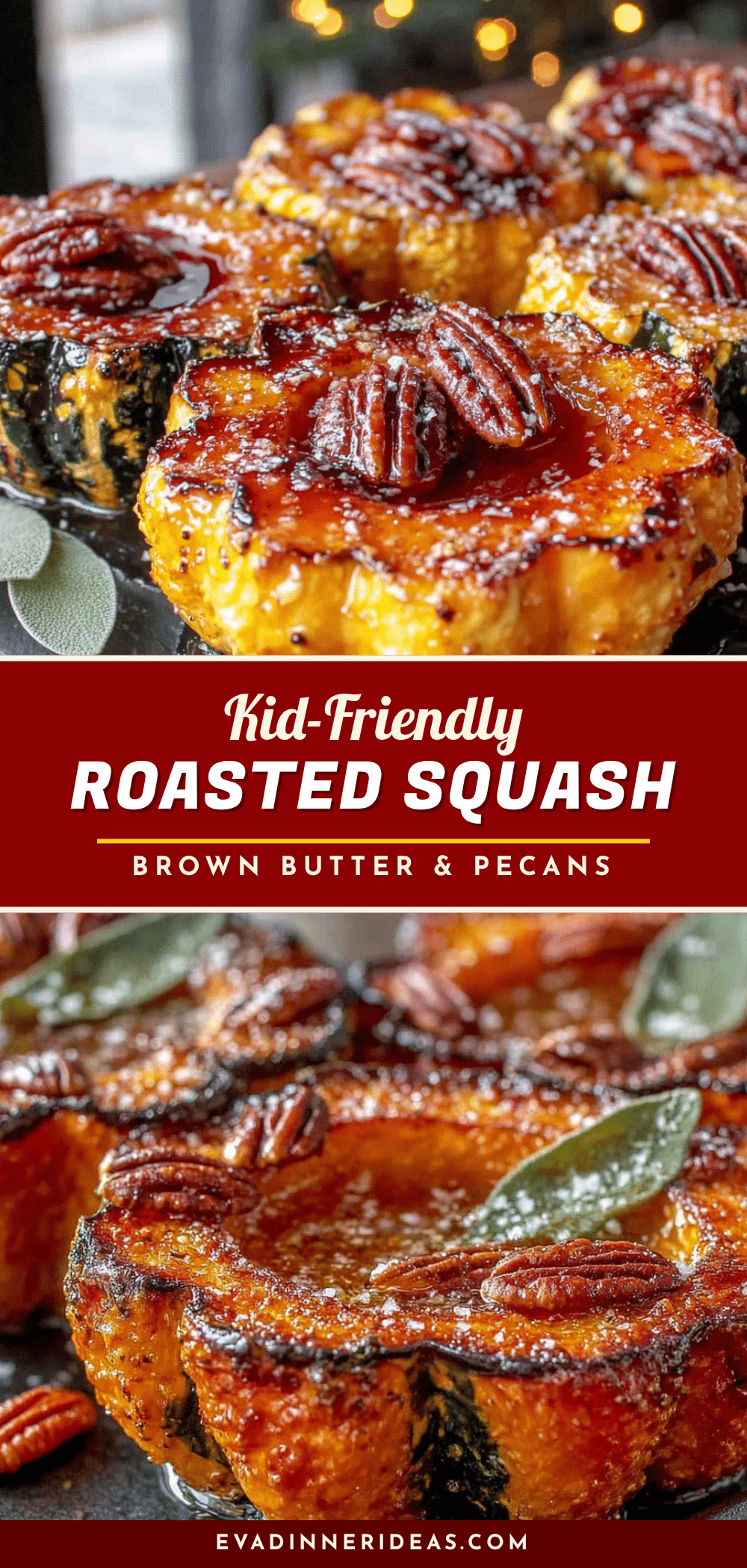
Kid-Friendly Roasted Acorn Squash with Brown Butter
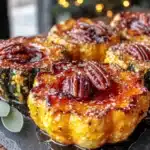
This kid-friendly roasted acorn squash with brown butter is proof that the best recipes often come from unexpected places. A seven-year-old’s suggestion changed the way I cook squash forever, and I’m so glad I listened. It’s simple, affordable, and absolutely delicious—everything a family meal should be.
- Prep Time: 10 minutes
- Cook Time: 25 minutes
- Total Time: 35 minutes
- Yield: 4 servings 1x
- Category: Side Dish
- Cuisine: American
Ingredients
- 2 medium acorn squash
- 4 tablespoons unsalted butter (1/2 stick)
- 1/2 cup pecans, roughly chopped
- 2 tablespoons pure maple syrup
- 2 tablespoons olive oil
- 1/2 teaspoon fine sea salt, plus more for finishing
- 1/4 teaspoon freshly ground black pepper
- 1/4 teaspoon cinnamon (optional)
Instructions
- Preheat your oven to 400°F (200°C). Line a baking sheet with parchment paper or a silicone mat. While the oven heats, wash the squash thoroughly. Remember—we’re leaving the skin on, so give it a good scrub under running water. Pat it dry with a clean towel.
- Cut the squash. Place the squash on a stable cutting board. Using a sharp chef’s knife, carefully slice off the stem end and the very bottom—just enough to create a flat surface. Then cut the squash crosswise into 1/2-inch thick rings. You should get about 4-5 rings per squash. Scoop out the seeds and stringy pulp from the center of each ring using a spoon. Don’t worry if a few seeds remain—they’ll roast up nicely and are totally edible.
- Season the squash. Arrange the rings in a single layer on the prepared baking sheet. Drizzle with olive oil and sprinkle with salt, pepper, and cinnamon (if using). Use your hands to toss gently, making sure both sides are coated. Spread the rings back into a single layer—don’t overcrowd, or they’ll steam instead of roast.
- Roast the squash. Place the baking sheet in the preheated oven and roast for 20 minutes. The squash should be tender when pierced with a fork and lightly browned on the edges. While the squash roasts, make the brown butter.
- Make the brown butter. In a small skillet or saucepan over medium heat, melt the butter. Swirl the pan occasionally. The butter will foam, then the foam will subside, and you’ll see brown specks forming at the bottom. This takes about 3-4 minutes. Watch closely—it can go from brown to burnt in seconds. When it smells nutty and looks amber, remove it from the heat immediately. Stir in the chopped pecans and maple syrup. The residual heat will toast the pecans slightly.
- Finish the dish. Remove the roasted squash from the oven. Drizzle the brown butter mixture evenly over the squash rings. Return the baking sheet to the oven for another 5-7 minutes, until the pecans are toasted and the butter is bubbly.
- Serve. Transfer the squash rings to a serving platter. Spoon any remaining brown butter and pecans from the pan over the top. Sprinkle with a pinch of flaky salt if you have it. Serve warm.
Notes
Don’t skip the brown butter—it’s the heart of this dish. Cut the squash evenly for consistent cooking. Watch the salt to balance the sweetness. Avoid overcrowding the baking sheet to ensure caramelization instead of steaming. For a vegan version, use coconut oil or plant-based butter. For a nut-free version, swap pecans for pumpkin seeds or sunflower seeds.
Nutrition
- Serving Size: 1 serving (about 1/2
- Calories: 220
- Sugar: 8
- Sodium: 300
- Fat: 16
- Saturated Fat: 7
- Carbohydrates: 20
- Fiber: 4
- Protein: 3
Keywords: roasted acorn squash, brown butter, kid-friendly, easy side dish, fall recipe, Thanksgiving side, healthy squash recipe