It was 10:47 PM on a rainy Thursday, and I had that bone-deep chill that only seems to hit when you’ve been standing in a grocery store parking lot without a coat. I didn’t have what a normal cozy beef stew recipe would need—no fancy chuck roast, no aged red wine from some vineyard I’d never heard of. But I had a sad-looking chuck steak marked down to $4.50, half a bottle of Cabernet that had been open since Tuesday, and the reckless idea that maybe, just maybe, this could work. Honestly, I was too tired to care about perfection. I just wanted something warm that smelled like I had my life together.
So I chopped that steak into uneven chunks—some were definitely more “rustic” than others—and tossed them into my Dutch oven with way more garlic than any recipe would recommend. The wine went in next, and I’ll admit, I used the rest of the bottle for “quality control” while I stirred. There was a moment where I thought I’d ruined it. The liquid looked too thin, the meat was browning in patches, and I’d forgotten to buy fresh thyme. But I had dried thyme in the back of my spice drawer, and honestly, desperation is a pretty good substitute for confidence.
The stew simmered for almost two hours, and somewhere around midnight, my kitchen started smelling like a French bistro that had gotten lost in a Midwestern rainstorm. I ladled some into a bowl, grabbed a crusty piece of bread I’d found in the freezer, and took that first bite. You know that feeling when something is so much better than it has any right to be? That was this stew. The beef was tender in that way that only happens when you’ve given it time, and the wine had mellowed into this rich, velvety sauce that clung to every vegetable. I ate it sitting on my kitchen counter, feet dangling, steam fogging up my glasses. And I thought, this is the recipe I’m going to keep making. Not because it’s fancy, but because it’s the kind of warmth you can’t fake.
Why You’ll Love This Recipe
This Cozy Red Wine Beef Stew isn’t just another one-pot dinner—it’s the one you’ll actually look forward to making when the temperature drops. I’ve tested this recipe about seven times now (you’re welcome for the extra beef I ate during research), and I can tell you with confidence that this version is the sweet spot between rich flavor and doable weeknight cooking.
- Simple Ingredients, No Fuss : You don’t need a specialty butcher or a wine expert. Grocery store chuck, a decent bottle of red wine you’d actually drink, and basic veggies are all you need. I’ve made this with $7 wine and $15 wine—both were delicious, and honestly, the cheaper one worked better.
- One Pot, Minimal Mess : This whole thing comes together in a single Dutch oven or heavy pot. You brown the meat, sauté the veggies, deglaze with wine, and let it simmer. That’s it. Less dishes means more time curled up on the couch.
- Perfect for Chilly Nights : This is the stew you want when the wind is howling and you’ve got a fire going (or at least a really good blanket). It’s hearty enough to be a full meal, especially with some crusty bread for dipping.
- Crowd-Pleaser Status : I brought this to a friend’s house last month, and three different people asked for the recipe before they’d even finished their bowls. Kids like it because the wine cooks down into something rich and savory—not boozy. Adults like it because, well, it’s beef stew with wine.
- Unbelievably Tender Beef : The secret is low and slow cooking. That chuck steak transforms from tough and chewy to fork-tender after about two hours in the wine bath. It’s the kind of texture that makes you close your eyes after the first bite.
This recipe is comfort food that actually works for real life. It’s not about impressing anyone—it’s about feeding yourself and the people you love something that feels like a hug in a bowl.
What Ingredients You Will Need
This recipe uses simple, hearty ingredients that work together to create that deep, rich flavor you expect from a proper beef stew. Most of these are pantry staples or easy to find at any grocery store. Here’s what you’ll need:
For the Beef and Marinade
- 2 pounds beef chuck, cut into 1.5-inch chunks (look for well-marbled pieces; the fat renders during cooking and keeps the meat moist)
- 1 teaspoon kosher salt (plus more for seasoning)
- ½ teaspoon black pepper, freshly ground
- 2 tablespoons all-purpose flour (for dredging; this helps thicken the stew later)
- 2 tablespoons olive oil, divided (use a good quality one for browning)
For the Aromatics and Vegetables
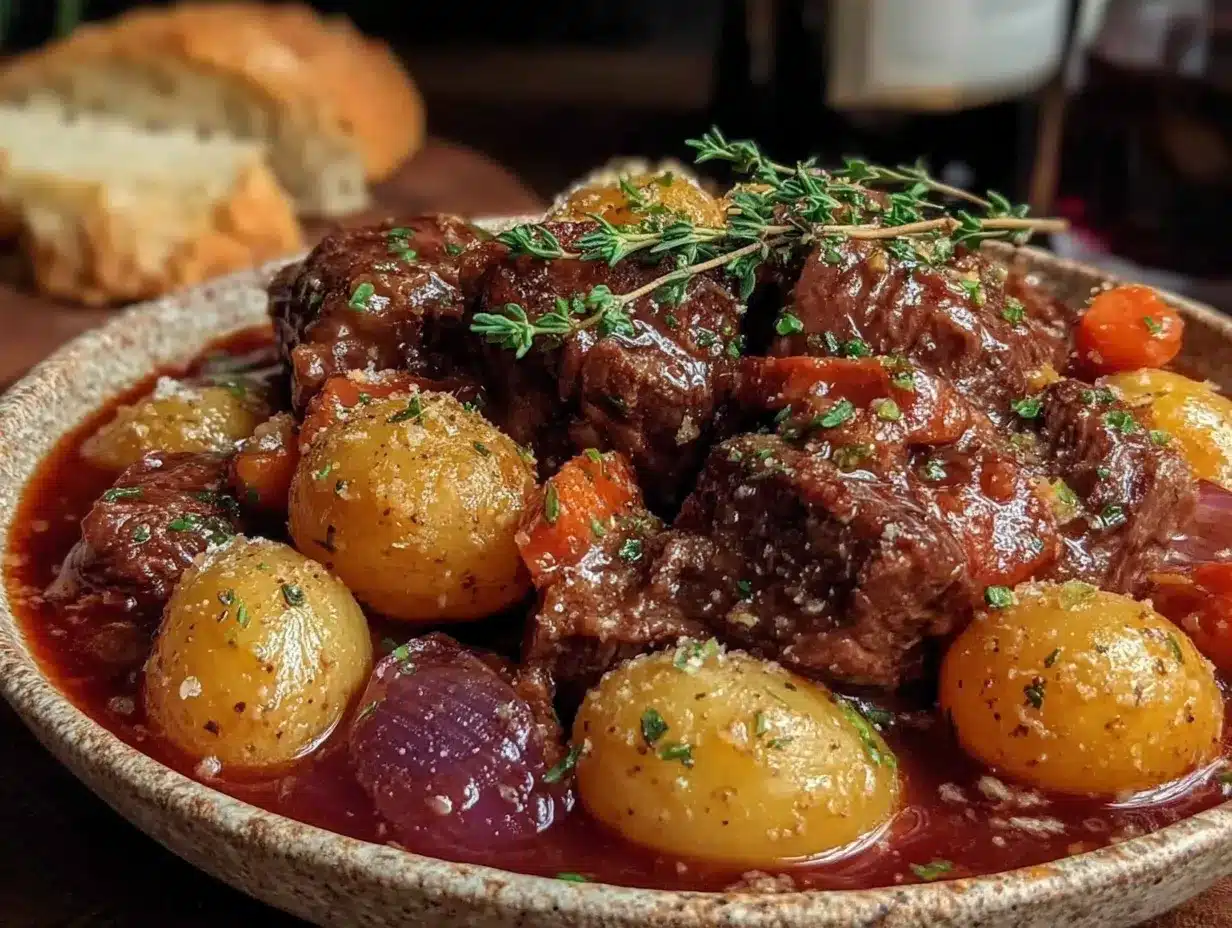
- 1 large yellow onion, diced (about 1.5 cups)
- 3 cloves garlic, minced (I use 4 because I’m a garlic person)
- 3 medium carrots, peeled and cut into 1-inch chunks
- 3 celery stalks, cut into 1-inch pieces
- 1 pound baby potatoes, halved (Yukon Gold or red potatoes work best; they hold their shape)
- 8 ounces cremini mushrooms, halved (optional, but I love the earthy depth they add)
For the Braising Liquid
- 1.5 cups dry red wine (Cabernet Sauvignon, Merlot, or a bold Zinfandel—anything you’d drink, not “cooking wine”)
- 2 cups beef broth, low sodium (I prefer Better Than Bouillon mixed with water; it has a richer flavor than boxed broth)
- 1 tablespoon tomato paste (adds depth and a touch of sweetness)
- 2 sprigs fresh thyme (or 1 teaspoon dried—I’ve used both, and dried works fine in a pinch)
- 2 bay leaves
- 1 teaspoon Worcestershire sauce (this is my secret ingredient for umami)
For Finishing
- 1 tablespoon cornstarch mixed with 2 tablespoons cold water (slurry, if you want a thicker stew)
- Fresh parsley, chopped, for garnish
- Crusty bread, for serving (sourdough or a French baguette is perfect)
Ingredient Tips : If you’re gluten-free, swap the all-purpose flour for a 1:1 gluten-free flour blend or cornstarch for dredging. For a dairy-free version, this recipe is naturally dairy-free as written. And if you don’t have red wine on hand, you can use an extra cup of beef broth plus a tablespoon of red wine vinegar for acidity—it won’t be exactly the same, but it’ll still be delicious.
Equipment Needed
You don’t need a fancy kitchen to make this stew, but a few key tools make the process smoother. Here’s what I use:
- Dutch Oven (5-6 quart) : This is my go-to for stews. The heavy bottom distributes heat evenly, and the lid traps moisture for that slow braise. I use a Lodge enameled cast iron one I found on sale—it’s been worth every penny. If you don’t have one, a heavy-bottomed stockpot or a deep skillet with a lid works too.
- Sharp Chef’s Knife : A good knife makes cutting beef and vegetables so much easier. I’ve learned the hard way that a dull knife is more dangerous than a sharp one.
- Cutting Board : Wood or plastic—whatever you have. Just make sure it’s big enough to handle the meat and veggies.
- Wooden Spoon or Silicone Spatula : For stirring and scraping up the browned bits from the bottom of the pot (that’s where the flavor lives).
- Measuring Cups and Spoons : For accuracy, though I’ve definitely eyeballed the wine more than once.
- Tongs : For flipping the beef chunks while browning. They give you better control than a fork.
- Small Bowl : For mixing the cornstarch slurry at the end.
Budget-Friendly Tip : If you don’t have a Dutch oven, a slow cooker works beautifully for this recipe. Just brown the meat and sauté the veggies on the stovetop first, then transfer everything to the slow cooker and cook on low for 7-8 hours.
Preparation Method
This is where the magic happens. Take your time with the browning step—it’s the most important part for building flavor. Here’s exactly how I do it:
- Prep the Beef (5 minutes) : Pat the beef chunks dry with paper towels. This is crucial—wet meat won’t brown properly. Season generously with salt and pepper, then toss with the flour until evenly coated. Shake off any excess flour.
- Brown the Beef (15-20 minutes) : Heat 1 tablespoon of olive oil in your Dutch oven over medium-high heat until it shimmers. Working in batches (don’t crowd the pot!), add the beef in a single layer. Let it sear without moving for 3-4 minutes until a deep brown crust forms. Flip and brown the other sides. Transfer the browned beef to a plate and set aside. If the pot looks dry, add a little more oil between batches.
- Sauté the Aromatics (5 minutes) : Reduce the heat to medium. Add the remaining 1 tablespoon of olive oil. Toss in the diced onion and cook for 3-4 minutes, stirring occasionally, until softened and translucent. Add the minced garlic and cook for 30 seconds until fragrant—don’t let it burn.
- Deglaze the Pot (2 minutes) : Pour about ½ cup of the red wine into the pot and use your wooden spoon to scrape up all the browned bits from the bottom. This is called deglazing, and it’s where so much flavor comes from. Let the wine bubble for a minute or two until it reduces slightly.
- Add the Vegetables and Liquid (5 minutes) : Stir in the carrots, celery, and potatoes (and mushrooms, if using). Cook for 2 minutes to coat them in the pan juices. Add the tomato paste and stir for another minute. Pour in the remaining 1 cup of red wine and the beef broth. Add the Worcestershire sauce, thyme sprigs, and bay leaves.
- Return the Beef and Simmer (2 hours) : Nestle the browned beef chunks back into the pot, along with any accumulated juices. Bring the liquid to a gentle boil, then reduce the heat to low. Cover the pot and let it simmer for 1.5 to 2 hours, stirring occasionally. The stew should be at a gentle bubble—not a rolling boil. You’ll know it’s done when the beef is fork-tender and the vegetables are soft.
- Thicken the Stew (5 minutes) : If you want a thicker stew, mix the cornstarch and cold water in a small bowl to make a slurry. Remove the thyme sprigs and bay leaves. Stir the slurry into the stew and let it simmer uncovered for 3-5 minutes until it thickens. Taste and adjust seasoning with more salt and pepper if needed.
- Rest and Serve (10 minutes) : Let the stew sit off the heat for 10 minutes before serving. This allows the flavors to meld even more. Ladle into bowls, garnish with fresh parsley, and serve with crusty bread for dipping.
Sensory Cues : When the beef is browning, listen for a steady sizzle—if it’s sputtering, the pan is too hot. The stew should smell rich and wine-forward as it simmers, with the vegetables softening into the background. The finished stew should look glossy and thick, with the beef easily pulling apart with a fork.
Cooking Tips & Techniques
I’ve made this stew enough times to know where things can go wrong—and how to fix them. Here are my best tips, learned through trial and error:
- Don’t Skip the Browning : I know it’s tempting to just dump everything in the pot and walk away, but browning the beef is non-negotiable. That caramelized crust is where the deep, savory flavor comes from. If you’re short on time, at least brown half the beef—it’s better than nothing.
- Use the Right Wine : Cook with a wine you’d actually drink. The rule is simple: if you wouldn’t drink it, don’t cook with it. I’ve used a $9 bottle of Cabernet and a $20 bottle of Malbec, and both worked great. Avoid “cooking wine” from the grocery store—it’s salty and lacks complexity.
- Low and Slow is Key : Rushing the simmer is the fastest way to tough beef. Keep the heat low enough that the liquid is barely bubbling. If you see big, rolling bubbles, you’re cooking too hot. Patience pays off here.
- Season as You Go : Don’t wait until the end to add all the salt. Season the beef before browning, add a pinch when you sauté the onions, and taste the broth before you cover the pot. Layering the seasoning makes for a more flavorful stew.
- The Cornstarch Slurry is Optional : If you like a brothy stew, skip the slurry. I personally like my stew thick enough to coat the back of a spoon, but my husband prefers it soupier. Do what makes you happy.
- My Biggest Failure : The first time I made this, I used a cheap “cooking wine” and skipped browning the beef because I was in a hurry. The stew tasted flat and the beef was tough. I ate it anyway, but I learned my lesson. Don’t be like me—take the extra 15 minutes to brown the meat.
Variations & Adaptations
This stew is forgiving enough to adapt to whatever you have in your kitchen or whatever dietary needs come up. Here are some ways I’ve changed it up:
- Vegetarian Version : Swap the beef for 2 cans of drained chickpeas or 1.5 pounds of hearty mushrooms (portobello or king oyster work great). Use vegetable broth instead of beef broth, and skip the Worcestershire sauce (or use a vegan version). It’s a completely different dish, but still deeply satisfying.
- Gluten-Free Adaptation : Use gluten-free all-purpose flour or cornstarch for dredging the beef. Make sure your beef broth and Worcestershire sauce are certified gluten-free. The rest of the ingredients are naturally gluten-free.
- Slow Cooker Method : After browning the beef and sautéing the vegetables on the stovetop, transfer everything to a slow cooker. Cook on low for 7-8 hours or on high for 4-5 hours. Thicken with the cornstarch slurry at the end.
- Add More Veggies : I’ve thrown in parsnips, turnips, and even sweet potatoes when I had them on hand. They all work beautifully. Just cut them into similar-sized chunks so they cook evenly.
- Spicy Twist : Add ½ teaspoon of smoked paprika and a pinch of cayenne pepper along with the tomato paste. It gives the stew a warm, smoky heat that’s perfect for cold nights.
- Herb Swap : If you don’t have thyme, rosemary works wonderfully. I’ve also used a teaspoon of dried oregano in a pinch—not traditional, but it added a nice Italian-inspired flavor.
Serving & Storage Suggestions
This stew is even better the next day, so don’t be afraid to make a big batch. Here’s how I serve and store it:
- Serving Temperature : Serve this stew piping hot straight from the pot. I like to ladle it into wide, shallow bowls so there’s room for bread. A sprinkle of fresh parsley on top adds a pop of color and freshness.
- What to Serve With It : Crusty bread is non-negotiable in my house—sourdough, a French baguette, or even thick slices of toasted country bread. For a side, a simple green salad with a lemony vinaigrette cuts through the richness. If you’re feeling indulgent, mashed potatoes on the side are incredible.
- Wine Pairing : Pour yourself a glass of whatever red wine you used in the stew. It’s a perfect match. A full-bodied Zinfandel or a smooth Merlot works beautifully.
- Storage : Let the stew cool completely, then transfer it to an airtight container. It will keep in the refrigerator for up to 4 days. The flavors actually deepen and meld overnight, so leftovers are often better than the first serving.
- Freezing : This stew freezes like a dream. Portion it into freezer-safe containers or zip-top bags (lay them flat for easy stacking). It will keep for up to 3 months. Thaw overnight in the refrigerator before reheating.
- Reheating : Reheat gently on the stovetop over medium-low heat, stirring occasionally. Add a splash of beef broth or water if the stew has thickened too much. You can also microwave individual portions in 30-second bursts, stirring in between.
Nutritional Information & Benefits
This stew is hearty comfort food, but it also packs some nutritional benefits. Here’s a rough estimate per serving (based on 6 servings):
| Nutrient | Amount Per Serving |
|---|---|
| Calories | ~420 |
| Protein | 32g |
| Fat | 18g |
| Carbohydrates | 28g |
| Fiber | 5g |
| Sugar | 8g |
| Sodium | 680mg |
Health Highlights : Beef chuck is a good source of iron and B vitamins, which support energy levels. Carrots and celery provide vitamin A and antioxidants. The red wine contains resveratrol, which has been linked to heart health in moderate amounts. And let’s be honest—sometimes you just need a warm, filling meal that makes you feel good, and this stew delivers on that front.
Dietary Notes : This recipe is naturally dairy-free and can be made gluten-free with simple swaps. It’s also low in added sugar (the only sugar comes from the vegetables and a small amount in the wine). If you’re watching your sodium, use low-sodium beef broth and go easy on the added salt.
Conclusion
This Cozy Red Wine Beef Stew is the kind of recipe that feels like coming home. It’s not fancy, it’s not complicated, and it doesn’t require a trip to a specialty store. It’s just good, honest food that warms you from the inside out. I’ve made it on rainy Thursdays, snowy Sundays, and even one particularly dreary Tuesday that needed a rescue mission. Every time, it delivers.
I hope you give this stew a try, and I hope you make it your own. Maybe you’ll add extra garlic like I do, or maybe you’ll throw in a parsnip you found in the back of the fridge. That’s the beauty of a recipe like this—it’s a starting point, not a rulebook. If you make it, I’d love to hear how it turned out. Leave a comment below, share a photo, or tell me what you changed. Honestly, the best recipes come from the tweaks we make along the way.
So grab your Dutch oven, pour yourself a glass of wine (one for the pot, one for you), and get cooking. Your cozy night in is waiting.
Frequently Asked Questions
Can I make this stew in a slow cooker?
Absolutely! After browning the beef and sautéing the vegetables on the stovetop, transfer everything to a slow cooker. Cook on low for 7-8 hours or on high for 4-5 hours. Thicken with the cornstarch slurry at the end if desired.
What’s the best cut of beef for stew?
Beef chuck is my top choice—it has enough marbling to stay tender during long cooking. Other good options include brisket, bottom round, or even short ribs (though those are pricier). Avoid lean cuts like sirloin, which can become tough and dry.
Can I use a different type of wine?
Yes! Any dry red wine works well. Cabernet Sauvignon, Merlot, Malbec, or Zinfandel are all great choices. Avoid sweet wines like port or dessert wines—they’ll make the stew taste sugary. If you don’t have red wine, you can substitute with additional beef broth plus a tablespoon of red wine vinegar.
How do I make the stew thicker?
The easiest method is to make a cornstarch slurry (1 tablespoon cornstarch mixed with 2 tablespoons cold water) and stir it into the simmering stew. Let it cook for 3-5 minutes to thicken. Alternatively, you can mash some of the potatoes against the side of the pot to release their starch, which naturally thickens the broth.
Can I freeze this stew?
Yes, this stew freezes beautifully. Let it cool completely, then transfer to freezer-safe containers or zip-top bags. It will keep for up to 3 months. Thaw overnight in the refrigerator and reheat gently on the stovetop, adding a splash of broth if needed.
Pin This Recipe!
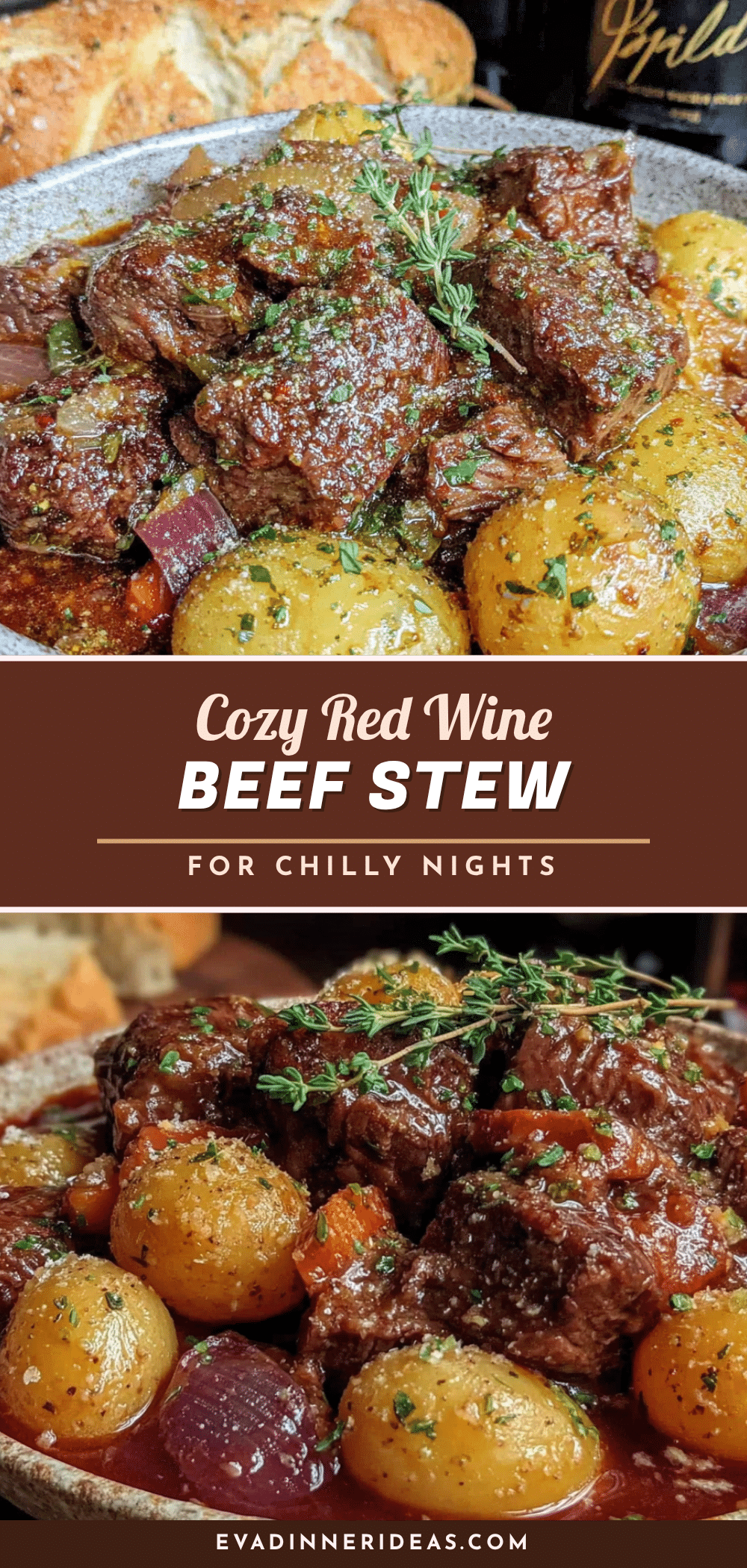
Cozy Red Wine Beef Stew – Easy One Pot Dinner
This Cozy Red Wine Beef Stew is the ultimate comfort food for chilly nights. Made with simple ingredients like beef chuck, red wine, and hearty vegetables, it’s a one-pot wonder that delivers rich, deep flavor with minimal effort.
- Prep Time: 15 minutes
- Cook Time: 2 hours
- Total Time: 2 hours 15 minutes
- Yield: 6 servings 1x
- Category: Main Course
- Cuisine: American
Ingredients
- 2 pounds beef chuck, cut into 1.5-inch chunks
- 1 teaspoon kosher salt, plus more for seasoning
- ½ teaspoon black pepper, freshly ground
- 2 tablespoons all-purpose flour
- 2 tablespoons olive oil, divided
- 1 large yellow onion, diced (about 1.5 cups)
- 3 cloves garlic, minced
- 3 medium carrots, peeled and cut into 1-inch chunks
- 3 celery stalks, cut into 1-inch pieces
- 1 pound baby potatoes, halved (Yukon Gold or red potatoes)
- 8 ounces cremini mushrooms, halved (optional)
- 1.5 cups dry red wine (Cabernet Sauvignon, Merlot, or Zinfandel)
- 2 cups low sodium beef broth
- 1 tablespoon tomato paste
- 2 sprigs fresh thyme (or 1 teaspoon dried)
- 2 bay leaves
- 1 teaspoon Worcestershire sauce
- 1 tablespoon cornstarch
- 2 tablespoons cold water
- Fresh parsley, chopped, for garnish
- Crusty bread, for serving
Instructions
- Prep the Beef: Pat the beef chunks dry with paper towels. Season generously with salt and pepper, then toss with the flour until evenly coated. Shake off any excess flour.
- Brown the Beef: Heat 1 tablespoon of olive oil in a Dutch oven over medium-high heat until it shimmers. Working in batches, add the beef in a single layer. Let it sear without moving for 3-4 minutes until a deep brown crust forms. Flip and brown the other sides. Transfer the browned beef to a plate and set aside.
- Sauté the Aromatics: Reduce the heat to medium. Add the remaining 1 tablespoon of olive oil. Toss in the diced onion and cook for 3-4 minutes, stirring occasionally, until softened and translucent. Add the minced garlic and cook for 30 seconds until fragrant.
- Deglaze the Pot: Pour about ½ cup of the red wine into the pot and use a wooden spoon to scrape up all the browned bits from the bottom. Let the wine bubble for a minute or two until it reduces slightly.
- Add the Vegetables and Liquid: Stir in the carrots, celery, and potatoes (and mushrooms, if using). Cook for 2 minutes to coat them in the pan juices. Add the tomato paste and stir for another minute. Pour in the remaining 1 cup of red wine and the beef broth. Add the Worcestershire sauce, thyme sprigs, and bay leaves.
- Return the Beef and Simmer: Nestle the browned beef chunks back into the pot, along with any accumulated juices. Bring the liquid to a gentle boil, then reduce the heat to low. Cover the pot and let it simmer for 1.5 to 2 hours, stirring occasionally, until the beef is fork-tender and the vegetables are soft.
- Thicken the Stew: If you want a thicker stew, mix the cornstarch and cold water in a small bowl to make a slurry. Remove the thyme sprigs and bay leaves. Stir the slurry into the stew and let it simmer uncovered for 3-5 minutes until it thickens. Taste and adjust seasoning with more salt and pepper if needed.
- Rest and Serve: Let the stew sit off the heat for 10 minutes before serving. Ladle into bowls, garnish with fresh parsley, and serve with crusty bread for dipping.
Notes
Don’t skip browning the beef—it’s essential for deep flavor. Use a wine you’d actually drink. For a gluten-free version, use gluten-free flour or cornstarch for dredging. The stew can be made in a slow cooker: brown beef and sauté vegetables on stovetop, then transfer to slow cooker and cook on low for 7-8 hours. Leftovers taste even better the next day.
Nutrition
- Serving Size: 1 bowl (about 1.5 cu
- Calories: 420
- Sugar: 8
- Sodium: 680
- Fat: 18
- Saturated Fat: 6
- Carbohydrates: 28
- Fiber: 5
- Protein: 32
Keywords: beef stew, red wine stew, one pot dinner, comfort food, winter recipe, Dutch oven stew, cozy dinner