Lisa wasn’t trying to impress anyone. I’d stopped by her place on a rainy Thursday to pick up a book I’d lent her months ago, and the smell hit me before I even got through the front door. That deep, winey, almost smoky aroma wrapped around me like a warm blanket. She was standing at the stove in her oldest sweater, stirring a pot with a wooden spoon that looked older than both of us combined. “Oh, that’s just stew,” she said when I asked. “Nothing fancy.”
But it was fancy. It was the kind of fancy that comes from patience, not from trying hard. She didn’t mention she was hosting a small dinner party the next night. She didn’t brag about the cut of beef or the bottle of red wine going in. She just handed me a taste from the spoon, and honestly? I stood there in her kitchen, silent for a second, because that first bite had this unexpected depth. The beef was so tender it barely held together, and the broth was rich and glossy, with a little brightness sneaking in from somewhere. I asked her what she put in it, and she shrugged. “You know, the usual stuff.”
The usual stuff. That’s the thing about cooks like Lisa—they make magic look effortless. Maybe you’ve been there, standing in someone else’s kitchen, watching them do something simple that somehow changes everything. I kept thinking about that stew for days. I dreamed about it, honestly. So I called her up, asked her to walk me through it, and she did—while folding laundry, because of course she did. This recipe is the result of that phone call and about six practice batches later. It’s the one I now make every time I want to feel like a host who has it all together, even when I’m frantically wiping counters five minutes before guests arrive.
Why You’ll Love This Recipe
Let me tell you why this cozy red wine beef stew has become my secret weapon for dinner parties. I’ve tested this recipe more times than I care to admit, tweaking the wine ratio, the cooking time, even the size of the carrot chunks. This version is the one that gets the closed-eye, silent-chew reaction every single time.
- Perfect for Hosting: This stew was born for dinner parties. You can make it a day ahead, and it actually gets better overnight. That means you get to enjoy your own party instead of sweating in the kitchen.
- Simple Ingredients, Big Flavor: No weird specialty items here. Good beef, a decent bottle of red wine, carrots, onions, and a few pantry staples. Your grocery list is short and your payoff is huge.
- Scales Like a Dream: Cooking for six? Twelve? This recipe doubles and triples without missing a beat. I’ve made it for a cozy dinner for four and for a holiday crowd of fifteen. Same method, same incredible results.
- Make-Ahead Magic: This is the ultimate prep-ahead dish. The flavors marry and deepen overnight, so day-old stew is actually superior. Your future self will thank you.
- Unbelievably Tender Meat: The low-and-slow cooking, combined with the acid from the wine, breaks down the beef until it’s fork-tender. I’m talking melt-in-your-mouth, no-knife-required tender.
What makes this version different? It’s the double-dose of umami. Most stew recipes rely on just the beef and wine for depth. I add a splash of soy sauce and a dollop of tomato paste that gets caramelized right at the start. It sounds weird, I know, but trust me on this. That little trick gives the broth a savory richness that makes people ask, “What’s your secret?” I smile and say, “Time and a good bottle of wine.”
This isn’t just good stew. It’s the kind that makes you close your eyes after the first bite. It’s comfort food reimagined—richer, deeper, but with the same soul-soothing satisfaction you crave on a cold evening. Perfect for impressing guests without stress, or turning a simple weeknight into something memorable.
What Ingredients You Will Need
This cozy red wine beef stew uses simple, wholesome ingredients that work together to create layers of flavor without any fuss. Most of these are pantry staples or easy to find at any grocery store.
- Beef chuck, 2 lbs (900g) – cut into 1.5-inch cubes. Don’t skimp here. Chuck has the perfect amount of marbling that breaks down during slow cooking. I prefer buying a whole chuck roast and cubing it myself for better control over size.
- Bacon, 4 strips – adds a smoky foundation. Regular or thick-cut both work. The fat renders out and becomes the base for browning the beef.
- Yellow onions, 2 large – diced. They melt into the broth, adding sweetness and body.
- Carrots, 4 medium – peeled and cut into 1-inch chunks. I like using rainbow carrots when I can find them for a prettier presentation.
- Celery stalks, 3 – sliced into half-inch pieces. Adds that classic aromatic base.
- Garlic cloves, 6 – minced. Don’t be shy with the garlic here.
- Tomato paste, 3 tablespoons – this gets caramelized in the pot for deep, concentrated flavor. I recommend the tube kind for convenience.
- All-purpose flour, ¼ cup (30g) – helps thicken the stew and gives the beef a nice crust during browning.
- Dry red wine, 2 cups (475ml) – use something you’d actually drink. A Côtes du Rhône or a decent Cabernet Sauvignon works beautifully. Avoid anything labeled “cooking wine.”
- Beef broth, 4 cups (950ml) – low-sodium preferred so you can control the salt level. I like Pacific Foods or Swanson brand.
- Soy sauce, 2 tablespoons – my secret umami booster. It doesn’t make the stew taste Asian; it just deepens the savory notes.
- Bay leaves, 2 – for that subtle herbal background note.
- Fresh thyme, 4 sprigs – tied together with kitchen twine for easy removal. Dried thyme works too, use 1 teaspoon.
- Russet potatoes, 1.5 lbs (680g) – peeled and cut into 1.5-inch chunks. Yukon Golds also work and hold their shape slightly better.
- Frozen peas, 1 cup (150g) – added at the end for a pop of color and sweetness.
- Salt and black pepper – to taste. I use kosher salt and freshly ground black pepper.
- Olive oil, 2 tablespoons – for browning if needed, though the bacon fat usually provides enough.
For substitutions: Use a good quality Merlot or Pinot Noir if you prefer a fruitier note. For a gluten-free version, substitute the flour with a 1:1 gluten-free blend or cornstarch slurry (mix 2 tablespoons cornstarch with 2 tablespoons cold water, add at the end). You can skip the bacon and use 3 tablespoons of olive oil for the base if you’re feeding a vegetarian crowd—though honestly, the beef makes this non-negotiable for meat-eaters.
Equipment Needed
You don’t need a professional kitchen to make this cozy red wine beef stew, but a few key tools make the process smoother.
- Dutch oven or heavy-bottomed pot (6-quart or larger): This is your best friend for this recipe. The heavy construction distributes heat evenly and retains it well for consistent browning. I use a Le Creuset, but a Lodge cast iron enameled pot works just as well for a fraction of the price.
- Sharp chef’s knife: A good knife makes cubing beef and chopping vegetables a breeze. A dull knife is dangerous and frustrating.
- Cutting board: Preferably a large wooden or plastic board with a groove to catch juices.
- Wooden spoon or silicone spatula: For stirring and scraping up the browned bits from the bottom of the pot—that’s where the flavor lives.
- Measuring cups and spoons: For accurate ingredient portions.
- Kitchen twine: To tie the thyme sprigs together for easy removal later.
- Tongs: For flipping the beef cubes during browning without piercing them.
- Slotted spoon: For removing the bacon and bay leaves later.
No Dutch oven? No problem. A large heavy-bottomed stockpot or even a slow cooker works. If using a slow cooker, brown the beef and vegetables on the stovetop first, then transfer everything to the slow cooker and cook on low for 8 hours. Just know you’ll lose some of that deep, caramelized flavor from oven braising.
Preparation Method
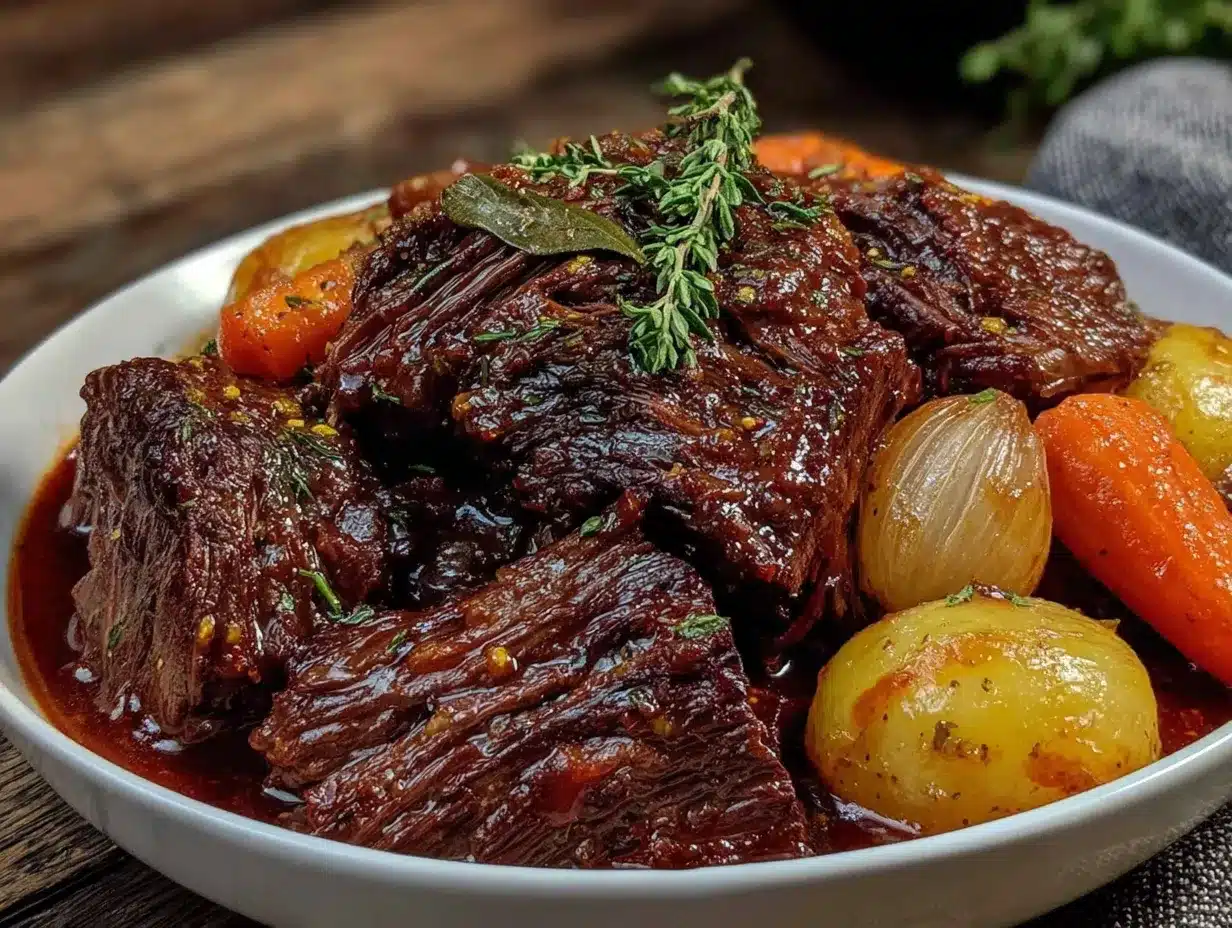
This cozy red wine beef stew takes about 30 minutes of active prep and 2.5 to 3 hours of cooking time. The actual hands-on work is minimal, but patience is key. Let’s break it down step by step.
- Prep the beef (10 minutes): Pat the beef cubes dry with paper towels. This is crucial—wet meat won’t brown properly. Season generously with salt and pepper. Toss with the ¼ cup of flour until evenly coated. Set aside.
- Cook the bacon (8 minutes): Heat your Dutch oven over medium heat. Add the bacon strips and cook until crispy, about 4-5 minutes per side. Remove the bacon with a slotted spoon and set aside on a paper towel-lined plate. Leave the rendered fat in the pot.
- Brown the beef (12-15 minutes): Working in batches so you don’t crowd the pot, add the beef cubes in a single layer. Sear for 3-4 minutes per side until deeply browned. Don’t rush this step. Those brown bits on the bottom of the pot are pure flavor. Transfer browned beef to a clean plate. Repeat with remaining beef.
- Sauté the aromatics (8 minutes): Reduce heat to medium-low. Add the diced onions, carrots, and celery to the pot. Cook, stirring occasionally, until the onions become translucent and start to soften, about 6 minutes. Add the minced garlic and cook for another minute until fragrant.
- Caramelize the tomato paste (3 minutes): Push the vegetables to the sides of the pot. Add the tomato paste to the center and let it cook, stirring constantly, until it darkens to a rusty red color and smells sweet. This step deepens the flavor significantly.
- Deglaze the pot (2 minutes): Pour in the red wine, scraping the bottom of the pot with your wooden spoon to release all those browned bits. Let the wine bubble and reduce slightly, about 2 minutes. The alcohol will cook off, leaving behind rich, concentrated flavor.
- Add liquids and aromatics (2 minutes): Pour in the beef broth and soy sauce. Add the bay leaves and tied thyme sprigs. Return the browned beef and crumbled bacon to the pot. Stir everything together gently.
- Simmer the stew (2 to 2.5 hours): Bring the stew to a gentle boil, then reduce the heat to low. Cover the pot with the lid slightly ajar to allow some steam to escape. Let it simmer gently—small bubbles, not a rolling boil. Check it every 30 minutes, giving it a gentle stir. The stew is ready when the beef is fork-tender and the vegetables are soft.
- Add potatoes (45 minutes before done): After the stew has been simmering for about 1.5 hours, add the potato chunks. Stir them in gently and continue simmering until they are tender when pierced with a fork.
- Finish and adjust (5 minutes): Remove the bay leaves and thyme sprigs. Stir in the frozen peas—they only need a minute or two to warm through. Taste the broth and adjust seasoning with salt and pepper. If the stew seems too thin, let it simmer uncovered for another 10-15 minutes to thicken. If it’s too thick, add a splash of beef broth or water.
- Rest before serving (10-15 minutes): This is a step I learned the hard way. Let the stew sit off the heat for at least 10 minutes before serving. The flavors meld together beautifully during this rest, and the temperature evens out.
Sensory cues: When browning the beef, listen for a steady sizzle—if it’s silent, the pot isn’t hot enough. The broth should look deep reddish-brown, almost like dark chocolate, when it’s done. The beef should offer no resistance when pierced with a fork. The aroma should fill your kitchen with warmth and make your guests start hovering near the stove.
Cooking Tips & Techniques
After making this cozy red wine beef stew more times than I can count, I’ve collected a few hard-earned lessons. Let me save you some trouble.
Don’t skip the browning step. I know it’s tempting to just dump everything in the pot and walk away. But that deep, caramelized crust on the beef is where the flavor starts. I once rushed this step because guests were arriving early, and the stew turned out good—not great. Good is fine, but great is what we’re after here. Take the extra 15 minutes.
Use the right wine. The rule is simple: if you wouldn’t drink it, don’t cook with it. That doesn’t mean you need a $50 bottle. A $12 to $15 bottle of Côtes du Rhône or a decent Merlot works perfectly. Avoid anything labeled “cooking wine”—it has added salt and preservatives that mess with the flavor.
Patience with the simmer. Low and slow is the name of the game. If you boil the stew aggressively, the beef will turn tough and stringy instead of tender and silky. I set a timer for 30 minutes and just check on it periodically. The stew will tell you when it’s done—the meat will start to fall apart when you stir it.
Season in layers. Salt the beef before browning, add a little more with the vegetables, and adjust at the end. Seasoning only at the end leads to flat-tasting stew. The soy sauce adds salt too, so go easy on additional salt until the final taste test.
Make it ahead. Here’s the real pro tip: make this stew a day before your dinner party. Cool it completely, refrigerate overnight, then reheat gently the next day. The flavors deepen and meld together in a way that fresh-made stew just can’t match. I’ve done side-by-side taste tests, and day-old stew wins every time.
Variations & Adaptations
This cozy red wine beef stew is wonderfully adaptable. Here are a few ways to make it your own.
Herb swap: If you don’t have fresh thyme, use 1 teaspoon of dried thyme. Rosemary also works beautifully—use 2 sprigs fresh or 1 teaspoon dried. I once made this with a bundle of fresh oregano from my neighbor’s garden, and it was fantastic.
Vegetable variations: Not a fan of peas? Leave them out. Add mushrooms instead—quarter 8 ounces of cremini mushrooms and sauté them with the onions. Parsnips make a great substitute for some of the carrots. I’ve also added turnips when I had them on hand, and they added a nice peppery note.
Dietary adaptations: For a gluten-free version, skip the flour coating on the beef and use a cornstarch slurry at the end. For a lower-carb option, skip the potatoes and add extra carrots and celery. The stew will still be hearty and satisfying. For a dairy-free version, this recipe is naturally dairy-free as written.
Slow cooker method: Brown everything on the stovetop first, then transfer to a slow cooker. Cook on low for 8 hours or high for 4-5 hours. Add the potatoes during the last 2 hours and the peas at the very end. The texture is slightly different—less concentrated—but still delicious.
Spice it up: Add a pinch of smoked paprika or a dash of cayenne pepper for a subtle warmth. I experimented with a teaspoon of smoked paprika once and never looked back. It adds a layer of complexity that plays beautifully with the wine.
Serving & Storage Suggestions
This cozy red wine beef stew is a showstopper on any dinner table. Here’s how to serve it like a pro.
Serving temperature: Serve the stew hot, but not boiling. Let it rest for 10-15 minutes after cooking so the flavors settle. Ladle it into wide, shallow bowls so the broth is visible and the ingredients aren’t piled too high.
Presentation tips: Garnish with a sprinkle of fresh parsley or a sprig of thyme for a pop of green. A drizzle of good olive oil on top adds richness and a beautiful sheen. Serve with crusty bread for dipping—a sourdough boule or a rustic baguette works perfectly. The bread soaks up that incredible broth.
What to serve alongside: A simple green salad with a bright vinaigrette cuts through the richness of the stew. Roasted asparagus or steamed green beans add color and freshness. For a heartier meal, serve over mashed potatoes or egg noodles. The stew is also wonderful with a side of creamy polenta.
Beverage pairings: Serve the same wine you used in the stew—it creates a beautiful harmony. A full-bodied red like a Cabernet Sauvignon or a Zinfandel works well too. For non-alcoholic options, a sparkling water with a twist of lemon or a rich, dark grape juice complements the flavors.
Storage instructions: Cool the stew completely before storing. Transfer to an airtight container and refrigerate for up to 4 days. The stew actually improves after a day in the fridge. For longer storage, freeze in freezer-safe containers or zip-top bags for up to 3 months. Thaw overnight in the refrigerator before reheating.
Reheating methods: Reheat gently on the stovetop over medium-low heat, stirring occasionally. Add a splash of beef broth or water if the stew has thickened too much. You can also reheat individual portions in the microwave—cover the bowl and heat in 1-minute intervals, stirring between each.
Flavor development: The flavors continue to develop and deepen over time. Day-old stew is noticeably richer and more complex. I’ve found that the third day is the sweet spot—the wine has fully integrated, the vegetables have absorbed the broth, and the beef is at its most tender.
Nutritional Information & Benefits
This cozy red wine beef stew is a hearty, nourishing meal that provides a good balance of protein, vegetables, and healthy fats. Here’s a rough estimate per serving (based on 8 servings):
- Calories: Approximately 450-500 per serving
- Protein: 35-40g (from the beef and bacon)
- Carbohydrates: 30-35g (from potatoes, carrots, and peas)
- Fiber: 5-6g (from vegetables)
- Fat: 18-22g (mostly from beef and bacon)
- Iron: High (beef is an excellent source of heme iron)
- Vitamin A: High (from carrots)
- Vitamin C: Moderate (from potatoes and peas)
Health benefits: The beef provides high-quality protein and essential amino acids for muscle repair and satiety. The carrots are rich in beta-carotene, which supports eye health and immune function. The red wine contains antioxidants like resveratrol, which may support heart health in moderation. The garlic offers anti-inflammatory and immune-boosting properties.
Dietary considerations: This recipe is naturally dairy-free and egg-free. For gluten-free, use the cornstarch slurry option. It’s not suitable for vegetarian or vegan diets due to the beef and bacon. The sodium content can be managed by using low-sodium broth and adjusting the added salt.
Personal perspective: I love that this stew feels indulgent but is actually quite balanced. It’s the kind of meal that fills you up without weighing you down. When I serve it at dinner parties, I feel good knowing my guests are getting a nourishing meal that also happens to be incredibly delicious.
Conclusion
This cozy red wine beef stew has become my go-to for dinner parties, holiday gatherings, and those quiet winter evenings when I need something warm and satisfying. It’s the recipe I turn to when I want to impress without stress, when I want to feed people well without spending the whole party in the kitchen.
What I love most about this stew is how forgiving it is. You can tweak the vegetables, swap the herbs, adjust the wine—it always turns out delicious. It’s a recipe that rewards patience but doesn’t punish imperfection. That first batch I made after Lisa’s stew? I forgot the bay leaves and used a wine that was a little too fruity. It was still incredible.
I hope you make this stew for your next gathering. I hope it fills your home with that same warm, winey aroma that stopped me in my tracks at Lisa’s front door. And I hope it makes you feel like the kind of host who has it all together—even if you’re frantically wiping counters five minutes before guests arrive.
If you try this cozy red wine beef stew, I’d love to hear about it. Leave a comment below and let me know how it turned out, what variations you tried, or just tell me about your own kitchen adventures. And if you share it on social media, tag me—I want to see your beautiful bowls of stew. Happy cooking, friends.
Frequently Asked Questions
Can I use a different cut of beef?
Yes, you can use beef brisket, bottom round, or even short ribs. Just avoid lean cuts like sirloin or tenderloin—they will become tough and dry during the long cooking time. The key is to use a tougher cut with good marbling that breaks down into tenderness.
Can I make this stew in an Instant Pot?
Absolutely. Use the sauté function for browning the beef and vegetables. Then pressure cook on high for 35 minutes with a natural release. Add the potatoes and cook for another 10 minutes under pressure. The texture will be slightly different but still delicious.
Why is my stew broth thin?
If your stew is too thin, remove the lid and let it simmer uncovered for 15-20 minutes to allow some liquid to evaporate. Alternatively, mix 2 tablespoons of cornstarch with 2 tablespoons of cold water and stir it into the simmering stew. It will thicken within a minute or two.
Can I freeze this stew?
Yes, this stew freezes beautifully. Cool it completely, transfer to freezer-safe containers or zip-top bags, and freeze for up to 3 months. Thaw overnight in the refrigerator and reheat gently on the stovetop. The flavors will still be fantastic.
How do I prevent the beef from being tough?
Tough beef is usually the result of cooking at too high a temperature or not cooking long enough. Make sure your stew is at a gentle simmer, not a rolling boil. And be patient—it can take 2 to 3 hours for the beef to become truly tender. Low and slow is the secret.
Pin This Recipe!
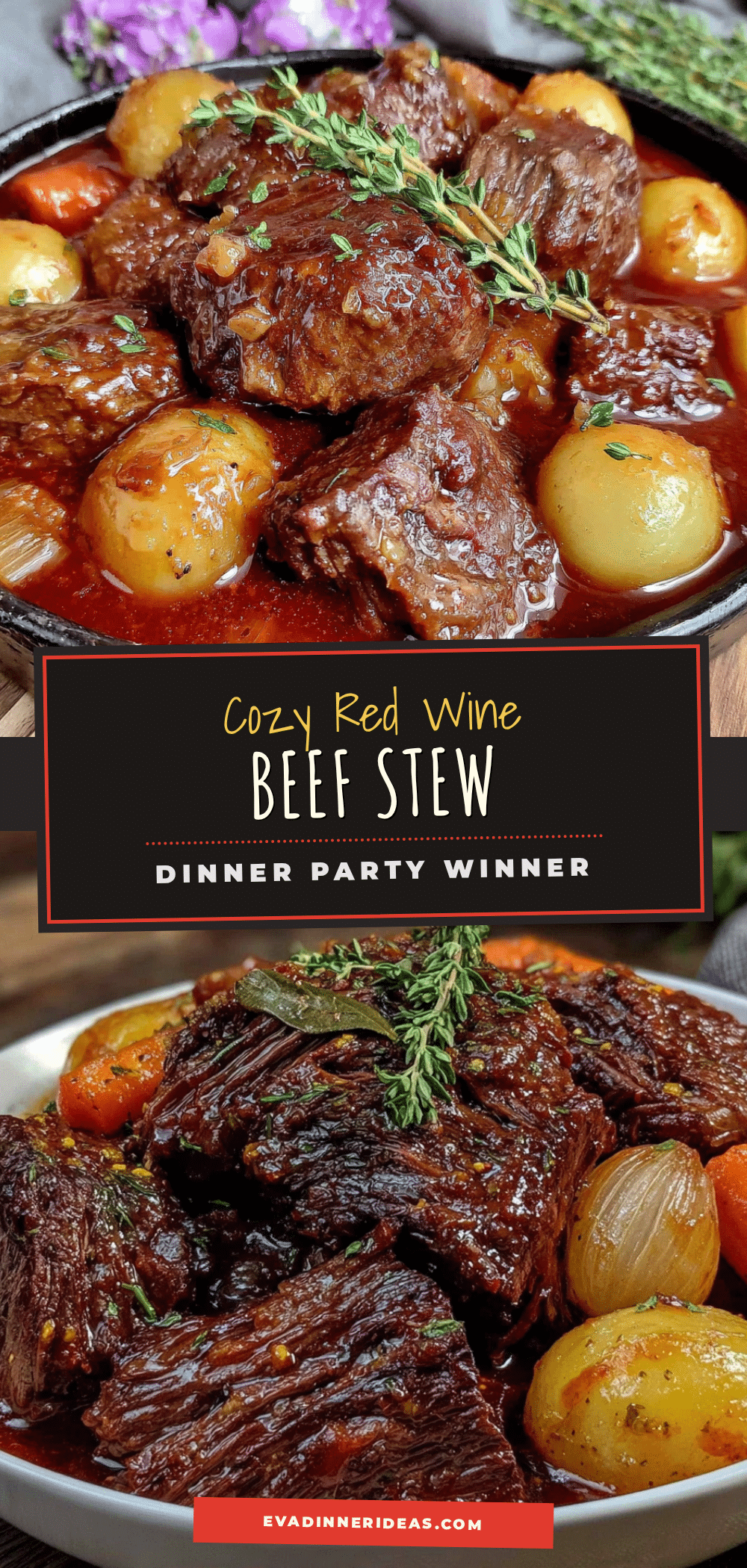
Cozy Red Wine Beef Stew: Easy Dinner Party Recipe
A rich, deeply flavorful beef stew made with red wine, tender beef, and vegetables, perfect for dinner parties or cozy nights in. This make-ahead recipe delivers melt-in-your-mouth meat and a savory broth that improves overnight.
- Prep Time: 30 minutes
- Cook Time: 2 hours 30 minutes
- Total Time: 3 hours
- Yield: 8 servings 1x
- Category: Main Course
- Cuisine: American
Ingredients
- 2 lbs (900g) beef chuck, cut into 1.5-inch cubes
- 4 strips bacon
- 2 large yellow onions, diced
- 4 medium carrots, peeled and cut into 1-inch chunks
- 3 celery stalks, sliced into half-inch pieces
- 6 garlic cloves, minced
- 3 tablespoons tomato paste
- ¼ cup (30g) all-purpose flour
- 2 cups (475ml) dry red wine (e.g., Côtes du Rhône or Cabernet Sauvignon)
- 4 cups (950ml) low-sodium beef broth
- 2 tablespoons soy sauce
- 2 bay leaves
- 4 sprigs fresh thyme, tied together
- 1.5 lbs (680g) Russet potatoes, peeled and cut into 1.5-inch chunks
- 1 cup (150g) frozen peas
- Salt and black pepper to taste
- 2 tablespoons olive oil (if needed)
Instructions
- Pat the beef cubes dry with paper towels. Season generously with salt and pepper. Toss with the ¼ cup of flour until evenly coated. Set aside.
- Heat a Dutch oven over medium heat. Add the bacon strips and cook until crispy, about 4-5 minutes per side. Remove the bacon with a slotted spoon and set aside on a paper towel-lined plate. Leave the rendered fat in the pot.
- Working in batches, add the beef cubes in a single layer. Sear for 3-4 minutes per side until deeply browned. Transfer browned beef to a clean plate. Repeat with remaining beef.
- Reduce heat to medium-low. Add the diced onions, carrots, and celery to the pot. Cook, stirring occasionally, until the onions become translucent and start to soften, about 6 minutes. Add the minced garlic and cook for another minute until fragrant.
- Push the vegetables to the sides of the pot. Add the tomato paste to the center and cook, stirring constantly, until it darkens to a rusty red color and smells sweet, about 3 minutes.
- Pour in the red wine, scraping the bottom of the pot with a wooden spoon to release all browned bits. Let the wine bubble and reduce slightly, about 2 minutes.
- Pour in the beef broth and soy sauce. Add the bay leaves and tied thyme sprigs. Return the browned beef and crumbled bacon to the pot. Stir everything together gently.
- Bring the stew to a gentle boil, then reduce the heat to low. Cover the pot with the lid slightly ajar. Let it simmer gently for 2 to 2.5 hours, checking every 30 minutes and stirring gently.
- After the stew has been simmering for about 1.5 hours, add the potato chunks. Stir them in gently and continue simmering until they are tender when pierced with a fork, about 45 minutes.
- Remove the bay leaves and thyme sprigs. Stir in the frozen peas and cook for 1-2 minutes until warmed through. Taste the broth and adjust seasoning with salt and pepper. If the stew seems too thin, let it simmer uncovered for another 10-15 minutes to thicken. If too thick, add a splash of beef broth or water.
- Let the stew rest off the heat for at least 10-15 minutes before serving.
Notes
For best results, make the stew a day ahead and refrigerate overnight. The flavors deepen and meld together. Use a wine you would drink; avoid cooking wine. For gluten-free, substitute flour with a 1:1 gluten-free blend or use a cornstarch slurry (2 tablespoons cornstarch mixed with 2 tablespoons cold water) added at the end. For a slow cooker, brown everything on the stovetop first, then transfer to the slow cooker and cook on low for 8 hours.
Nutrition
- Serving Size: 1 bowl (about 1.5 cu
- Calories: 475
- Sugar: 8
- Sodium: 680
- Fat: 20
- Saturated Fat: 7
- Carbohydrates: 33
- Fiber: 5
- Protein: 38
Keywords: beef stew, red wine stew, dinner party, comfort food, make-ahead, winter recipe