It was 11:47 PM on a drizzly Tuesday in October, and I was hit with a craving so specific it almost hurt. I wanted meatloaf—not my mom’s, not the one from that diner off Route 9, but something sweet and savory and sticky in a way that felt like a hug from the inside out. The problem? I didn’t have ketchup. I know, right? That’s basically a crime in meatloaf world. But I had a half-used bottle of brown sugar from a baking project three weeks ago, a pound of ground beef I’d thawed on a whim, and this weird idea that popped into my head while staring at the pantry door: what if I just… glazed it with brown sugar instead?
Honestly, I almost talked myself out of it. Meatloaf is one of those recipes you don’t mess with, you know? It’s comfort food royalty. But something about the late hour and the rain tapping against the window made me feel reckless in the best way. I grabbed a mixing bowl, cracked an egg one-handed (it went everywhere, let me tell you), and just started throwing things together. The brown sugar dissolved into the pan juices as the meatloaf baked, creating this caramelized crust that smelled like someone was baking a dessert next to a savory dinner. It was confusing and wonderful and exactly what I needed.
That first bite was a revelation. The sweetness didn’t overpower the meat—it wrapped around it like a cozy blanket, balancing the savory richness in a way that made me wonder why I’d never tried this before. I ate two slices standing at the counter, still in my pajamas, and decided right then that this was going to become a thing. Maybe you’ve had one of those nights where you just need something warm and familiar but also a little bit different? That’s what this meatloaf is. It’s the recipe you didn’t know you were looking for, the one that turns a regular Tuesday into something worth remembering.
Why You’ll Love This Recipe
Let me be real with you—I’ve tested this recipe about seven times since that late-night experiment, tweaking and adjusting until it was just right. Here’s why I think it’s going to become a staple in your kitchen:
- Quick & Easy: From start to table in about an hour, with only 15 minutes of active prep. Perfect for those evenings when you want comfort food but don’t have all night.
- Simple Ingredients: You probably have everything you need right now. No fancy trips to specialty stores, no obscure spices you’ll never use again.
- Perfect for Cozy Nights: This is the dish you want when the weather turns cold, or you’ve had a rough day, or you just need something that feels like a warm hug on a plate.
- Crowd-Pleaser: I’ve served this to picky kids, skeptical in-laws, and meatloaf purists—every single person went back for seconds. The brown sugar glaze is just different enough to intrigue without scaring anyone off.
- Unbelievably Delicious: The texture is tender and moist (sorry, I know some people hate that word), and the glaze caramelizes into this sticky-sweet crust that’s absolutely addictive. It’s comfort food, but elevated in the simplest way possible.
What makes this recipe different from all the other meatloaf recipes out there? It’s the glaze, honestly. Most meatloaf recipes use a ketchup-based topping that’s fine but predictable. This brown sugar glaze creates a caramelized crust that’s both sweet and savory, with a depth of flavor that feels like you spent hours in the kitchen. Plus, I’ve perfected the ratio of breadcrumbs to milk to keep the meatloaf tender without falling apart. It’s not just another version—it’s the version I keep coming back to, and I think you will too.
This recipe isn’t just good—it’s the kind that makes you close your eyes after the first bite. It’s comfort food reimagined: a little sweeter, a little stickier, but with the same soul-soothing satisfaction that made you love meatloaf in the first place. Perfect for impressing guests without stress, or turning a simple Tuesday dinner into something memorable.
What Ingredients You Will Need
This recipe uses simple, wholesome ingredients to deliver bold flavor and satisfying texture without the fuss. Most of these are pantry staples, which is exactly what you want on a cozy night in.
For the Meatloaf
- Ground beef, 2 lbs (900g) – I recommend 80/20 blend for the best balance of flavor and moisture. Too lean and your meatloaf will be dry; too fatty and it’ll shrink too much.
- Breadcrumbs, 1 cup (120g) – Plain or Italian-style both work. I prefer Panko for a lighter texture, but regular breadcrumbs are fine too. (Gluten-free breadcrumbs work great as a swap.)
- Milk, ½ cup (120ml) – Whole milk adds richness, but 2% works. The milk soaks into the breadcrumbs to keep the meatloaf tender. (Use unsweetened almond milk if needed.)
- Eggs, 2 large – They bind everything together. Make sure they’re at room temperature for easier mixing.
- Yellow onion, 1 medium, finely diced – About 1 cup. I like to sauté mine for a few minutes before adding—it softens the flavor and prevents crunchy onion bits in the finished meatloaf.
- Garlic, 3 cloves, minced – Fresh is best here. Pre-minced from a jar works in a pinch, but fresh garlic has a brighter flavor.
- Worcestershire sauce, 2 tablespoons (30ml) – This adds that deep umami flavor. I’m partial to Lea & Perrins, but any brand works.
- Salt, 1½ teaspoons – Kosher salt preferred. If using table salt, reduce to 1 teaspoon.
- Black pepper, 1 teaspoon – Freshly ground is worth the extra few seconds.
- Dried thyme, 1 teaspoon – Or 1 tablespoon fresh thyme leaves. It adds a subtle earthy note that pairs beautifully with the sweet glaze.
- Dried parsley, 1 tablespoon – Or 3 tablespoons fresh, chopped. Mostly for color and a hint of freshness.
For the Brown Sugar Glaze
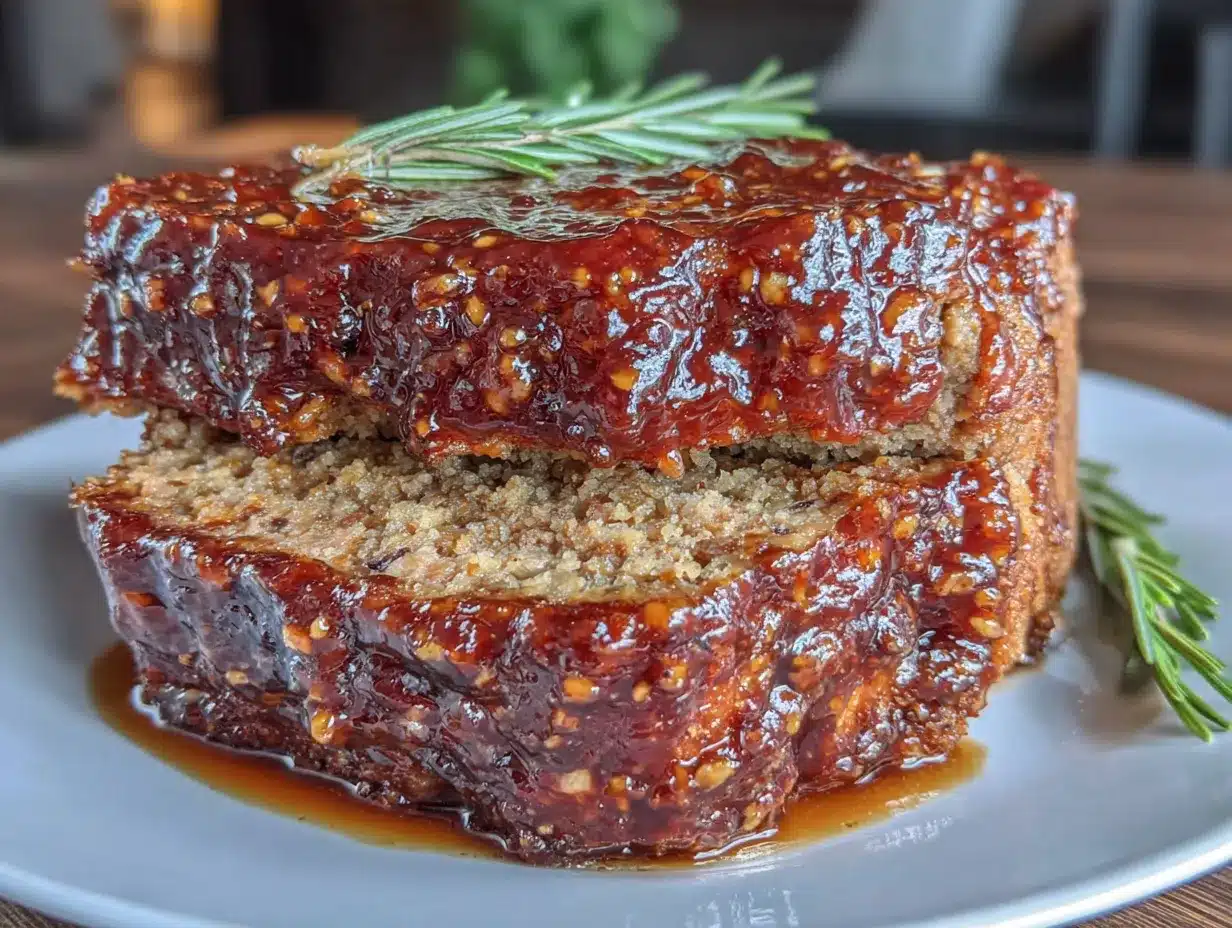
- Brown sugar, ½ cup (100g), packed – Light or dark both work. Dark brown sugar gives a deeper, more molasses-y flavor that I personally love.
- Ketchup, ¼ cup (60ml) – Yes, I know I said I didn’t have ketchup that first night, but for the final version, a little ketchup in the glaze helps balance the sweetness with acidity. Trust me on this one.
- Dijon mustard, 1 tablespoon (15ml) – Adds a subtle tang that cuts through the sweetness. Yellow mustard works too, but Dijon is smoother.
- Apple cider vinegar, 1 tablespoon (15ml) – Just a touch to brighten everything up. (White vinegar works in a pinch.)
- Worcestershire sauce, 1 teaspoon (5ml) – A little extra umami in the glaze never hurt anyone.
Ingredient Tips from My Kitchen
I’ve made this recipe with different types of ground meat, and here’s what I’ve learned: ground pork mixed with beef (half and half) makes an incredibly juicy meatloaf. Ground turkey works too, but you’ll want to add an extra tablespoon of olive oil to keep it from drying out. For the breadcrumbs, I’ve used crushed crackers (Ritz are amazing), rolled oats, and even crushed pork rinds for a keto version. They all work, but the texture changes slightly. The brown sugar—honestly, don’t skimp here. Splenda brown sugar blend works for a lower-sugar option, but the caramelization won’t be quite as dramatic. For the best results, use the real stuff.
Equipment Needed
You don’t need anything fancy for this recipe, which is part of its charm. Here’s what you’ll need:
- Large mixing bowl – For combining all the meatloaf ingredients. Any big bowl works; I use a ceramic one that belonged to my grandmother.
- Loaf pan, 9×5 inches (23x13cm) – Standard size. If you don’t have one, you can shape the meatloaf free-form on a rimmed baking sheet. It’ll cook a little faster that way, so keep an eye on it.
- Small saucepan – For making the glaze. A small skillet works too.
- Whisk – To combine the glaze ingredients smoothly.
- Chef’s knife and cutting board – For dicing the onion and mincing the garlic.
- Measuring cups and spoons – Accuracy matters, especially with the breadcrumbs and milk ratio.
- Meat thermometer – This is non-negotiable for me. A digital instant-read thermometer ensures your meatloaf reaches 160°F (71°C) without overcooking. They’re cheap and worth every penny.
- Parchment paper or aluminum foil – For lining the loaf pan. Makes cleanup so much easier.
- Basting brush – For applying the glaze. A spoon works too, but a brush gives you a more even coat.
If you don’t have a loaf pan, don’t let that stop you. I’ve made this meatloaf in a cast-iron skillet, shaped into a round loaf, and it turned out beautifully. The edges get extra crispy, which is honestly a bonus. For the thermometer, my favorite budget-friendly option is the ThermoPro TP03—it’s under $20 and has lasted me years. Just rinse it after each use and it’ll last forever.
Preparation Method
Alright, let’s make some meatloaf. I’ve broken this down into steps that are easy to follow, with all the little details I’ve learned from making this about a dozen times.
Step 1: Preheat and Prep (5 minutes)
Preheat your oven to 350°F (175°C). Line your 9×5-inch loaf pan with parchment paper, leaving some overhang on the long sides—this makes lifting the finished meatloaf out so much easier. If you don’t have parchment, grease the pan well with butter or cooking spray.
Step 2: Sauté the Aromatics (5 minutes)
Heat a small skillet over medium heat with a drizzle of olive oil. Add the finely diced onion and cook for 3-4 minutes until translucent and soft. Add the minced garlic and cook for another 30 seconds until fragrant. Set aside to cool slightly. This step is optional but highly recommended—raw onion can be harsh, and sautéing it first mellows the flavor beautifully.
Step 3: Make the Breadcrumb Mixture (2 minutes)
In a small bowl, combine the breadcrumbs with the milk. Let it sit for 2-3 minutes until the breadcrumbs have absorbed most of the milk. This creates what’s called a “panade,” and it’s the secret to tender, moist meatloaf. Without this step, the breadcrumbs would just soak up moisture from the meat, leaving you with a dry loaf.
Step 4: Mix the Meatloaf (5 minutes)
In your large mixing bowl, combine the ground beef, sautéed onion and garlic, the breadcrumb mixture, beaten eggs, Worcestershire sauce, salt, pepper, thyme, and parsley. Here’s where I have a strong opinion: use your hands. I know it’s messy, but your hands mix everything evenly without overworking the meat. Overmixing makes meatloaf tough. Just gently combine until everything is incorporated—you should still see small bits of onion and herbs. If you really can’t stand touching raw meat, use a rubber spatula, but be gentle.
Step 5: Shape and Bake (10 minutes prep + 45 minutes baking)
Transfer the meat mixture to your prepared loaf pan. Gently press it into an even shape, making sure there are no air pockets. Don’t pack it down too firmly—you want it to hold together without being dense. Bake uncovered for 45 minutes at 350°F (175°C).
Step 6: Make the Glaze (5 minutes)
While the meatloaf is baking, make the glaze. In a small saucepan over medium heat, combine the brown sugar, ketchup, Dijon mustard, apple cider vinegar, and Worcestershire sauce. Whisk until the brown sugar dissolves and the mixture comes to a gentle simmer. Let it bubble for 2-3 minutes until slightly thickened, then remove from heat. The glaze should be syrupy but still pourable—if it gets too thick, add a teaspoon of water.
Step 7: Glaze and Finish Baking (15 minutes)
After 45 minutes, remove the meatloaf from the oven. Carefully pour or brush about half the glaze over the top, spreading it evenly. Return to the oven and bake for another 10 minutes. Then apply the remaining glaze and bake for 5 more minutes. The glaze should be bubbly and caramelized, with a deep amber color. The total internal temperature should reach 160°F (71°C) when checked with a meat thermometer inserted into the center.
Step 8: Rest and Serve (10 minutes)
This is the hardest part—let the meatloaf rest in the pan for 10 minutes before slicing. I know you want to dig in right away, but resting allows the juices to redistribute throughout the meatloaf. If you cut into it too soon, all those lovely juices will run out onto the cutting board instead of staying in your slice. Use the parchment paper overhang to lift the meatloaf out of the pan, transfer to a cutting board, and slice into 1-inch thick pieces.
Cooking Tips & Techniques
I’ve made every mistake in the book with meatloaf, so you don’t have to. Here are the things I wish someone had told me:
Don’t overmix. This is the number one mistake people make. Mix just until everything comes together. If you see streaks of flour or breadcrumbs, that’s fine—they’ll disappear during baking. Overmixing develops the proteins in the meat and makes your meatloaf tough and dense. Use a light hand, seriously.
Let your meat come to room temperature. I know food safety rules say otherwise, but if you can let the ground beef sit out for 15-20 minutes before mixing, it’ll combine more evenly and cook more consistently. Straight-from-the-fridge meat will make the cold spots in your meatloaf take longer to cook, leading to an overcooked exterior.
Check the temperature early. Ovens vary wildly. Start checking the internal temperature at the 50-minute mark. You’re looking for 160°F (71°C). If it’s not there yet, keep going and check every 5 minutes. I once had a meatloaf that took almost 75 minutes total because my oven was running cool. Don’t rely on time alone—use that thermometer.
Line your pan. I cannot stress this enough. Parchment paper with overhang makes cleanup a breeze and prevents the glaze from sticking to the pan. The first time I made this, I didn’t line the pan, and I spent 20 minutes scrubbing caramelized sugar off the sides. Learn from my mistake.
Let it rest. I mentioned this above, but it bears repeating. Ten minutes of rest makes the difference between a meatloaf that falls apart and one that slices beautifully. Use that time to make a quick side dish or set the table.
Double the glaze. If you’re a glaze person like me, make 1.5 times the glaze recipe. You’ll have extra for drizzling over the top when serving, and trust me, you’ll want it. The glaze is honestly the best part.
Variations & Adaptations
One of the things I love about this recipe is how flexible it is. Here are some variations I’ve tried and loved:
Spicy Brown Sugar Meatloaf
Add 1-2 tablespoons of sriracha or your favorite hot sauce to the glaze. The heat cuts through the sweetness beautifully. I also like adding ½ teaspoon of cayenne pepper to the meat mixture for an extra kick. This version is perfect for those who like a little fire with their comfort food.
Turkey Meatloaf (Lighter Option)
Swap the ground beef for 2 lbs of ground turkey (93/7 blend). Add 2 tablespoons of olive oil to the meat mixture to compensate for the lower fat content. The cooking time might be slightly shorter—start checking at the 40-minute mark. The glaze works exactly the same way and adds the moisture that turkey sometimes lacks.
Gluten-Free Version
Use gluten-free breadcrumbs or crushed gluten-free crackers (I like Schär brand). Make sure your Worcestershire sauce is gluten-free—Lea & Perrins is, but some generic brands aren’t. Everything else in the recipe is naturally gluten-free, so this is an easy swap.
Cheese-Stuffed Meatloaf
This is my personal favorite indulgence. After mixing the meatloaf, press half of it into the loaf pan. Make a shallow well down the center and fill it with ½ cup of shredded cheddar or mozzarella cheese. Top with the remaining meat mixture, seal the edges, and bake as directed. The melted cheese center is absolutely ridiculous in the best way.
BBQ Twist
Replace the ketchup in the glaze with your favorite barbecue sauce. I’ve used both sweet and smoky BBQ sauces, and they both work beautifully. The brown sugar still provides that caramelized crust, but the BBQ flavor adds a different dimension. This version is great for summer cookouts.
Serving & Storage Suggestions
This meatloaf is best served warm, right after its 10-minute rest. Slice it into 1-inch thick pieces and arrange on a platter. The glaze should be sticky and glossy—if it’s cooled too much, you can reheat individual slices in the microwave for 15-20 seconds to revive that caramelized texture.
What to serve with it: Mashed potatoes are the classic choice, and for good reason—the sweet glaze mingles with buttery potatoes in a way that’s pure comfort. I also love it with roasted green beans or a simple side salad with a tangy vinaigrette to cut through the richness. For a truly cozy meal, serve it with creamy mashed potatoes and roasted garlic green beans. The leftovers (if there are any) make an incredible sandwich the next day—slice it cold, put it on toasted bread with a little mayo, and you’ve got lunch sorted.
Storage: Leftover meatloaf keeps well in an airtight container in the refrigerator for up to 4 days. The flavors actually deepen overnight as the glaze soaks into the meat. To reheat, I prefer the oven: place slices on a baking sheet, cover with foil, and warm at 300°F (150°C) for 10-15 minutes. The microwave works too, but the glaze won’t be as sticky.
Freezing: This meatloaf freezes beautifully. You can freeze it whole (wrap tightly in plastic wrap, then foil) or in individual slices. It’ll keep for up to 3 months. To thaw, transfer to the refrigerator overnight. Reheat in the oven or microwave. I often make two meatloaves at once—one for dinner and one for the freezer. It’s a gift to your future self on a busy weeknight.
Flavor development: Here’s something interesting—the meatloaf actually tastes better the next day. The glaze continues to permeate the meat, and the flavors meld together overnight. I’ve been known to make this a day ahead on purpose, just so I can have leftovers for lunch. Don’t judge me until you’ve tried it.
Nutritional Information & Benefits
Here’s the estimated nutritional breakdown per serving (based on 8 servings):
| Nutrient | Amount per Serving |
|---|---|
| Calories | 385 |
| Total Fat | 18g |
| Saturated Fat | 7g |
| Cholesterol | 135mg |
| Sodium | 720mg |
| Total Carbohydrates | 28g |
| Dietary Fiber | 1g |
| Sugars | 18g |
| Protein | 28g |
This recipe is a good source of protein and iron from the beef, and the onions and garlic provide antioxidants and anti-inflammatory compounds. The brown sugar glaze does add sugar, but in moderation, this is a satisfying meal that fits into a balanced diet. If you’re watching your sugar intake, you can reduce the brown sugar to ⅓ cup—the glaze won’t be as thick, but it’ll still be delicious.
Dietary considerations: This recipe contains gluten (from breadcrumbs) and dairy (from milk). For gluten-free and dairy-free options, see the variations section above. It’s not suitable for vegetarian or vegan diets, but you could try a lentil loaf with the same glaze for a plant-based version.
Conclusion
This cozy brown sugar glazed meatloaf has become one of those recipes I turn to again and again. It started as a late-night experiment born from necessity—no ketchup, a half-empty bag of brown sugar, and a craving I couldn’t ignore. But it’s become so much more than that. It’s the dish I make when I want to feel taken care of, when I need something warm and familiar that also surprises me a little. The sweet glaze caramelizing into a sticky crust, the tender meat that holds together just right, the way it makes my whole kitchen smell like comfort—it’s everything I want in a meal.
I hope you’ll try it and make it your own. Maybe you’ll add more spice, or stuff it with cheese, or serve it with a side of roasted vegetables. That’s the beauty of a good recipe—it gives you a foundation and lets you build on it. So go ahead, preheat that oven, and give yourself the gift of a cozy night in with a meatloaf that’s anything but ordinary.
If you make this recipe, I’d love to hear about it! Drop a comment below and let me know how it turned out—did you add any twists? Serve it with something unexpected? Share your creation on social media and tag me so I can see your beautiful brown sugar glazed masterpiece. Happy cooking, friends!
Frequently Asked Questions
Can I make this meatloaf without a loaf pan?
Absolutely! Shape the meatloaf into a free-form loaf on a rimmed baking sheet lined with parchment paper. It’ll cook a bit faster (start checking at 35 minutes), and you’ll get more caramelized edges, which is honestly a bonus. Just make sure to build up the sides so the glaze doesn’t run off.
Why is my meatloaf falling apart?
There are a few possible reasons: not enough binder (breadcrumbs and eggs), overmixing (which breaks down the proteins), or not letting it rest after baking. Make sure you’re using the full cup of breadcrumbs and letting the meatloaf rest for at least 10 minutes before slicing. If it’s still falling apart, add an extra egg next time.
Can I use dark brown sugar instead of light?
Yes! Dark brown sugar has more molasses, which gives the glaze a deeper, richer flavor. I actually prefer it for this recipe—it makes the glaze look almost like a dark caramel. Just be aware that the color will be a bit darker, and the flavor will be slightly more complex. Either works beautifully.
How do I prevent the glaze from burning?
The glaze can burn if it’s applied too early or if the oven temperature is too high. I apply it in two stages during the last 15 minutes of baking, which gives it time to caramelize without burning. If you notice the glaze getting too dark, tent the meatloaf loosely with foil for the remaining cooking time.
Can I double this recipe?
Definitely! Double all the ingredients and use two loaf pans, or shape the meatloaf into a larger free-form loaf on a baking sheet. If using two pans, the cooking time stays about the same. For a larger single loaf, you’ll need to add 10-15 minutes to the cooking time. Always use a meat thermometer to check for doneness.
Pin This Recipe!
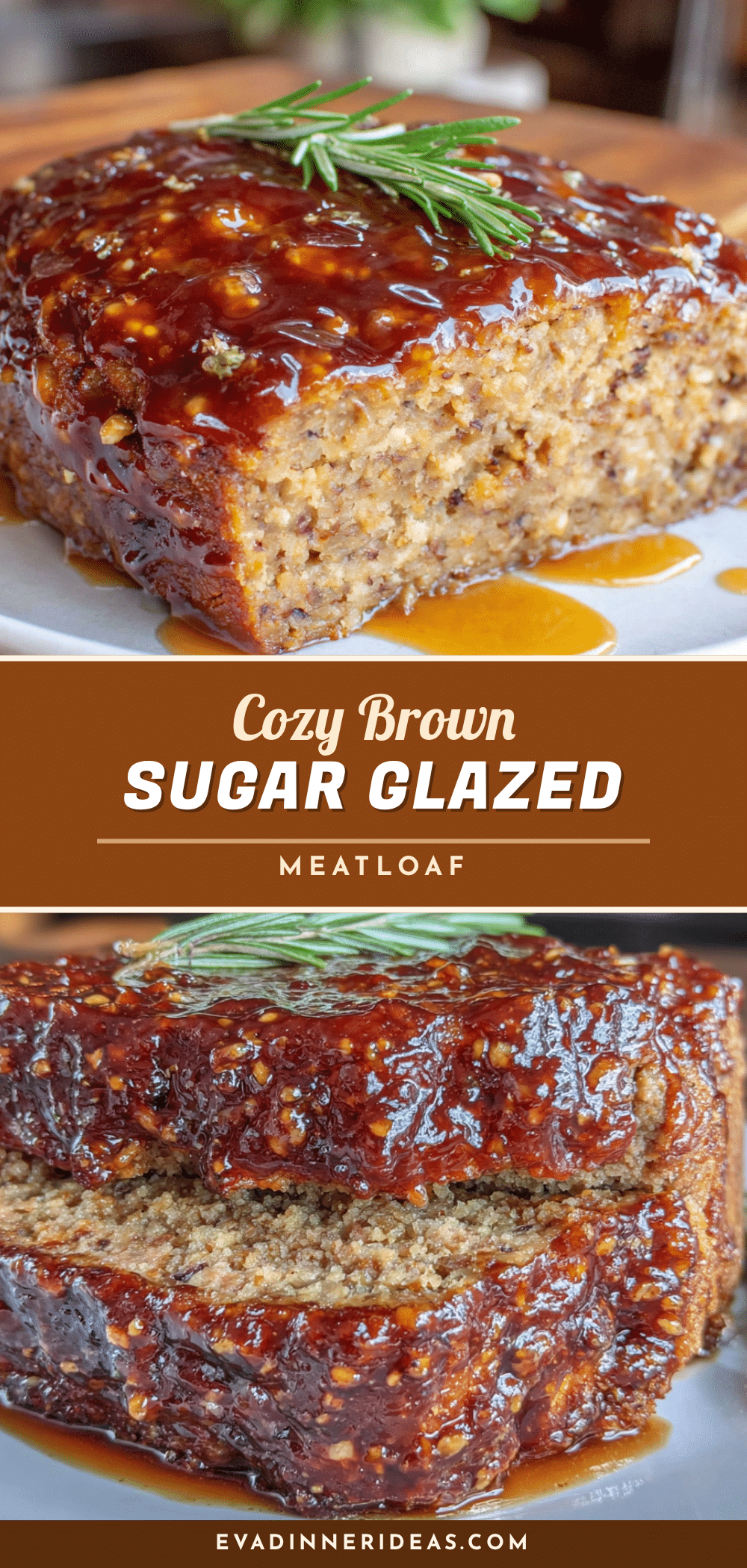
Cozy Brown Sugar Glazed Meatloaf: Easy Homemade Recipe
A sweet and savory meatloaf with a caramelized brown sugar glaze that turns a regular Tuesday dinner into something memorable. Perfect for cozy nights, this recipe is quick, easy, and made with simple ingredients.
- Prep Time: 15 minutes
- Cook Time: 60 minutes
- Total Time: 1 hour 15 minutes
- Yield: 8 servings 1x
- Category: Main Course
- Cuisine: American
Ingredients
- 2 lbs (900g) ground beef (80/20 blend)
- 1 cup (120g) breadcrumbs (plain or Italian-style, Panko preferred)
- ½ cup (120ml) milk (whole or 2%)
- 2 large eggs, room temperature
- 1 medium yellow onion, finely diced (about 1 cup)
- 3 cloves garlic, minced
- 2 tablespoons (30ml) Worcestershire sauce
- 1½ teaspoons kosher salt (or 1 teaspoon table salt)
- 1 teaspoon black pepper, freshly ground
- 1 teaspoon dried thyme (or 1 tablespoon fresh)
- 1 tablespoon dried parsley (or 3 tablespoons fresh)
- ½ cup (100g) brown sugar, packed (light or dark)
- ¼ cup (60ml) ketchup
- 1 tablespoon (15ml) Dijon mustard
- 1 tablespoon (15ml) apple cider vinegar
- 1 teaspoon (5ml) Worcestershire sauce
Instructions
- Preheat oven to 350°F (175°C). Line a 9×5-inch loaf pan with parchment paper, leaving overhang on the long sides. Grease with butter or cooking spray if not using parchment.
- Heat a small skillet over medium heat with a drizzle of olive oil. Sauté the diced onion for 3-4 minutes until translucent. Add minced garlic and cook for 30 seconds until fragrant. Set aside to cool slightly.
- In a small bowl, combine breadcrumbs and milk. Let sit for 2-3 minutes until breadcrumbs absorb most of the milk, forming a panade.
- In a large mixing bowl, combine ground beef, sautéed onion and garlic, breadcrumb mixture, beaten eggs, 2 tablespoons Worcestershire sauce, salt, pepper, thyme, and parsley. Mix gently with your hands until just combined—do not overmix.
- Transfer meat mixture to the prepared loaf pan. Gently press into an even shape, avoiding air pockets. Do not pack too firmly. Bake uncovered for 45 minutes.
- While meatloaf bakes, make the glaze: In a small saucepan over medium heat, combine brown sugar, ketchup, Dijon mustard, apple cider vinegar, and 1 teaspoon Worcestershire sauce. Whisk until sugar dissolves and mixture simmers. Let bubble for 2-3 minutes until slightly thickened. Remove from heat.
- After 45 minutes, remove meatloaf from oven. Brush or pour half the glaze over the top. Return to oven and bake for 10 minutes. Apply remaining glaze and bake for 5 more minutes, until internal temperature reaches 160°F (71°C) and glaze is bubbly and caramelized.
- Let meatloaf rest in the pan for 10 minutes. Use parchment overhang to lift out, transfer to a cutting board, and slice into 1-inch thick pieces. Serve warm.
Notes
Don’t overmix the meatloaf to keep it tender. Let the meat come to room temperature for 15-20 minutes before mixing. Check internal temperature early (at 50 minutes) as ovens vary. Line the pan with parchment for easy cleanup. Let the meatloaf rest for 10 minutes before slicing to retain juices. Double the glaze if you want extra for drizzling. The meatloaf tastes even better the next day as flavors meld.
Nutrition
- Serving Size: 1 slice (1-inch thic
- Calories: 385
- Sugar: 18
- Sodium: 720
- Fat: 18
- Saturated Fat: 7
- Carbohydrates: 28
- Fiber: 1
- Protein: 28
Keywords: brown sugar glazed meatloaf, easy meatloaf recipe, homemade meatloaf, comfort food, ground beef recipe, caramelized meatloaf