“Why can’t you just toss everything in a bowl and pour the dressing over it right before we eat?” My brother-in-law, Mark, asked me this last December as I was meticulously layering sliced kiwis and pomegranate arils in a glass trifle dish for our family’s Christmas Eve dinner. I started to explain why that wouldn’t work—the citrus would make the apples mushy, the honey would seize up in the cold fruit, the whole thing would turn into a sad, watery mess. Then I stopped. Honestly, I was tired. I’d been prepping for three days, and the idea of one less step sounded like a small miracle. So I shrugged, dumped everything into my biggest wooden bowl, whisked the dressing together in the same measuring cup, and poured it over the top.
The power went out halfway through dinner—a classic Midwest winter storm move. We ate by candlelight, forks clinking in the dark, and that fruit salad was the first thing to disappear. The apples were still crisp. The dressing hadn’t broken. And Mark, who barely cooks, looked at me with this infuriatingly smug grin. I mean, he was right. Sometimes the simplest method wins, and it took a Christmas blackout and a brother-in-law’s suggestion to teach me that. Maybe you’ve been there—that moment when you realize you’ve been overcomplicating something for years.
That’s the thing about this Best Winter Fruit Salad with Honey Lime Dressing. It’s not fussy. It doesn’t require precision or patience. It just needs good fruit, a bright dressing, and the willingness to let go of control. I’ve made it for every winter gathering since, and it always steals the show. There’s something about the combination of sweet citrus, tart pomegranate, and that honey-lime kick that feels like sunshine on a cold day. It’s the dish that taught me to listen more and lecture less—and that’s a lesson worth sharing.
Why You’ll Love This Recipe
This isn’t just another fruit salad. It’s the one that will have your guests asking for the recipe before they’ve finished their first serving. I’ve tested this combination at six different holiday gatherings, and it has never failed to impress. Here’s why it works so well for hosting:
- Quick & Easy: Comes together in under 15 minutes. No cooking, no complicated steps—just chopping and whisking. Perfect for those moments when guests are arriving and you need something beautiful on the table fast.
- Simple Ingredients: You only need 7 ingredients, and most of them are winter staples. No special trips to a fancy grocery store required.
- Perfect for Winter Gatherings: This salad is a showstopper at Christmas dinners, New Year’s brunches, and cozy potlucks. It adds color and freshness to heavy winter menus.
- Crowd-Pleaser: Kids love the sweetness, adults appreciate the tangy dressing, and everyone goes back for seconds. I’ve watched it convert confirmed fruit-salad-skeptics.
- Unbelievably Delicious: The honey lime dressing is the secret weapon. It’s bright without being tart, sweet without being cloying, and it coats every piece of fruit perfectly.
What makes this recipe different from every other fruit salad out there? It’s the timing. Most recipes tell you to dress the fruit right before serving, but this one actually benefits from a 10-minute rest. The honey lime dressing gently macerates the fruit, drawing out just enough juice to create a light syrup without turning everything mushy. It’s a happy accident I discovered thanks to Mark’s insistence, and it’s now my non-negotiable method.
This is the kind of dish that makes you close your eyes after the first bite. It’s comfort food reimagined—lighter, brighter, and somehow exactly what you need when it’s freezing outside. Perfect for impressing guests without stress, or turning a simple weeknight dinner into something memorable. Honestly, it’s the recipe I’m most proud of, and I didn’t even come up with it.
What Ingredients You Will Need
This recipe uses simple, winter-friendly ingredients to deliver bold flavor and satisfying texture without the fuss. Most of these are easy to find at any grocery store from November through February. Here’s what you’ll need:
For the Fruit Salad
- 2 large navel oranges, peeled and cut into bite-sized segments (look for heavy oranges—they’re juicier)
- 2 medium red apples, such as Honeycrisp or Fuji, diced (leave the skin on for color and fiber)
- 2 medium firm-ripe pears, such as Bosc or Anjou, diced (they hold their shape better than softer varieties)
- 1 cup fresh pomegranate arils (about 1 large pomegranate — I recommend buying pre-seeded to save time)
- 2 medium kiwis, peeled and sliced into half-moons
- 1 cup seedless red grapes, halved lengthwise
- 1/4 cup fresh mint leaves, thinly sliced (plus extra for garnish)
For the Honey Lime Dressing
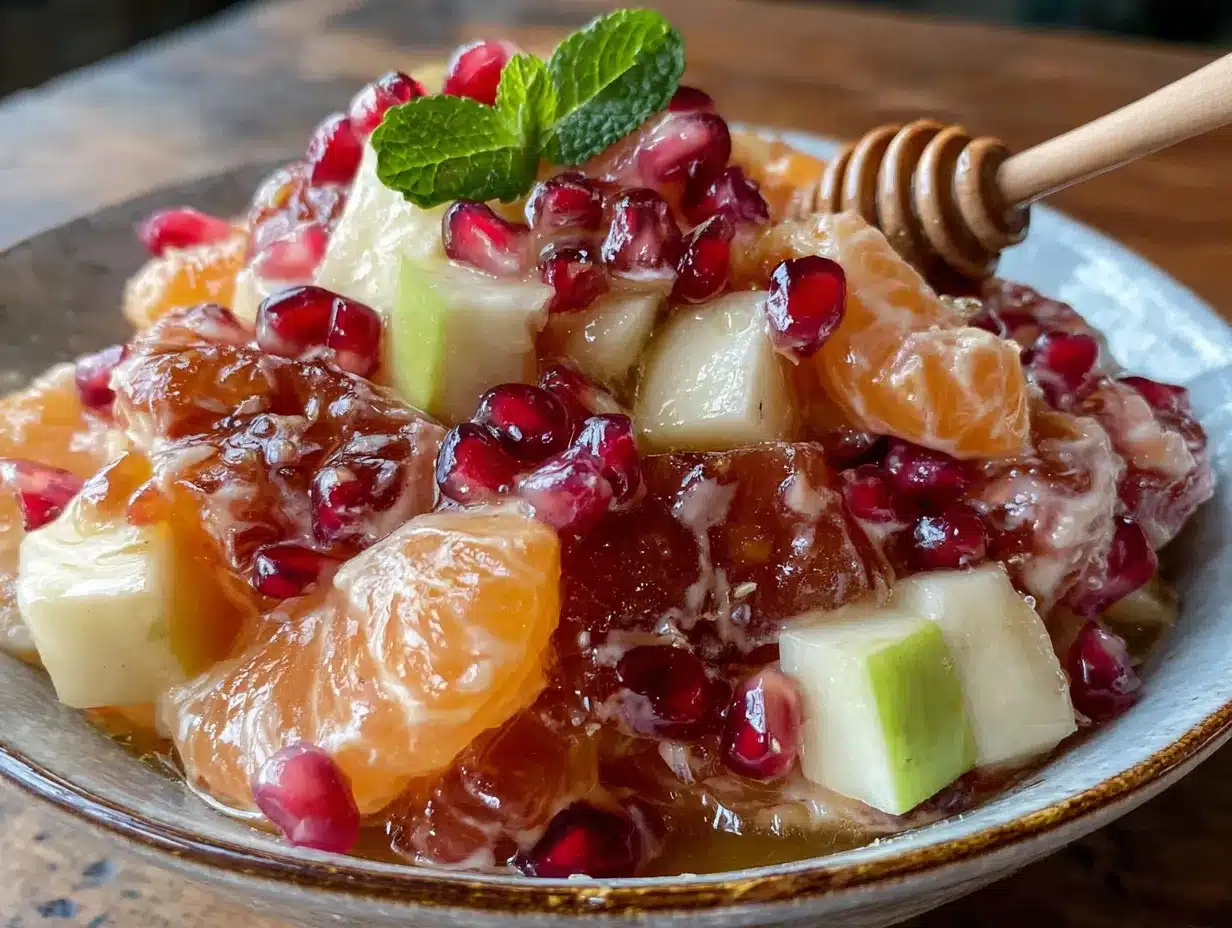
- 3 tablespoons honey (use a mild variety like clover or orange blossom for best flavor)
- 2 tablespoons fresh lime juice (about 1 large lime — never use bottled)
- 1 tablespoon fresh orange juice (squeezed from one of the oranges you’re already using)
- 1/8 teaspoon fine sea salt (trust me on this—it makes the flavors pop)
A few notes on ingredient selection: For the apples, Honeycrisp or Fuji are my go-to choices because they stay crisp even after being dressed. Avoid Red Delicious—they turn mealy. For pears, Bosc holds up beautifully, but Anjou works too. Just make sure they’re firm but give slightly at the neck when pressed. If pomegranates aren’t in season, you can substitute dried cranberries, but the texture won’t be the same. I’ve tried it, and it’s fine, but not as good.
For the honey, I prefer orange blossom honey from my local farmer’s market. It adds a subtle floral note that complements the citrus beautifully. If you only have regular clover honey, that works perfectly too. Just avoid strongly flavored honeys like buckwheat—they’ll overpower the delicate fruit.
If you need substitutions: Use agave nectar instead of honey for a vegan version. Swap lime juice with lemon juice if that’s what you have, though the flavor will be slightly less bright. And if you can’t find fresh mint, just leave it out—the salad is still delicious without it.
Equipment Needed
You don’t need much for this recipe, which is part of its beauty. Here’s what I use:
- Large mixing bowl — I use my grandmother’s old ceramic bowl, but any large bowl works. Glass lets you see the beautiful colors, which is nice for presentation.
- Sharp chef’s knife — A good 8-inch knife makes dicing apples and pears effortless. Dull knives crush fruit and make a mess.
- Cutting board — I prefer wood, but any sturdy board works. Just make sure it’s clean and dry.
- Small whisk or fork — For emulsifying the dressing. A fork works in a pinch, but a tiny whisk is faster.
- Citrus juicer — I have a simple handheld reamer that cost $4. It does the job perfectly. No need for an electric juicer.
- Measuring spoons — For the honey, lime juice, and salt. Eyeballing works if you’re experienced, but measuring ensures consistency.
- Large serving platter or bowl — I like to use a wide, shallow white platter for this salad. It shows off the colors and makes the fruit feel more special than a deep bowl.
If you don’t have a citrus juicer, you can squeeze the lime and orange by hand. Just roll them on the counter first to loosen the juices. And if you’re serving a crowd, a large glass trifle dish makes a stunning presentation—layer the fruit and garnish with mint for a showstopper effect.
Preparation Method
This salad comes together in about 15 minutes. Here’s how I do it, step by step:
- Make the dressing first. In a small bowl or liquid measuring cup, whisk together 3 tablespoons honey, 2 tablespoons fresh lime juice, 1 tablespoon fresh orange juice, and 1/8 teaspoon fine sea salt. Whisk until the honey is completely dissolved and the dressing looks smooth and slightly thickened. Set aside. (Pro tip: If your honey is crystallized, microwave the jar for 10 seconds to loosen it before measuring.)
- Prepare the citrus. Using a sharp knife, cut off the top and bottom of each orange so it sits flat on your cutting board. Working from top to bottom, slice off the peel and white pith in strips. Then, holding the orange over a bowl to catch the juice, cut between the membranes to release the segments. Drop the segments into your large mixing bowl. This method takes a little practice, but it’s worth it—no bitter pith in your salad.
- Prep the apples and pears. Core the apples and pears, then dice them into bite-sized pieces—about 1/2-inch cubes. I leave the skin on for color and texture, but you can peel them if you prefer. Add them to the bowl with the orange segments. Toss gently with a spoon to distribute the citrus juice, which will help prevent browning.
- Halve the grapes. Rinse the grapes and pat them dry. Cut each grape in half lengthwise. Add them to the bowl. (If you’re using very large grapes, quarter them instead.)
- Prep the kiwis. Cut off both ends of each kiwi, then use a spoon to scoop out the flesh from the skin. Slice into half-moons about 1/4-inch thick. Add to the bowl.
- Add the pomegranate arils. Sprinkle the pomegranate arils over the top. If you’re using a whole pomegranate, score it around the middle, then break it open underwater to release the seeds without staining your hands.
- Pour the dressing over the fruit. Give the dressing one more whisk, then drizzle it evenly over the fruit. Use a large rubber spatula or wooden spoon to gently fold everything together until the dressing coats every piece. Take your time with this—you want even coverage.
- Let it rest for 10 minutes. This is the magic step. Cover the bowl with plastic wrap and let it sit at room temperature for exactly 10 minutes. The honey lime dressing will draw out a little juice from the fruit, creating a light syrup. Don’t skip this, and don’t let it sit longer than 15 minutes or the apples will start to soften.
- Add the mint and serve. Just before serving, sprinkle the sliced mint over the top and fold gently. Transfer to your serving platter or bowl, garnish with a few whole mint leaves and maybe a few extra pomegranate arils, and serve immediately.
A quick note on timing: If you’re prepping for a party, you can chop all the fruit up to 4 hours ahead and store it separately in airtight containers in the refrigerator. Combine everything and add the dressing no more than 15 minutes before serving. The mint should always go on last—it discolors quickly once cut.
Cooking Tips & Techniques
After making this salad more times than I can count, I’ve learned a few things the hard way. Here are my best tips:
The biggest mistake people make is over-dressing the fruit. I did this my first time, and the salad turned into a soupy mess. The dressing should lightly coat the fruit, not pool at the bottom of the bowl. If you’re unsure, add half the dressing, toss, then add more as needed. You can always add, but you can’t take away.
Temperature matters more than you think. This salad is best served at cool room temperature, not straight from the fridge. Cold fruit dulls the flavors, especially the honey and lime. If you’ve prepped ahead, let the dressed salad sit at room temperature for 5 minutes before serving. The difference is remarkable.
Here’s a trick I learned from a pastry chef friend: Toast the honey slightly before making the dressing. Warm the honey in a small saucepan over low heat for about 30 seconds until it becomes more fluid, then whisk in the lime juice. This helps the honey incorporate more smoothly and adds a deeper, almost caramelized flavor. I do this every time now.
Don’t skip the salt. I know it sounds weird in a fruit salad, but that tiny pinch of salt is what makes the honey lime dressing sing. It balances the sweetness and acidity, and it makes the fruit flavors pop. I learned this after forgetting it once—the salad was fine, but it wasn’t memorable. The salt makes it memorable.
Multitasking strategy: While the dressed fruit rests for 10 minutes, use that time to clean up your cutting board and knives, set out serving dishes, or prep the rest of your meal. That 10-minute rest is a gift—don’t waste it standing around.
One more thing: If you’re serving this at a party, make a double batch. I’m not kidding. I once made a single batch for a gathering of 10 people, thinking it would be a small side dish. It was gone in 20 minutes, and three people asked for the recipe. Now I always make at least double when hosting.
Variations & Adaptations
This recipe is incredibly flexible. Here are some variations I’ve tried and loved:
Citrus Lover’s Version: Add 1 cup of grapefruit segments (peeled and membrane-free) and swap half the lime juice for lemon juice. The combination of grapefruit, orange, and lime is incredibly bright and refreshing. I made this for a New Year’s brunch, and it was a hit.
Warm Spiced Option: Add 1/4 teaspoon ground cinnamon and a pinch of ground ginger to the honey lime dressing. This gives the salad a cozy, winter-spiced flavor that pairs beautifully with roasted meats. I serve this version alongside glazed ham at Christmas, and it’s become a family tradition.
Tropical Twist: Replace the apples and pears with 1 cup diced fresh mango and 1 cup diced fresh pineapple. Keep the citrus, pomegranate, and kiwi. The honey lime dressing works beautifully with tropical fruit. This version is perfect if you’re craving a taste of summer in the middle of winter.
For a crowd (12+ servings): Double all the fruit ingredients, but only increase the dressing by 1.5 times. The fruit releases more juice when there’s more of it, so you don’t need as much dressing proportionally. I learned this the hard way after making a triple batch that was swimming in dressing.
Dairy-Free Add-In: Sometimes I add 1/2 cup of toasted coconut flakes or 1/3 cup of slivered almonds for crunch. Just make sure your guests don’t have nut allergies before adding nuts. The coconut version is especially good with the tropical twist variation.
Low-Sugar Version: Reduce the honey to 1.5 tablespoons and add an extra tablespoon of lime juice. The fruit provides plenty of natural sweetness, so you won’t miss the extra honey. I’ve served this to friends watching their sugar intake, and they loved it.
Serving & Storage Suggestions
This salad is best served immediately after the 10-minute rest, but here’s everything you need to know about serving and storing it:
Serving Temperature: Serve at cool room temperature. If you’ve refrigerated the fruit beforehand, let the dressed salad sit out for 5 minutes before serving. Cold fruit mutes the flavors, and you want that honey lime dressing to shine.
Presentation Tips: I serve this in a wide, shallow white bowl or on a large platter. The white background makes the jewel-toned fruit pop. Garnish with a few whole mint leaves and an extra sprinkle of pomegranate arils right before serving. For holiday gatherings, I sometimes add a few edible flowers for an extra festive touch.
What to Serve Alongside: This salad pairs beautifully with roasted meats like ham, turkey, or pork loin. It’s also wonderful alongside a cheese board or with yogurt and granola for brunch. For a winter dinner party, I serve it as a bright, refreshing counterpoint to rich, creamy dishes like mac and cheese or mashed potatoes.
Storage: Leftovers can be stored in an airtight container in the refrigerator for up to 24 hours. The texture will soften, but the flavor actually improves as the fruit marinates in the dressing. I actually prefer the leftovers the next morning—they’re perfect spooned over yogurt or oatmeal.
Reheating: Don’t. This salad is served cold or at room temperature. If it’s been refrigerated, just let it sit at room temperature for 10 minutes before serving again.
Freezing: I don’t recommend freezing this salad. The fruit will become mushy and watery when thawed. Make it fresh—it’s so quick that there’s no need to freeze it.
Flavor Development: The flavors meld beautifully over time. If you make this a few hours ahead (without the mint), the honey lime dressing will have infused the fruit, and the salad will taste even better. Just add the mint right before serving.
Nutritional Information & Benefits
This salad is as nutritious as it is delicious. Here’s the approximate nutritional breakdown per serving (based on 8 servings):
- Calories: 145
- Total Fat: 0.5g
- Sodium: 45mg
- Total Carbohydrates: 36g
- Dietary Fiber: 5g
- Sugars: 26g (all natural from fruit and honey)
- Protein: 2g
- Vitamin C: 85% of the Daily Value
- Vitamin A: 10% of the Daily Value
- Potassium: 350mg
The health benefits here are substantial. Oranges and kiwis are packed with Vitamin C, which supports immune health during winter months. Pomegranate arils are rich in antioxidants called punicalagins, which are linked to heart health. Apples provide pectin, a type of soluble fiber that supports digestive health. And honey contains trace amounts of enzymes and antioxidants.
This salad is naturally gluten-free, dairy-free, and vegan (if you use agave instead of honey). It’s also low in fat and sodium, making it a heart-healthy choice for any gathering. The only potential allergen is the fruit itself for those with oral allergy syndrome, but that’s relatively rare.
From a wellness perspective, I love that this salad offers a way to enjoy something sweet and satisfying without refined sugar. It’s proof that healthy food can be genuinely indulgent. I feel good serving it to my family and friends, knowing they’re getting a dose of vitamins and antioxidants with every bite.
Conclusion
This Best Winter Fruit Salad with Honey Lime Dressing has become my go-to dish for every winter gathering, and I honestly can’t imagine the holiday season without it. It’s bright, refreshing, and surprisingly forgiving—the kind of recipe that makes you look like a hero with almost no effort. Whether you’re hosting a Christmas dinner, a New Year’s brunch, or just a cozy winter dinner with friends, this salad delivers every time.
I love that this recipe taught me to be more flexible in the kitchen. Sometimes the best ideas come from the most unexpected places—even from a brother-in-law who doesn’t cook. So go ahead and make this your own. Add more citrus if you love tartness. Throw in some toasted nuts for crunch. Skip the mint if you’re out. The beauty of this salad is that it works with whatever you have.
I’d love to hear how this turns out for you! Drop a comment below and let me know what variations you tried, or tag me in your photos if you share them online. And if you’re looking for more winter recipes, you might also enjoy my cranberry orange relish or my roasted winter vegetables with balsamic glaze. Happy cooking, and here’s to bright flavors on even the coldest days!
Frequently Asked Questions
Can I make this fruit salad the night before?
You can prep the fruit and dressing separately the night before, but don’t combine them until 10-15 minutes before serving. Store the chopped fruit in an airtight container in the refrigerator and keep the dressing in a separate jar. The mint should always be added fresh right before serving.
What if I can’t find pomegranates?
You can substitute dried cranberries or fresh raspberries, though the texture will be different. I’ve also used frozen pomegranate arils when fresh weren’t available—just thaw them and pat dry before adding.
How do I keep the apples from turning brown?
The citrus juice from the oranges and the lime in the dressing naturally prevent browning. Just make sure you toss the apples with the orange segments right after cutting them, and they’ll stay bright for hours.
Can I use bottled lime juice instead of fresh?
I really don’t recommend it. Fresh lime juice has a brightness that bottled juice just can’t replicate. For the best flavor, always use fresh citrus. One large lime typically yields about 2 tablespoons of juice, so you’ll need just one.
Is this salad suitable for a diabetic-friendly diet?
While the sugars are all natural, this salad does contain carbohydrates from fruit and honey. For a lower-sugar version, reduce the honey to 1.5 tablespoons and focus on lower-sugar fruits like berries (if available) and grapefruit. Always consult with your healthcare provider about dietary choices.
Pin This Recipe!
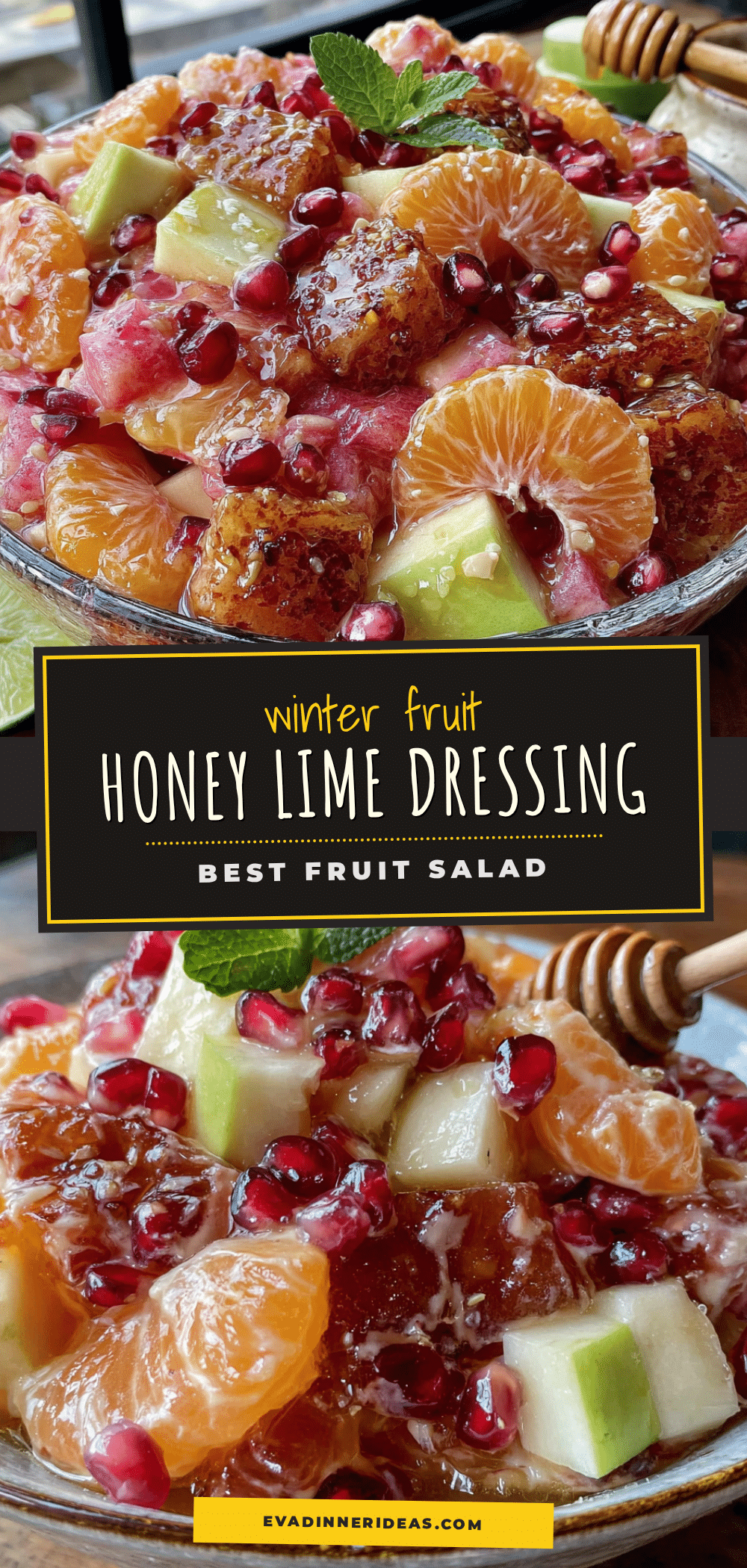
Best Winter Fruit Salad with Easy Honey Lime Dressing
This bright and refreshing winter fruit salad features a simple honey lime dressing that brings out the best in seasonal fruits. It’s quick to make, perfect for holiday gatherings, and surprisingly forgiving—the dressing gently macerates the fruit to create a light syrup without turning it mushy.
- Prep Time: 15 minutes
- Cook Time: 0 minutes
- Total Time: 25 minutes
- Yield: 8 servings 1x
- Category: Side Dish
- Cuisine: American
Ingredients
- 2 large navel oranges, peeled and cut into bite-sized segments
- 2 medium red apples (such as Honeycrisp or Fuji), diced
- 2 medium firm-ripe pears (such as Bosc or Anjou), diced
- 1 cup fresh pomegranate arils (about 1 large pomegranate)
- 2 medium kiwis, peeled and sliced into half-moons
- 1 cup seedless red grapes, halved lengthwise
- 1/4 cup fresh mint leaves, thinly sliced (plus extra for garnish)
- 3 tablespoons honey (mild variety like clover or orange blossom)
- 2 tablespoons fresh lime juice (about 1 large lime)
- 1 tablespoon fresh orange juice
- 1/8 teaspoon fine sea salt
Instructions
- Make the dressing first: In a small bowl or liquid measuring cup, whisk together honey, fresh lime juice, fresh orange juice, and fine sea salt until the honey is completely dissolved and the dressing looks smooth and slightly thickened. Set aside.
- Prepare the citrus: Using a sharp knife, cut off the top and bottom of each orange so it sits flat on your cutting board. Working from top to bottom, slice off the peel and white pith in strips. Then, holding the orange over a bowl to catch the juice, cut between the membranes to release the segments. Drop the segments into your large mixing bowl.
- Prep the apples and pears: Core the apples and pears, then dice them into bite-sized pieces (about 1/2-inch cubes). Leave the skin on for color and texture, or peel if preferred. Add them to the bowl with the orange segments. Toss gently with a spoon to distribute the citrus juice, which will help prevent browning.
- Halve the grapes: Rinse the grapes and pat them dry. Cut each grape in half lengthwise. Add them to the bowl. (If using very large grapes, quarter them instead.)
- Prep the kiwis: Cut off both ends of each kiwi, then use a spoon to scoop out the flesh from the skin. Slice into half-moons about 1/4-inch thick. Add to the bowl.
- Add the pomegranate arils: Sprinkle the pomegranate arils over the top.
- Pour the dressing over the fruit: Give the dressing one more whisk, then drizzle it evenly over the fruit. Use a large rubber spatula or wooden spoon to gently fold everything together until the dressing coats every piece.
- Let it rest for 10 minutes: Cover the bowl with plastic wrap and let it sit at room temperature for exactly 10 minutes. The honey lime dressing will draw out a little juice from the fruit, creating a light syrup. Don’t skip this, and don’t let it sit longer than 15 minutes or the apples will start to soften.
- Add the mint and serve: Just before serving, sprinkle the sliced mint over the top and fold gently. Transfer to your serving platter or bowl, garnish with a few whole mint leaves and maybe a few extra pomegranate arils, and serve immediately.
Notes
The salad is best served at cool room temperature. If prepping ahead, chop the fruit up to 4 hours ahead and store separately. Combine everything and add the dressing no more than 15 minutes before serving. The mint should always go on last as it discolors quickly once cut. For a vegan version, substitute agave nectar for honey. Leftovers can be stored in an airtight container in the refrigerator for up to 24 hours; the texture will soften but the flavor improves.
Nutrition
- Serving Size: 1 serving (about 1 c
- Calories: 145
- Sugar: 26
- Sodium: 45
- Fat: 0.5
- Carbohydrates: 36
- Fiber: 5
- Protein: 2
Keywords: winter fruit salad, honey lime dressing, fruit salad, holiday salad, easy fruit salad, winter recipe