I was standing in the frozen foods aisle of our local grocery store last November, staring blankly at a bag of frozen pearl onions, when the smell hit me. It wasn’t anything in the air—it was a memory, sharp and sudden. That deep, almost sweet scent of onions and beef melding together for hours, the kind of smell that seeps into your clothes and hangs around until the next morning. And suddenly I was seven years old, standing on a step stool in my Aunt Clara’s tiny kitchen, watching her brown a massive hunk of meat in her favorite cast iron pot. She’d let me stir the onions, standing so close the heat made my cheeks pink. She passed away five years ago, and I still haven’t been able to get rid of that old pot—it sits on my counter even when I’m not using it, like a little monument.
Honestly, I’d been avoiding making brisket for years. It felt like one of those dishes that belonged to someone else, you know? A dish for people who had their lives together and owned actual roasting pans. But that day in the grocery store, I grabbed the beef, a bag of carrots, and a whole lot of onions. I was determined to chase that feeling. Let me tell you, the first time I made this cozy slow braised brisket with caramelized onions and carrots, I almost cried. Not because it was sad—because it tasted exactly like her kitchen smelled. I mean, I messed up the first batch (forgot to sear the meat long enough, rookie mistake), but the second time? Bingo. This is that recipe. The one that makes your house smell like Sunday for three days straight.
Why You’ll Love This Recipe
This isn’t just another brisket recipe. After about a dozen test batches (my neighbors have been very well-fed), I can tell you this version hits differently. Let me break it down for you.
- Deep, Layered Flavor Without the Fuss: The magic happens in the oven. You get that incredible, slow-cooked taste without having to babysit a stovetop for hours. The caramelized onions do all the heavy lifting, creating a sauce that’s rich, savory, and a little bit sweet.
- Incredibly Tender Meat: We’re talking fork-tender. The kind of brisket that falls apart when you look at it. Low and slow is the secret—it breaks down all that connective tissue into pure, silky goodness.
- Simple, Honest Ingredients: No fancy wine reductions or hard-to-find spices here. Onions, carrots, beef, broth, and a few pantry staples. This is peasant food at its finest, and honestly, that’s what makes it so good.
- Perfect for a Cozy Weekend: This is the ultimate Sunday supper. You pop it in the oven in the afternoon, and by dinner time, your whole house smells like a hug. It’s made for chilly evenings when all you want to do is stay in.
- Makes Incredible Leftovers: I’m not kidding when I say this brisket is even better the next day. The flavors have time to get to know each other. Slice it cold for sandwiches, or reheat it in the sauce for an equally amazing dinner the next night.
What makes this recipe different from all the others? It’s the patience with the onions. Most recipes rush this step. I don’t. We’re taking a full 30 minutes to get those onions truly golden and jammy before anything else goes in the pot. That’s the foundation of the whole dish. It’s not a shortcut—it’s a commitment, and it pays off in every single bite.
What Ingredients You Will Need
This recipe uses simple, hearty ingredients to build something truly special. Most of these are probably already in your kitchen, which is part of the beauty of it. Here’s what you’ll need to grab.
For the Brisket
- 4-5 pounds beef brisket, flat cut: Look for a piece with a nice, even fat cap on top. That fat renders down and keeps the meat moist. I’ve had good luck with the flat cut from my local butcher, but a whole packer brisket works too if you trim it well.
- 2 tablespoons kosher salt: Don’t skimp. Salt is crucial for seasoning the meat all the way through. Use Diamond Crystal if you have it—it’s less salty by volume than Morton’s.
- 1 tablespoon black pepper, freshly ground: Freshly ground makes a real difference here. The pre-ground stuff just doesn’t have the same pop.
- 2 tablespoons vegetable oil or avocado oil: You need an oil with a high smoke point for searing. Olive oil will burn and get bitter.
For the Caramelized Onions and Sauce
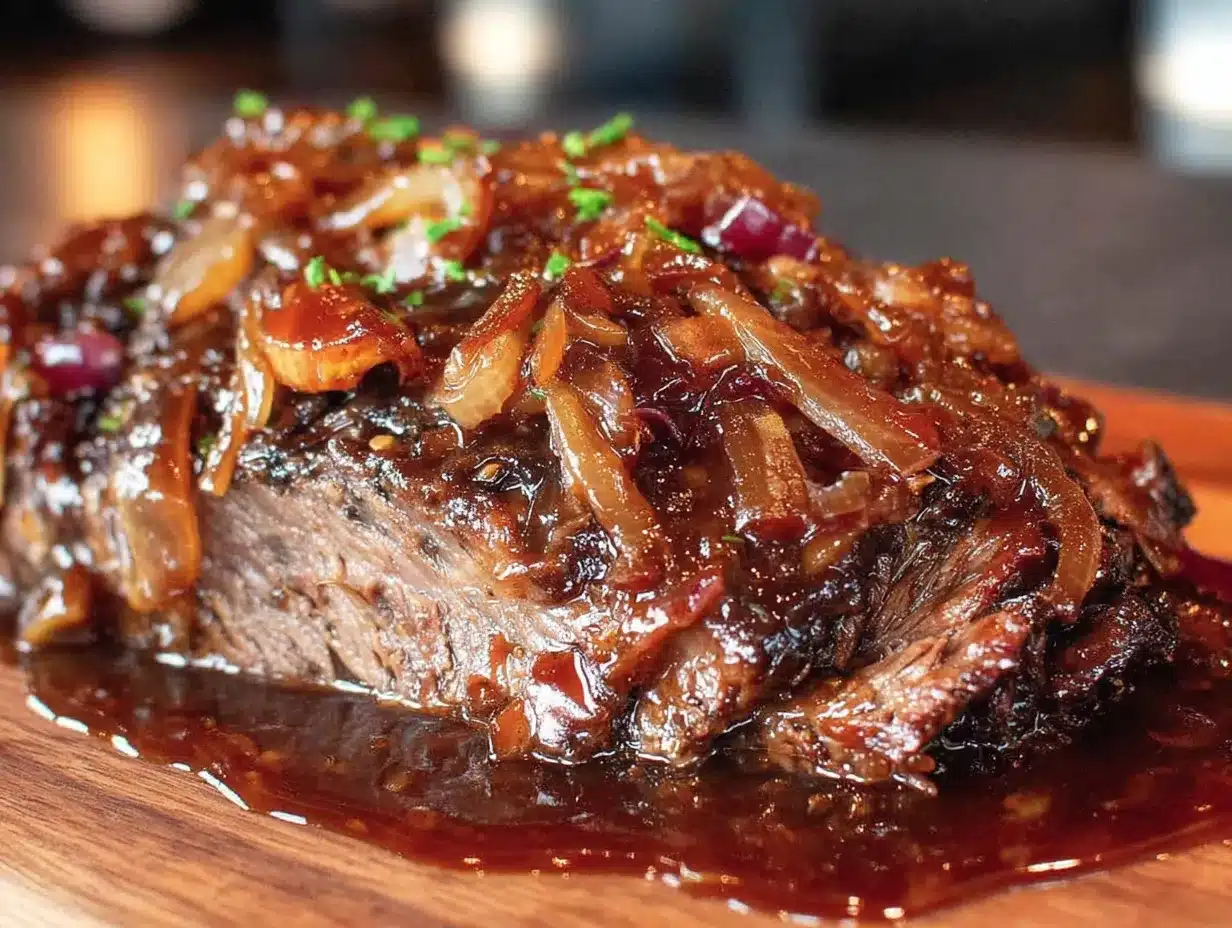
- 4 large yellow onions, thinly sliced: Yellow onions are the workhorses here. They have the perfect balance of sugar and bite to create that deep, sweet flavor. Don’t use red or sweet onions—they’ll get mushy.
- 4 cloves garlic, minced: Adds that savory backbone. Fresh is non-negotiable; the jarred stuff will taste flat.
- 2 tablespoons tomato paste: This adds umami and helps thicken the sauce. I love the double-concentrated tube kind—it’s easier to use than a can.
- 1 cup beef broth, low-sodium: You want control over the salt level. If you only have regular broth, cut the added salt back a bit.
- 1 cup dry red wine (optional but recommended): A Cabernet or Merlot works beautifully. It adds complexity and depth. If you don’t cook with wine, just use another cup of beef broth.
- 2 sprigs fresh thyme: A little earthiness to round everything out. Dried thyme works in a pinch—use about 1 teaspoon.
- 2 bay leaves: For that subtle, aromatic background note. Remember to fish them out before serving!
For the Carrots
- 1 pound carrots, peeled and cut into 2-inch chunks: I like using rainbow carrots when I can find them for a pop of color, but standard orange carrots are perfect. If they’re thick, cut them in half lengthwise so they cook evenly.
Equipment Needed
You don’t need a professional kitchen to pull this off, but having the right tools makes everything easier. Here’s what I use.
- Large Dutch Oven or Heavy-Bottomed Pot (6-8 quarts): This is non-negotiable. You need something that can go from stovetop to oven. A Le Creuset or Staub is a dream, but a good heavy enameled cast iron pot from Lodge is a fantastic budget-friendly option. The heavy bottom is key for even heat distribution.
- Sharp Chef’s Knife: Slicing 4 pounds of onions with a dull knife is a special kind of torture. Trust me, I’ve been there. A sharp knife makes the prep work fly by.
- Cutting Board: A big, sturdy one. You’ll be doing a lot of chopping.
- Tongs: For flipping the brisket in the hot pot. Metal ones are best—they won’t melt.
- Wooden Spoon or Spatula: For scraping up all those delicious browned bits from the bottom of the pot (that’s pure flavor).
- Aluminum Foil: For covering the pot if your lid doesn’t fit perfectly, or for tenting the meat while it rests.
Preparation Method
Alright, let’s get cooking. This is a low-effort, high-reward recipe, but there are a few key moments where you need to pay attention. I’ll walk you through it step-by-step.
- Prep the Brisket (15 minutes before cooking): Take your brisket out of the fridge and pat it completely dry with paper towels. This is the most important step for a good sear. Season it all over with the kosher salt and black pepper. Don’t be shy—use it all. Let it sit on the counter for about 15 minutes to take the chill off.
- Preheat Your Oven: Set your oven to 300°F (150°C). Place a rack in the lower third of the oven.
- Sear the Brisket (10-15 minutes): Place your Dutch oven on the stovetop over medium-high heat. Add the vegetable oil and let it get shimmering hot—almost smoking. Carefully lay the brisket in the pot, fat-side down. Let it sear undisturbed for 4-5 minutes. You want a deep, dark brown crust. It should release easily from the pan when it’s ready; if it sticks, it needs more time. Flip and sear the other side for another 4-5 minutes. Use your tongs to sear the edges too, about 1 minute each. Transfer the brisket to a large plate. Don’t worry if some bits are stuck to the pot—that’s flavor.
- Caramelize the Onions (30-35 minutes): Reduce the heat to medium. Add your sliced onions to the pot. There will be a lot of them, and that’s okay. Stir them with your wooden spoon, scraping up all those browned bits from the bottom of the pot. This is called deglazing, and it’s where the magic starts. Cook the onions, stirring every 3-4 minutes, for about 30 minutes. You want them to be deeply golden, soft, and jammy. Don’t rush this step. If they start to stick or burn, add a splash of water or broth. The smell in your kitchen right now is incredible.
- Build the Sauce (5 minutes): Add the minced garlic and tomato paste to the onions. Stir constantly for 1 minute until the garlic is fragrant and the tomato paste has darkened slightly. Pour in the red wine (if using) and beef broth, scraping the bottom of the pot one last time to get any remaining flavor bits. Add the fresh thyme sprigs and bay leaves. Bring the liquid to a simmer.
- Return the Brisket and Add Carrots: Carefully place the seared brisket back into the pot, nestling it into the onion mixture. It should be mostly submerged in the liquid. Tuck the carrot chunks around the sides of the meat.
- Braise (3 to 3.5 hours): Put the lid on your Dutch oven and transfer it to the preheated oven. Let it cook, undisturbed, for 3 hours. After 3 hours, check the meat. It should be fork-tender—meaning a fork slides in with almost no resistance. If it’s still a little tough, give it another 30 minutes. The total time can vary depending on the thickness of your brisket.
- Rest and Serve (15-20 minutes): Carefully remove the pot from the oven. Using tongs, transfer the brisket to a cutting board. Let it rest, tented loosely with foil, for at least 15 minutes. This lets the juices redistribute. While it rests, check the sauce. If it’s too thin, simmer it on the stovetop for 5-10 minutes to reduce. Fish out the thyme stems and bay leaves. Slice the brisket against the grain into ½-inch thick slices. Serve it on a platter, spooning the caramelized onions, carrots, and sauce all over the top.
Cooking Tips & Techniques
I’ve made this brisket more times than I can count, and I’ve learned a few things the hard way. Here are my best tips to make sure yours turns out perfect.
Don’t skip the sear. I know it’s an extra step, and it makes a bit of a mess, but it’s non-negotiable. That brown crust is pure flavor. It’s the difference between a good brisket and a great one. The first time I made this, I got impatient and barely seared the meat. The final dish was pale and tasted flat. Never again.
Low and slow is the law. Your oven temperature matters. 300°F is the sweet spot. If you go too high, the meat will be tough and stringy. Too low, and it won’t break down the connective tissue. Trust the process. Your patience will be rewarded with meat so tender you can cut it with a butter knife.
Let it rest. This is the hardest part, especially when your house smells like heaven. But if you slice into that brisket right away, all those beautiful juices will run out onto the cutting board, leaving you with dry meat. A 15-minute rest under foil is all it takes to keep it juicy.
Deglaze like you mean it. When you add the onions after searing the meat, really scrape that bottom. Those browned bits (called the fond) are concentrated flavor. If you leave them stuck to the pot, you’re missing out on half the taste of the final sauce. Use a wooden spoon and a little elbow grease.
Slice against the grain. This is the number one mistake people make with brisket. Look at the lines of the meat fibers (the grain). You want to cut perpendicular to those lines, not parallel to them. Slicing with the grain gives you long, stringy, tough pieces. Against the grain gives you tender, melt-in-your-mouth slices.
Variations & Adaptations
This recipe is a fantastic base that you can tweak to fit your taste or what you have on hand. Here are some of my favorite ways to change it up.
Dietary Adaptations: For a gluten-free version, this recipe is already perfect—just make sure your beef broth is certified gluten-free. For a dairy-free version, skip any butter and stick with oil. To make it lower in fat, you can trim more of the fat cap off the brisket before cooking, but know that it might be slightly less tender.
Flavor Twists: I once added a stick of cinnamon and a star anise to the pot along with the broth. It gave the sauce a warm, almost Moroccan feel that was incredible. You can also swap the thyme for rosemary for a more piney, aromatic flavor. For a little heat, add a dried chili or a teaspoon of smoked paprika with the tomato paste.
Different Cooking Methods: Don’t have a Dutch oven? No problem. You can sear the meat in a regular skillet, then transfer everything to a deep baking dish, cover it tightly with foil, and braise it in the oven. You can also make this in a slow cooker. Sear the meat and caramelize the onions on the stovetop first, then transfer everything to the slow cooker and cook on low for 8-10 hours or on high for 5-6 hours.
Vegetable Swaps: Not a carrot fan? Swap them for parsnips, celery root, or even chunks of potato (add potatoes in the last hour so they don’t turn to mush). Mushrooms would also be a fantastic addition—add them with the onions.
Serving & Storage Suggestions
This brisket is a star on its own, but the right sides can make it a full-on celebration.
Serving: I love serving this over a bed of creamy mashed potatoes or soft polenta to soak up all that incredible sauce. Buttered egg noodles are another classic choice. For a lighter option, serve it alongside a simple green salad with a tangy vinaigrette to cut through the richness. A crusty loaf of bread is mandatory for wiping the plate clean. This dish is also perfect for a holiday table—think Rosh Hashanah, Passover, or a cozy Christmas Eve dinner.
Storage: Leftovers are a gift. Let the brisket cool completely, then store it in an airtight container with the sauce and vegetables. It will keep in the refrigerator for up to 4 days. The flavors actually get better as they meld overnight.
Freezing: This brisket freezes beautifully. Slice the meat or leave it whole, and pack it in a freezer-safe container with plenty of sauce. It will keep for up to 3 months. Thaw in the refrigerator overnight before reheating.
Reheating: The best way to reheat is low and slow. Place the brisket and sauce in a covered pot in a 300°F oven for 20-30 minutes, or until warmed through. You can also reheat it gently on the stovetop over low heat. Avoid the microwave—it will toughen the meat.
Nutritional Information & Benefits
While this is definitely a comfort food indulgence, it does have some nutritional upsides. A single serving (about 6 ounces of meat with sauce and vegetables) is estimated to contain approximately 450-550 calories, 30g of protein, 25g of fat, and 15g of carbohydrates.
Health Benefits: Beef brisket is an excellent source of high-quality protein, iron, and B vitamins, particularly B12, which is essential for energy and nervous system health. Carrots are packed with beta-carotene (which your body converts to vitamin A) and fiber. Onions, believe it or not, are rich in antioxidants and prebiotic fiber that supports gut health. This is a meal that nourishes you on multiple levels, even if it feels like a total treat.
Dietary Considerations: This recipe is naturally gluten-free and dairy-free. It is not suitable for a low-fat diet due to the fat content of the brisket. Contains no common allergens besides potential sulfites in the wine.
Conclusion
This cozy slow braised brisket with caramelized onions and carrots is more than just a recipe—it’s a feeling. It’s the smell of a Sunday afternoon. It’s the warmth of a kitchen on a cold day. It’s a dish that asks for nothing but your time and gives back so much more. I make it when I need to feel grounded, when I want to feed the people I love, or when I just need a little taste of that memory from Aunt Clara’s kitchen.
I really hope you give this a try. Don’t be intimidated by the long cook time—the actual hands-on work is minimal. Let the oven do the heavy lifting. And please, don’t be afraid to make it your own. Add more garlic, throw in some mushrooms, or swap the carrots for potatoes. The best recipes are the ones that become yours.
If you make this brisket, I’d love to hear about it! Leave a comment below and tell me how it turned out, or share a photo on social media and tag me. Did you make any changes? What did you serve it with? Your stories are what make this community so special. Happy cooking, friends!
Frequently Asked Questions
Can I use a different cut of beef for this recipe?
Absolutely. While brisket is the classic choice, this recipe works beautifully with a chuck roast or a bottom round roast. Just keep in mind that cooking times may vary. Chuck roast is usually a little more forgiving and will also become incredibly tender.
Do I have to use red wine?
Not at all. The wine adds depth and complexity, but you can skip it entirely. Just replace the cup of wine with an additional cup of beef broth. The dish will still be delicious—just a little less complex.
My brisket is tough after 3 hours. What went wrong?
Don’t panic! It’s likely just undercooked. Brisket needs time for the connective tissue to break down. If it’s tough, put it back in the oven, covered, for another 30-60 minutes. Check it again. It should slide apart with a fork when it’s ready.
Can I prepare this dish a day ahead?
Yes, and I actually recommend it! This brisket is one of those dishes that tastes even better the next day. Make it completely, let it cool, and store it in the fridge overnight. The next day, slice the meat and reheat it gently in the sauce. The flavors will be even more melded and delicious.
How do I prevent the carrots from getting too mushy?
If you’re worried about mushy carrots, cut them into larger, chunkier pieces—about 3 inches long and thick. You can also add them to the pot about halfway through the cooking time (after 1.5 hours) instead of at the beginning. This will give them a firmer texture while still being perfectly tender.
Pin This Recipe!
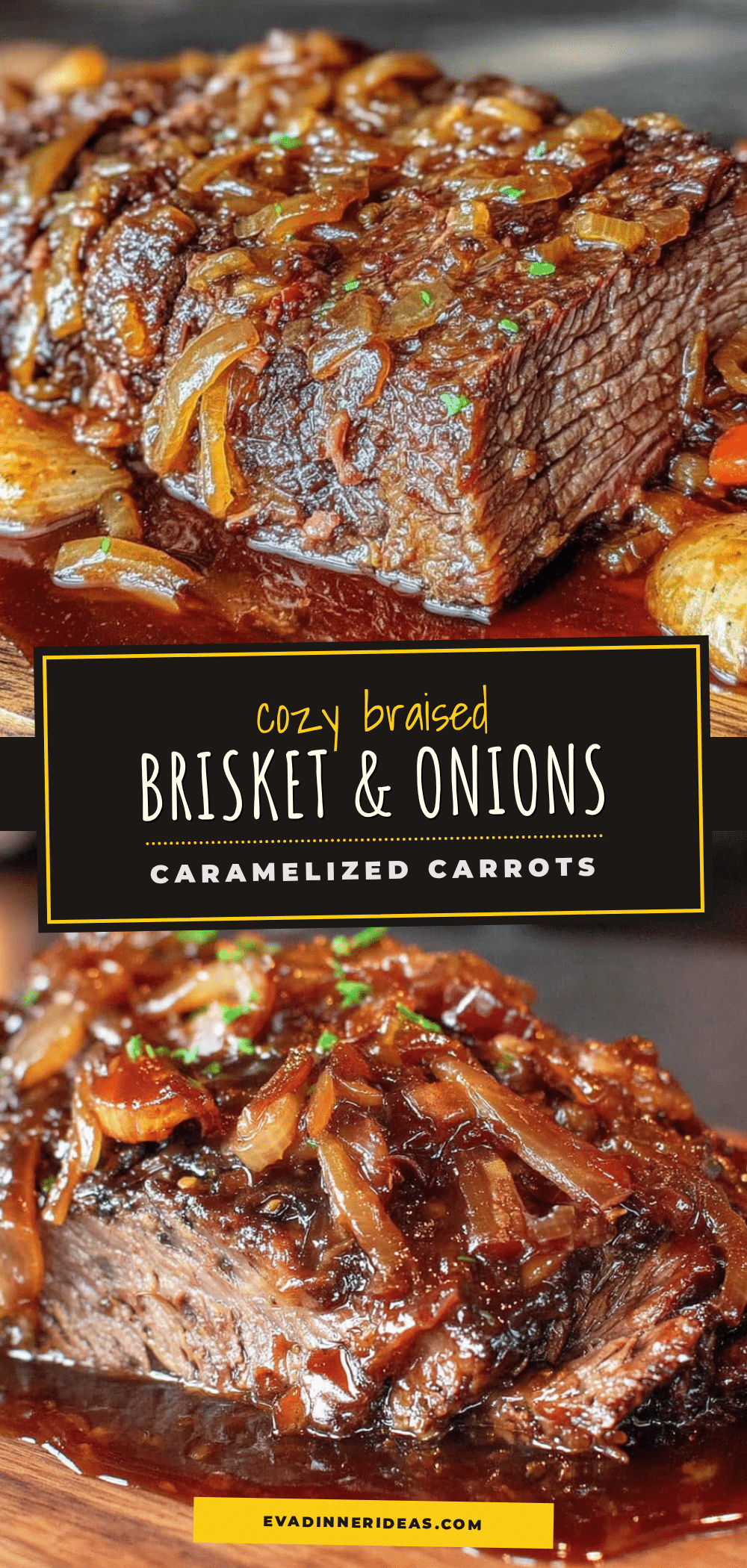
Cozy Slow Braised Brisket with Caramelized Onions
This cozy slow braised brisket with caramelized onions and carrots is more than just a recipe—it’s a feeling. It’s the smell of a Sunday afternoon, the warmth of a kitchen on a cold day, and a dish that asks for nothing but your time and gives back so much more.
- Prep Time: 15 minutes
- Cook Time: 3 hours 30 minutes
- Total Time: 3 hours 45 minutes
- Yield: 8 servings 1x
- Category: Main Course
- Cuisine: American
Ingredients
- 4–5 pounds beef brisket, flat cut
- 2 tablespoons kosher salt
- 1 tablespoon black pepper, freshly ground
- 2 tablespoons vegetable oil or avocado oil
- 4 large yellow onions, thinly sliced
- 4 cloves garlic, minced
- 2 tablespoons tomato paste
- 1 cup beef broth, low-sodium
- 1 cup dry red wine (optional but recommended)
- 2 sprigs fresh thyme
- 2 bay leaves
- 1 pound carrots, peeled and cut into 2-inch chunks
Instructions
- Prep the Brisket (15 minutes before cooking): Take your brisket out of the fridge and pat it completely dry with paper towels. Season it all over with the kosher salt and black pepper. Let it sit on the counter for about 15 minutes to take the chill off.
- Preheat Your Oven: Set your oven to 300°F (150°C). Place a rack in the lower third of the oven.
- Sear the Brisket (10-15 minutes): Place your Dutch oven on the stovetop over medium-high heat. Add the vegetable oil and let it get shimmering hot—almost smoking. Carefully lay the brisket in the pot, fat-side down. Let it sear undisturbed for 4-5 minutes. Flip and sear the other side for another 4-5 minutes. Use your tongs to sear the edges too, about 1 minute each. Transfer the brisket to a large plate.
- Caramelize the Onions (30-35 minutes): Reduce the heat to medium. Add your sliced onions to the pot. Stir them with your wooden spoon, scraping up all those browned bits from the bottom of the pot. Cook the onions, stirring every 3-4 minutes, for about 30 minutes until deeply golden, soft, and jammy.
- Build the Sauce (5 minutes): Add the minced garlic and tomato paste to the onions. Stir constantly for 1 minute until fragrant. Pour in the red wine (if using) and beef broth, scraping the bottom of the pot. Add the fresh thyme sprigs and bay leaves. Bring the liquid to a simmer.
- Return the Brisket and Add Carrots: Carefully place the seared brisket back into the pot, nestling it into the onion mixture. Tuck the carrot chunks around the sides of the meat.
- Braise (3 to 3.5 hours): Put the lid on your Dutch oven and transfer it to the preheated oven. Let it cook, undisturbed, for 3 hours. Check the meat—it should be fork-tender. If still tough, give it another 30 minutes.
- Rest and Serve (15-20 minutes): Remove the pot from the oven. Transfer the brisket to a cutting board and let it rest, tented loosely with foil, for at least 15 minutes. While it rests, check the sauce and simmer if too thin. Fish out the thyme stems and bay leaves. Slice the brisket against the grain into ½-inch thick slices. Serve with onions, carrots, and sauce spooned over the top.
Notes
Don’t skip the sear—it’s crucial for flavor. Low and slow at 300°F is key for tender meat. Let the brisket rest before slicing to keep it juicy. Deglaze the pot thoroughly after searing. Always slice against the grain. For best results, make a day ahead—flavors meld and improve overnight.
Nutrition
- Serving Size: 6 ounces of meat wit
- Calories: 500
- Sugar: 8
- Sodium: 800
- Fat: 25
- Saturated Fat: 9
- Carbohydrates: 15
- Fiber: 3
- Protein: 30
Keywords: brisket, slow braised, caramelized onions, comfort food, Sunday supper, beef, braised beef, holiday dinner