My neighbor Carlos had claimed for years that he hated coquito. Every December, when the holiday parties started rolling around and someone would inevitably show up with a bottle of the thick, sweet Puerto Rican coconut drink, he’d make a face and reach for a beer instead. “Too sweet,” he’d say. “Like drinking melted ice cream with a kick of rum.” I shrugged it off—different strokes for different folks, right? Then last Christmas Eve, I spotted him at my front door, holding an empty glass, looking suspiciously guilty. “I might’ve finished the pitcher,” he muttered. “Got any more?”
Honestly, I wasn’t surprised. This wasn’t just any coquito—it was the version I’d been tweaking for years, the one that finally got my own family to stop arguing over who made it best. I mean, coquito is serious business in Puerto Rican households. Everyone’s abuela has the “real” recipe, and nobody agrees on the right balance of cinnamon, vanilla, and coconut. But this one? This one is different. It’s creamy without being cloying, spiced without being overpowering, and somehow manages to be both rich and refreshing at the same time.
Let me tell you, the first time I made this for a dinner party, I watched three people who swore they “didn’t do sweet drinks” go back for seconds. Then thirds. Then started texting me for the recipe before the plates were cleared. That’s the thing about a really good coquito—it doesn’t try to convince you. It just sits there, all velvety and aromatic, and lets you discover for yourself that maybe, just maybe, you’ve been wrong this whole time. And honestly? That’s the best kind of recipe to have in your back pocket when you’re hosting.
Why You’ll Love This Recipe
This coquito isn’t just another holiday drink—it’s the one that’ll have your guests hovering around the pitcher all night. And trust me, I’ve tested this on enough crowds to know it works. Here’s why it stands out:
- Perfectly Balanced Sweetness : Most coquito recipes lean way too heavy on the sweetened condensed milk, making them cloying. This version uses a careful ratio of coconut cream to milk that gives you richness without the sugar crash.
- No Cooking Required : Seriously—you just blend, chill, and serve. Which means you can make it ahead of time and actually enjoy your own party instead of being stuck in the kitchen.
- Scales Beautifully for a Crowd : This recipe doubles, triples, or even quadruples without losing any quality. Perfect for when you’ve got twenty people showing up and you need something impressive ready to pour.
- Make-Ahead Magic : The flavors actually get better after a day or two in the fridge. So you can prep this on Wednesday for your Saturday party and thank yourself later.
- Customizable Spice Level : You control the cinnamon, nutmeg, and vanilla. Want it more aromatic? Add an extra cinnamon stick while it rests. Prefer it milder? Dial it back.
What makes this recipe different from every other coquito out there is the technique of blending the whole spices directly into the coconut cream base rather than just steeping them. It gives you this deep, integrated flavor that hits you in layers—first the coconut, then the warmth of the cinnamon, then the subtle kick of the rum. Plus, using quality cream of coconut (not coconut milk) makes all the difference in texture. It’s the kind of drink that makes people close their eyes after the first sip, and honestly, that never gets old when you’re the one who made it.
What Ingredients You Will Need
This recipe uses simple, pantry-friendly ingredients that come together to create something truly special. Most of these are easy to find at any grocery store, though you might need to hunt a little for the cream of coconut—it’s usually in the international aisle or near the cocktail mixers.
- 1 can (15 oz) cream of coconut (I prefer Coco López for the thickest, creamiest texture—it makes a noticeable difference)
- 1 can (13.5 oz) coconut milk, full-fat (Shake the can well before opening, as the cream separates from the water during storage)
- 1 can (14 oz) sweetened condensed milk (Adds richness and sweetness—use a high-quality brand like La Lechera if you can find it)
- 1 can (12 oz) evaporated milk (This thins the mixture slightly while adding creaminess without extra sugar)
- 1 cup Puerto Rican rum (White or gold works—I use Bacardí Gold for its smooth, slightly oaky flavor. You can also use a spiced rum for extra warmth)
- 1 teaspoon vanilla extract (Pure vanilla, not imitation—it really matters here)
- 1 cinnamon stick (For steeping—skip the ground cinnamon for this; the whole stick gives a cleaner flavor)
- 1/2 teaspoon ground nutmeg (Freshly grated if you have it—the pre-ground stuff works fine too)
- 1/4 teaspoon ground cloves (Optional, but adds that classic holiday warmth)
- Pinch of salt (Trust me on this—it balances the sweetness and brings out the coconut flavor)
Ingredient Selection Tips : When buying cream of coconut, look for a can that feels heavy and doesn’t have any dents. The consistency should be thick and paste-like, not watery. If you’re using a dairy-free version, swap the evaporated milk for another can of coconut milk and use a vegan sweetened condensed milk (Nature’s Charm makes a good one). For a lower-sugar option, you can substitute the sweetened condensed milk with a sugar-free version, though the texture will be slightly thinner.
Substitution Guidance : If you can’t find cream of coconut, you can substitute with 1 can of full-fat coconut milk plus 1/2 cup of sugar, blended together until smooth. The texture won’t be quite as thick, but it’ll still be delicious. For a non-alcoholic version, simply omit the rum and add an extra 1/2 cup of coconut milk or a splash of vanilla extract to maintain the volume.
Equipment Needed
You don’t need much fancy equipment for this recipe, which is part of what makes it so great for entertaining. Here’s what you’ll need:
- Blender —A standard countertop blender works perfectly. I’ve used everything from a $20 basic model to a Vitamix, and honestly, they all get the job done. Just make sure it has a tight-fitting lid since we’re blending hot liquids.
- Large pitcher or glass bottle —For storing the finished coquito. A 2-quart pitcher works well, or you can use a decorative glass bottle if you’re feeling fancy.
- Fine-mesh strainer —Optional, but helpful if you want to remove any tiny bits of spice that didn’t blend fully. A cheesecloth-lined colander works too.
- Measuring cups and spoons —For accuracy, especially with the rum and vanilla.
- Can opener —You’ll be opening a lot of cans, so make sure it’s sharp.
- Wooden spoon or spatula —For scraping down the blender and stirring the mixture as it chills.
Budget-Friendly Tip : If you don’t have a blender, you can whisk everything together by hand in a large bowl. It won’t be as smooth, but it’ll still taste amazing. Just make sure the cream of coconut is well stirred before adding it, as it tends to separate in the can.
Preparation Method
- Prepare the spice infusion : In a small saucepan, combine the cinnamon stick, nutmeg, cloves, and about 1/4 cup of the coconut milk. Heat over medium-low heat for 3-4 minutes, stirring occasionally, until the milk is warm and fragrant. Do not let it boil—you just want to wake up the spices. Remove from heat and let it cool for 5 minutes.
- Blend the base : In your blender, combine the cream of coconut, the remaining coconut milk, sweetened condensed milk, evaporated milk, and the warm spice mixture (including the cinnamon stick). Blend on high for 30-45 seconds until everything is completely smooth and well combined. The mixture should look thick and creamy, like a milkshake.
- Add the rum and vanilla : With the blender running on low, slowly pour in the rum and vanilla extract. Blend for another 10 seconds just to incorporate. Taste the mixture at this point—it should be sweet and creamy with a gentle warmth from the spices. If you want it stronger, add another splash of rum. If it’s too sweet for your taste, add a squeeze of fresh lime juice to balance it.
- Strain (optional but recommended) : Pour the mixture through a fine-mesh strainer into your pitcher or bottle. This catches any tiny bits of cinnamon bark or clove that didn’t break down completely. I learned this the hard way after serving a batch that had a gritty texture—now I never skip this step.
- Chill thoroughly : Cover the pitcher and refrigerate for at least 4 hours, but overnight is better. The flavors need time to meld together, and the drink needs to be ice-cold to be at its best. I usually make mine two days before a party—it only gets better with time.
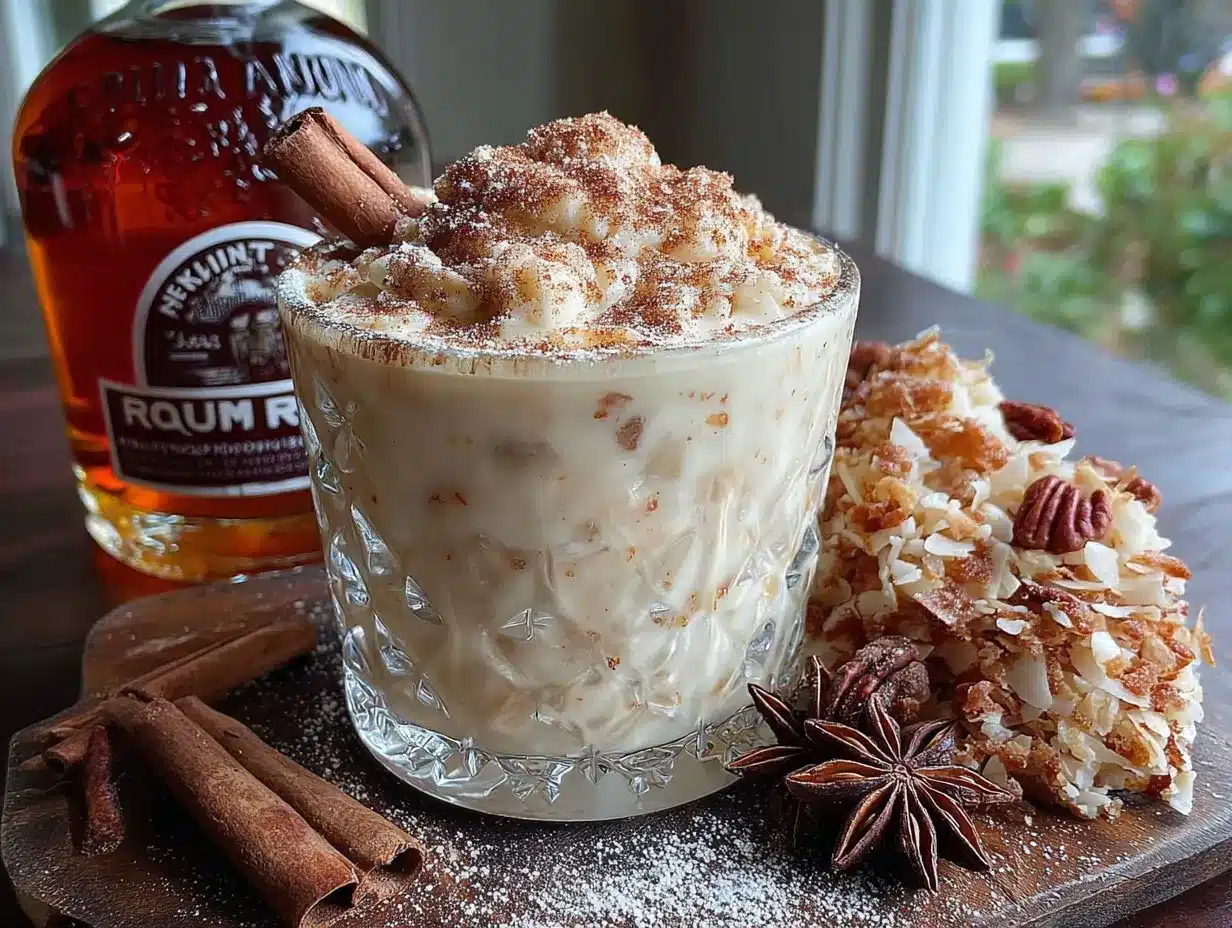
- Serve and garnish : When you’re ready to serve, give the coquito a good stir (the coconut cream can settle at the bottom). Pour into small glasses—coquito is rich, so a 4-ounce serving is plenty. Garnish with a cinnamon stick, a star anise, or a sprinkle of ground nutmeg. For an extra festive touch, rim the glasses with toasted coconut flakes.
Sensory Cue : When you blend the mixture, it should look like a smooth, pale ivory liquid with a glossy sheen. The smell should be intensely coconutty with warm, spicy undertones. If it smells boozy or thin, you might need to adjust the ratio of coconut to rum.
Troubleshooting Tip : If your coquito separates after chilling (the coconut cream rises to the top), don’t panic—this is normal. Just give it a vigorous stir or shake the bottle before serving. If it’s too thick, thin it with a splash of regular milk or coconut milk. If it’s too thin, add a little more cream of coconut and blend again.
Cooking Tips & Techniques
Over the years, I’ve made coquito for everything from casual family dinners to big holiday parties, and I’ve learned a few things the hard way. Here are my best tips for getting it right every time:
Temperature Matters : Always serve coquito ice-cold. I mean, really cold. If it’s even slightly warm, the sweetness becomes overwhelming and the rum taste is too sharp. I like to chill the glasses in the freezer for 15 minutes before pouring—it makes a huge difference.
Don’t Skip the Salt : I know it sounds weird, but that tiny pinch of salt is what makes the coconut flavor pop. Without it, the drink can taste flat and one-dimensional. It’s the same principle as salted caramel—salt enhances sweetness without making things salty.
Let It Rest : I cannot stress this enough—coquito needs time. The first time I made it, I served it straight from the blender, and honestly, it was just okay. The next day? It was incredible. The spices mellow, the rum integrates, and the coconut flavor deepens. Plan ahead and make it at least 24 hours in advance.
Rum Choice : While any rum will work, I’ve found that gold or añejo rums give a smoother, more complex flavor than white rum. Spiced rum can be nice, but it can also overpower the coconut, so use it sparingly. If you’re using a particularly strong rum (like overproof), cut back to 3/4 cup and add more coconut milk to balance.
Multitasking Tip : While the spice mixture is heating, you can open all your cans and measure out the rum. This recipe comes together in about 10 minutes of active time, so it’s perfect for making while you’re doing other holiday prep.
Variations & Adaptations
One of the best things about coquito is how adaptable it is. Here are some variations I’ve tried and loved:
Dairy-Free Version : Replace the sweetened condensed milk with a vegan version (Nature’s Charm makes an excellent one) and swap the evaporated milk for another can of full-fat coconut milk. The texture will be slightly thinner but still delicious. I’ve served this to dairy-free guests and they couldn’t tell the difference.
Spiced Chai Coquito : Add 2 chai tea bags to the warm coconut milk mixture and let them steep for 5 minutes before removing. The chai spices (cardamom, ginger, black pepper) add a beautiful warmth that pairs perfectly with the coconut. This is my personal favorite variation for winter parties.
Lower-Sugar Version : Use a sugar-free sweetened condensed milk and reduce the cream of coconut to 3/4 can. Add an extra 1/2 cup of unsweetened coconut milk to make up the volume. The taste is still sweet, but not cloying—perfect for guests who are watching their sugar intake.
Chocolate Coquito : Add 1/4 cup of unsweetened cocoa powder to the blender along with the other ingredients. Blend until smooth. This creates a rich, chocolate-coconut hybrid that tastes like a boozy Mounds bar. Serve with a sprinkle of sea salt on top.
Non-Alcoholic Version : Simply omit the rum and add an extra 1/2 cup of coconut milk or a splash of vanilla extract. You can also add a teaspoon of rum extract if you want that flavor without the alcohol. Kids and designated drivers love this version.
Serving & Storage Suggestions
Coquito is traditionally served in small glasses—think 4-6 ounces—because it’s so rich. I like to use small juice glasses or even shot glasses for parties, which makes it easy for guests to grab one and mingle. For a more elegant presentation, serve it in stemmed glasses with a cinnamon stick garnish.
What to Serve Alongside : Coquito pairs beautifully with crispy garlic chicken for a savory-sweet contrast, or with mango habanero salsa for a spicy-sweet combo. For dessert, it’s perfect with guava cheese pastelitos or banana rum cake—the tropical flavors just sing together.
Storage Instructions : Coquito keeps in the refrigerator for up to 2 weeks, stored in an airtight container. The flavors actually improve over the first few days, so don’t be afraid to make it well in advance. Do not freeze it—the texture becomes grainy when thawed.
Reheating Note : You shouldn’t need to reheat coquito because it’s served cold. But if you’ve stored it in the fridge and it’s become too thick, let it sit at room temperature for 10-15 minutes, then stir vigorously. If it’s still too thick, add a splash of milk or coconut milk to thin it out.
Transporting for Parties : If you’re bringing coquito to a friend’s house, pour it into a sealed glass bottle or a mason jar. Wrap the bottle in a dish towel to protect it during transport, and pack it in a cooler with ice packs to keep it cold. Trust me, you don’t want to show up with warm coquito—it’s just not the same.
Nutritional Information & Benefits
Let’s be real—coquito is a treat, not a health drink. But that doesn’t mean it can’t have some redeeming qualities. Here’s a rough estimate per 4-ounce serving:
- Calories : 280-320
- Fat : 15-18g (mostly from coconut, which is rich in medium-chain triglycerides)
- Carbohydrates : 30-35g
- Sugar : 28-32g
- Protein : 4-5g
- Alcohol : Approximately 0.5-0.7 standard drinks per serving
Health Benefits : Coconut cream contains medium-chain triglycerides (MCTs), which are metabolized differently than other fats and may provide quick energy. Cinnamon is known for its anti-inflammatory properties and can help regulate blood sugar. Nutmeg and cloves are both rich in antioxidants. Of course, these benefits are minimal given the sugar and alcohol content, but hey—it’s the holidays!
Dietary Considerations : This recipe is naturally gluten-free and can be made dairy-free and vegan with simple substitutions. It contains tree nuts (coconut) and dairy in its standard form. The alcohol content is moderate, but it’s still important to label it clearly if you’re serving it at a party where guests might not expect it.
Conclusion
This coquito recipe has become my go-to for every holiday gathering, and honestly, I don’t see that changing anytime soon. It’s one of those rare dishes that manages to be both impressive and effortless—the kind of thing that makes people think you spent hours in the kitchen when really, you just threw everything in a blender and let time do the work. Whether you’re hosting a big Christmas party, a cozy New Year’s Eve gathering, or just want something special to sip by the fire, this coquito delivers every single time.
I’d love to hear how it turns out for you. Did you try any of the variations? Add your own twist? Serve it with something unexpected? Drop a comment below and let me know—I’m always looking for new ideas to try. And if you’re feeling generous, share this recipe with a friend who needs a little holiday cheer. After all, the best recipes are the ones we pass along.
Here’s to good drinks, good company, and proving the skeptics wrong. Cheers!
Frequently Asked Questions
Can I make coquito without a blender?
Absolutely! You can whisk everything together by hand in a large bowl. Just make sure the cream of coconut is well stirred before adding it, and whisk vigorously for about a minute to ensure everything is well combined. The texture won’t be quite as smooth, but it’ll still taste delicious.
How long does homemade coquito last in the fridge?
Properly stored in an airtight container, coquito will keep for up to 2 weeks in the refrigerator. The flavors actually improve over the first 3-4 days as the spices meld with the coconut and rum. Just give it a good stir before serving, as the coconut cream can settle at the bottom.
Can I freeze coquito?
I don’t recommend freezing coquito. The coconut cream and dairy can separate when thawed, leaving you with a grainy, watery texture. If you need to make it far in advance, it’s better to prepare it up to a week ahead and keep it refrigerated.
What’s the best rum to use for coquito?
Gold or añejo rums work best because they have a smoother, more complex flavor than white rum. Bacardí Gold is a reliable choice, but any medium-bodied Puerto Rican rum will do. Avoid overproof rums unless you’re diluting them with extra coconut milk, as they can overpower the other flavors.
How can I make coquito less sweet?
Reduce the sweetened condensed milk by half and replace it with an equal amount of evaporated milk or coconut milk. You can also add a squeeze of fresh lime juice to balance the sweetness, or use a sugar-free sweetened condensed milk. Just keep in mind that reducing the sugar will also affect the texture—coquito should be thick and creamy, not thin and watery.
Pin This Recipe!
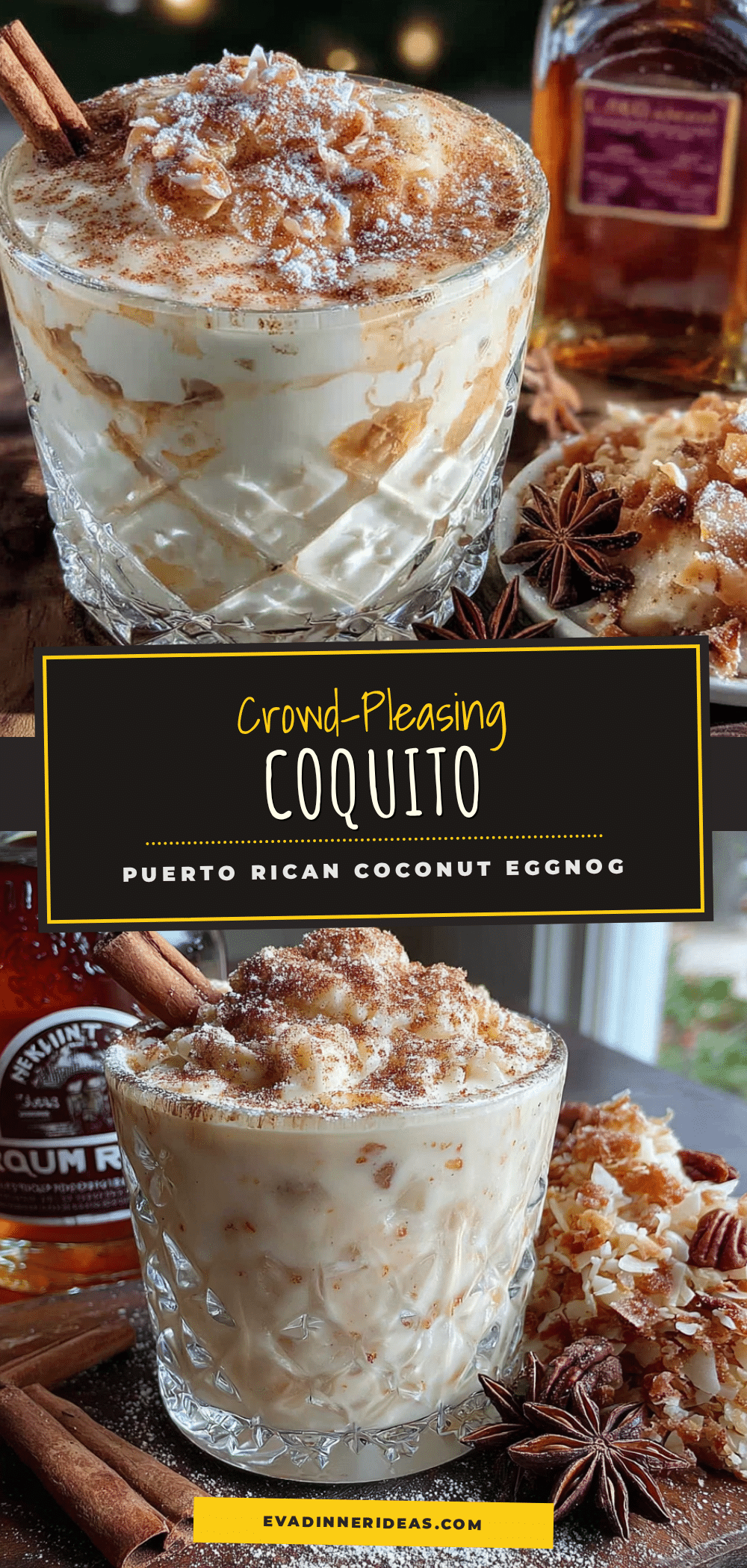
Crowd-Pleasing Coquito: Best Puerto Rican Coconut Eggnog Recipe
This coquito is creamy without being cloying, spiced without being overpowering, and rich yet refreshing. It’s the perfect holiday drink that will have your guests hovering around the pitcher all night.
- Prep Time: 10 minutes
- Cook Time: 5 minutes
- Total Time: 4 hours 15 minutes (includes chilling)
- Yield: 8 servings 1x
- Category: Beverage
- Cuisine: Puerto Rican
Ingredients
- 1 can (15 oz) cream of coconut (preferably Coco López)
- 1 can (13.5 oz) full-fat coconut milk
- 1 can (14 oz) sweetened condensed milk
- 1 can (12 oz) evaporated milk
- 1 cup Puerto Rican rum (white or gold, e.g., Bacardí Gold)
- 1 teaspoon vanilla extract (pure)
- 1 cinnamon stick
- 1/2 teaspoon ground nutmeg
- 1/4 teaspoon ground cloves (optional)
- Pinch of salt
Instructions
- Prepare the spice infusion: In a small saucepan, combine the cinnamon stick, nutmeg, cloves, and about 1/4 cup of the coconut milk. Heat over medium-low heat for 3-4 minutes, stirring occasionally, until the milk is warm and fragrant. Do not let it boil. Remove from heat and let it cool for 5 minutes.
- Blend the base: In your blender, combine the cream of coconut, the remaining coconut milk, sweetened condensed milk, evaporated milk, and the warm spice mixture (including the cinnamon stick). Blend on high for 30-45 seconds until completely smooth and well combined. The mixture should look thick and creamy, like a milkshake.
- Add the rum and vanilla: With the blender running on low, slowly pour in the rum and vanilla extract. Blend for another 10 seconds just to incorporate. Taste and adjust if needed.
- Strain (optional but recommended): Pour the mixture through a fine-mesh strainer into your pitcher or bottle to catch any tiny bits of spice.
- Chill thoroughly: Cover the pitcher and refrigerate for at least 4 hours, but overnight is better. The flavors need time to meld.
- Serve and garnish: Give the coquito a good stir before serving. Pour into small glasses (4-6 ounces). Garnish with a cinnamon stick, star anise, or a sprinkle of ground nutmeg.
Notes
Coquito needs time to meld; make it at least 24 hours in advance. Don’t skip the salt—it enhances the coconut flavor. Serve ice-cold. For a non-alcoholic version, omit the rum and add extra coconut milk or vanilla extract.
Nutrition
- Serving Size: 4 ounces
- Calories: 300
- Sugar: 30
- Sodium: 80
- Fat: 16.5
- Saturated Fat: 14
- Carbohydrates: 32.5
- Protein: 4.5
Keywords: coquito, Puerto Rican coconut eggnog, holiday drink, coconut, rum, Christmas, eggnog