My sister-in-law had refused to eat corned beef for seventeen years. Seventeen years of St. Patrick’s Day dinners where she’d load up on potatoes and soda bread while eyeing the main dish like it had personally wronged her. Then last March, I got a text that made me laugh out loud. It was a photo of her plate — piled high with sliced brisket — and the caption read, “I don’t know what you did, but I just ate two helpings.”
Honestly, I wasn’t even trying to convert her. I was just tired. Tired of the traditional boiled version that always turned out tough and salty, tired of hovering over a pot for hours on a Tuesday night. So I threw everything in the slow cooker before work, drizzled on a Guinness glaze that I kind of made up on the spot, and crossed my fingers. By the time dinner rolled around, the apartment smelled like a Dublin pub had somehow taken up residence in my kitchen. The meat was so tender it practically fell apart when I looked at it. My sister-in-law showed up unannounced, took one bite, and sat down in stunned silence. She didn’t say a word about her seventeen-year boycott. She just grabbed the serving fork and helped herself to more.
That’s the thing about this easy slow cooker corned beef and cabbage with Guinness glaze. It doesn’t try to convince anyone. It just shows up, does its thing, and lets the results speak for themselves. Maybe you’ve got a picky eater in your house, or maybe you’re just someone who wants a St. Patrick’s Day feast without the stress. Either way, this recipe has a way of winning people over when they least expect it. I keep making it because it proves that sometimes the best meals come from taking the easy route — and that’s a lesson I’m happy to learn again and again.
Why You’ll Love This Recipe
Let’s be real for a second. Corned beef and cabbage has a reputation for being a bit of a project. The traditional method involves simmering on the stovetop for hours, watching the liquid level, and hoping the meat doesn’t turn into shoe leather. This version throws all that stress out the window. Here’s why it works so well for busy weeknights:
- Set It and Forget It: The slow cooker does all the heavy lifting. You’re looking at about 10 minutes of active prep time in the morning, and then dinner takes care of itself while you handle your day.
- Fork-Tender Meat Every Time: Low and slow cooking breaks down the brisket’s connective tissue until it’s so tender you can pull it apart with a spoon. No more chewy, disappointing slices.
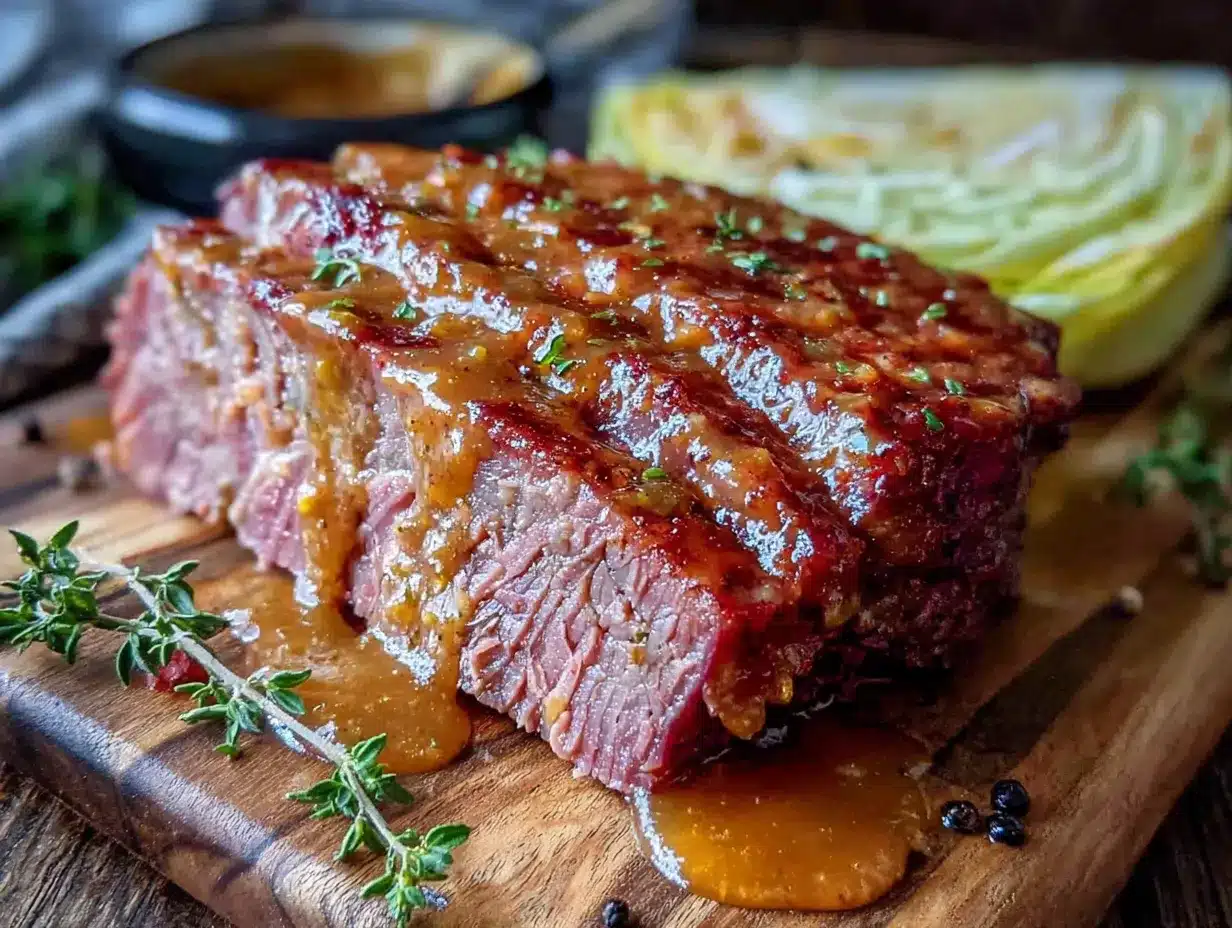
- A Glaze That Steals the Show: The Guinness glaze is where the magic happens. It reduces into a sticky, sweet, slightly bitter coating that caramelizes beautifully and makes the whole dish feel elevated without any extra effort.
- One-Pot Cleanup: Everything cooks in a single slow cooker insert. Less dishes, more time relaxing. That’s a win in my book.
- Crowd-Pleasing Flavor: The combination of malt, brown sugar, and warm spices hits that perfect balance of savory and sweet. Even self-proclaimed corned beef skeptics (yes, I’m looking at you, sister-in-law) come back for seconds.
What makes this recipe different from other slow cooker versions is that glaze. Most recipes just dump everything in and call it a day. By taking the extra five minutes to reduce the Guinness with brown sugar and mustard, you get a finish that tastes like you spent hours fussing. It’s the kind of meal that makes you close your eyes after the first bite — not because it’s complicated, but because it’s exactly right. Comfort food reimagined: easier, faster, but with the same soul-soothing satisfaction.
What Ingredients You Will Need
This recipe relies on simple, grocery-store ingredients that come together to create something surprisingly complex. You probably already have most of these in your pantry or fridge.
For the Corned Beef
- 1 (3-4 pound) corned beef brisket with seasoning packet – Look for a flat-cut brisket if you can find it. It’s leaner and slices more evenly than the point cut. I usually grab whatever brand is on sale at the grocery store, but I’ve had good luck with the one from Trader Joe’s.
- 1 large yellow onion, sliced into thick rings – The onion creates a natural rack for the meat to sit on, which prevents it from sitting in its own fat. It also adds sweetness to the cooking liquid.
- 3 cloves garlic, smashed – Whole cloves infuse the broth without burning or turning bitter during the long cook time.
- 1 tablespoon whole black peppercorns – These add a gentle heat that builds as the meat cooks. Skip the pre-ground stuff here — whole peppercorns release flavor slowly and won’t make the broth gritty.
- 2 bay leaves – A classic aromatic that adds subtle herbal notes.
- 4 cups low-sodium beef broth – You want enough liquid to come about halfway up the brisket. Water works in a pinch, but broth adds depth.
- 1 cup Guinness Draught stout – The beer adds richness and a slight bitterness that balances the saltiness of the corned beef. Don’t use a super hoppy IPA here — the bitterness would be overwhelming.
For the Guinness Glaze
- 1/2 cup Guinness Draught stout – This gets reduced down to concentrate the flavor.
- 1/4 cup packed brown sugar – Light or dark both work. Dark brown sugar adds more molasses flavor, which I personally prefer.
- 2 tablespoons Dijon mustard – The tanginess cuts through the richness of the beef. Whole grain mustard is also lovely here for texture.
- 1 tablespoon apple cider vinegar – A splash of acidity brightens everything up and keeps the glaze from being cloyingly sweet.
For the Cabbage and Vegetables
- 1 small head green cabbage, cut into 8 wedges – Keep the core intact on each wedge so the leaves hold together during cooking. Savoy cabbage works too, but it’s more delicate and may cook faster.
- 1 pound baby potatoes (Yukon Gold or red) – These hold their shape well and get perfectly tender in the broth. No need to peel them — the skins add texture and nutrients.
- 4 large carrots, peeled and cut into 2-inch chunks – Thick chunks won’t turn to mush. If your carrots are thin, leave them whole.
- Fresh parsley, chopped (for garnish) – Optional, but a sprinkle of green makes the finished dish look restaurant-worthy.
Equipment Needed
You don’t need a fancy kitchen to pull this off. Here’s what you’ll need:
- Slow cooker (6-quart or larger) – A 6-quart model fits a 3-4 pound brisket comfortably with room for the vegetables. If yours is smaller, just cook the meat alone and add the veggies later. I’ve been using a basic Crock-Pot for years and it works perfectly.
- Small saucepan – For making the glaze. Any small pot will do.
- Sharp chef’s knife – For slicing the onion, cabbage, and carrots. A dull knife makes prep take twice as long.
- Cutting board – Preferably one with a groove to catch juices.
- Tongs – For flipping the brisket and removing it from the slow cooker without it falling apart.
- Measuring cups and spoons – For the glaze ingredients.
- Fork or meat thermometer – To check for doneness. The meat should reach 190-200°F internally for that pull-apart texture.
If you don’t have a slow cooker, you can use a Dutch oven and cook the brisket in a 300°F oven for 3-4 hours. The glaze step stays the same. But honestly, the slow cooker makes this so much easier — especially on a busy weekday when you don’t want to babysit the oven.
Preparation Method
This method is broken down into three simple stages. Take it one step at a time and you’ll have a stunning dinner with minimal effort.
Stage 1: Prep and Slow Cook the Brisket
- Rinse and pat dry the brisket. Remove the corned beef from its packaging and rinse it under cold water. This washes off some of the excess salt and brine. Pat it completely dry with paper towels. Don’t skip this — the glaze sticks better to dry meat.
- Layer the aromatics. Spread the sliced onion rings across the bottom of your slow cooker. Smash the garlic cloves with the flat side of your knife and toss them in. Add the whole peppercorns and bay leaves. This creates a flavorful bed for the meat.
- Place the brisket fat-side up. Set the brisket on top of the onions. The fat cap will render down during cooking, basting the meat and keeping it moist. If your brisket doesn’t have a fat cap, just place it with the fattiest side facing up.
- Sprinkle the seasoning packet. Open the little packet that came with the corned beef and sprinkle it evenly over the top. This usually contains pickling spice blend — coriander, mustard seed, allspice, that sort of thing. It adds that classic corned beef flavor.
- Add the liquids. Pour the beef broth and 1 cup of Guinness around the brisket. Don’t pour it directly over the top or you’ll wash off the seasoning. The liquid should come about halfway up the sides of the meat. If it doesn’t, add a little more broth or water.
- Cook low and slow. Cover the slow cooker and cook on LOW for 8-10 hours or on HIGH for 4-5 hours. Low is better here — the longer, gentler cooking time gives you that fall-apart texture. You’ll know it’s done when you can insert a fork into the thickest part and it slides in with almost no resistance.
Stage 2: Make the Guinness Glaze
- Combine glaze ingredients. About 30 minutes before the brisket is done, combine the remaining 1/2 cup Guinness, brown sugar, Dijon mustard, and apple cider vinegar in a small saucepan.
- Simmer and reduce. Bring the mixture to a boil over medium heat, then reduce to a simmer. Let it bubble away for 8-10 minutes, stirring occasionally, until it thickens to a syrupy consistency. It should coat the back of a spoon. Watch it carefully toward the end — it can go from perfect to burnt in about 30 seconds.
- Set aside. Remove the glaze from the heat and let it cool slightly while you finish the brisket. It will thicken more as it cools.
Stage 3: Add Vegetables and Finish
- Remove the brisket. Carefully lift the cooked brisket out of the slow cooker using tongs and transfer it to a cutting board. Tent it loosely with foil to keep it warm. Don’t worry if a few onion slices stick to the bottom — that’s normal.
- Add the vegetables. Toss the baby potatoes and carrot chunks into the hot broth in the slow cooker. Nestle the cabbage wedges in among the vegetables, cut-side down. Cover and cook on HIGH for 30-45 minutes, or until the vegetables are tender when pierced with a fork.
- Glaze the brisket. While the vegetables cook, brush or spoon the Guinness glaze all over the top and sides of the brisket. For a thicker, stickier coating, you can pop the glazed brisket under the broiler for 3-4 minutes — just watch it closely so the sugar doesn’t burn.
- Slice against the grain. Once the vegetables are done, slice the brisket against the grain into 1/2-inch thick slices. Cutting against the grain is crucial — it shortens the muscle fibers and makes each bite tender instead of chewy. Look for the direction the lines of meat run and cut perpendicular to them.
- Serve it up. Arrange the sliced brisket on a platter with the potatoes, carrots, and cabbage wedges. Spoon a little of the cooking broth over the vegetables for extra flavor. Garnish with fresh parsley if you’re feeling fancy.
Cooking Tips & Techniques
I’ve made this recipe about a dozen times now, and I’ve learned a few things the hard way. Here’s what I wish someone had told me the first time:
Don’t skip the rinse. The first time I made corned beef in the slow cooker, I skipped the rinsing step because I was in a hurry. Big mistake. The meat came out so salty I could barely eat it. That brine is intense, and a quick rinse under cold water makes a huge difference.
Low and slow is non-negotiable. I know it’s tempting to crank the slow cooker to high and get dinner done faster. But with corned beef, the low setting is your friend. The collagen in the brisket needs time to break down into gelatin, and that only happens with gentle, prolonged heat. High heat will give you tough, dry meat every time.
Watch the glaze like a hawk. The first time I made the Guinness glaze, I walked away to check my email and came back to a burnt, smoky mess. The sugar in the brown sugar caramelizes quickly once the liquid reduces. Stay nearby and stir frequently during the last few minutes.
Timing is everything with the cabbage. If you add the cabbage at the beginning with the meat, you’ll end up with sad, gray, mushy leaves. Adding it during the last 30-45 minutes keeps it vibrant and gives it just enough time to soften while still holding its shape. The same goes for the potatoes and carrots — they need less time than the meat, so adding them later keeps them from turning to mush.
Let the brisket rest before slicing. I know you’re hungry. I am too. But if you slice the brisket right when it comes out of the slow cooker, it will fall apart into a crumbly mess. Let it rest under foil for 10-15 minutes. The juices redistribute, and the meat firms up just enough to slice cleanly.
Variations & Adaptations
One of the best things about this recipe is how flexible it is. Here are a few ways to switch it up:
For a leaner option: Trim any visible fat from the brisket before cooking. The meat will still be tender, but you’ll lose some of the richness from the rendered fat. You can also swap the beef broth for chicken broth to lighten the flavor profile.
Make it gluten-free: This one’s easy — just use a gluten-free stout or porter in place of the Guinness. Brands like Omission and Glutenberg make excellent gluten-free dark beers. Double-check your broth and mustard labels too, as some brands add gluten-containing ingredients.
Add a smoky twist: For a deeper flavor, add 1 teaspoon of smoked paprika to the glaze along with the other ingredients. It gives the dish a subtle campfire note that pairs beautifully with the maltiness of the Guinness.
Vegetable swaps: Not a fan of cabbage? Swap in Brussels sprouts (halved) or turnips. In the summer, I’ve added chunks of zucchini during the last 20 minutes of cooking — they soak up the broth beautifully. You can also swap the baby potatoes for sweet potatoes or parsnips for a different flavor profile.
Spice it up: Add 1/2 teaspoon of red pepper flakes to the cooking liquid for a gentle heat. Or stir a minced chipotle pepper in adobo into the glaze for a smoky-spicy kick. I tried this once on a whim and it was surprisingly good.
Serving & Storage Suggestions
This dish is best served hot, right after the vegetables finish cooking. Arrange the sliced brisket on a warm platter with the potatoes, carrots, and cabbage wedges nestled around it. Drizzle a little of the cooking broth over everything — it adds moisture and flavor. A sprinkle of fresh parsley or chives adds a pop of color that makes the whole thing look intentional.
For drinks, you can’t go wrong with more Guinness, but a crisp lager or even a dry cider works beautifully too. The slight acidity cuts through the richness of the meat. If you’re serving wine, go with a bold red like a Zinfandel or a Malbec.
Leftovers keep well in the fridge for 3-4 days. Store the sliced brisket and vegetables together in an airtight container, with a little of the cooking broth poured over to keep everything moist. The flavors actually deepen overnight — the next day’s sandwich is often better than the first dinner.
To reheat, warm the brisket and vegetables gently in a covered skillet over medium-low heat with a splash of broth or water. The microwave works in a pinch, but it can toughen the meat. For the best texture, reheat low and slow.
This recipe also freezes beautifully. Slice the cooled brisket and pack it in a freezer-safe container with some broth. It will keep for up to 3 months. Thaw overnight in the fridge before reheating. The cabbage doesn’t freeze well — it gets mushy — so plan to eat that fresh.
Nutritional Information & Benefits
Here’s the approximate nutritional breakdown for one serving (about 6 ounces of brisket with vegetables):
- Calories: 485
- Protein: 32g
- Fat: 22g
- Carbohydrates: 38g
- Fiber: 6g
- Sugar: 12g
- Sodium: 980mg
Corned beef is a good source of protein, iron, and B vitamins — particularly B12, which supports energy production and brain function. The cabbage is packed with vitamin C and fiber, while the carrots contribute beta-carotene and vitamin A. The potatoes provide potassium and complex carbohydrates for sustained energy.
This dish is naturally dairy-free and can be made gluten-free with a few simple swaps (see the variations section). It’s relatively high in sodium due to the brining process, so if you’re watching your salt intake, be mindful of portion sizes and don’t add extra salt during cooking. The rinse step helps reduce the sodium content significantly.
Conclusion
This easy slow cooker corned beef and cabbage with Guinness glaze has become my go-to for St. Patrick’s Day, but honestly, I make it year-round. It’s the kind of recipe that feels special without requiring a special occasion — or a ton of effort. The slow cooker does the work, the glaze adds the wow factor, and you get to show up at the table looking like a hero.
I love this recipe because it proves that you don’t need fancy techniques or hours of hands-on time to create something memorable. It’s comfort food at its best: warm, satisfying, and made with love (and a little beer). Whether you’re feeding a crowd or just meal-prepping for the week, this dish delivers every single time.
I’d love to hear how it turns out for you! Drop a comment below and let me know if you tried any variations — or if you managed to convert a corned beef skeptic in your own life. Don’t forget to share this recipe with a friend who needs a stress-free dinner idea. Happy cooking!
Frequently Asked Questions
Can I cook this on high instead of low?
You can, but I really don’t recommend it. Cooking on high for 4-5 hours will work in a pinch, but the meat won’t be as tender and the texture will be noticeably different. Low and slow gives the collagen time to break down properly, resulting in that fork-tender texture you’re after.
Do I have to use Guinness?
Not at all. Any dark stout or porter will work. If you don’t drink beer, you can substitute an equal amount of beef broth mixed with 1 tablespoon of molasses for a similar depth of flavor. The alcohol cooks off during the simmering, so the flavor remains without the buzz.
Why is my corned beef tough?
Two common culprits: not cooking it long enough, or cooking it on too high a heat. Corned beef needs time for the connective tissue to break down. If it’s tough after the recommended cooking time, let it cook another hour or two on low. Also, make sure you’re slicing against the grain — that makes a huge difference in perceived tenderness.
Can I add the cabbage at the beginning?
You can, but you won’t like the result. Cabbage cooked for 8 hours turns into a sad, mushy, sulfur-smelling mess. Adding it during the last 30-45 minutes keeps it vibrant and gives it a pleasant texture that still has a little bite.
How do I store leftovers?
Store the sliced brisket and vegetables in an airtight container in the refrigerator for up to 4 days. Pour a little of the cooking broth over everything to keep it moist. For longer storage, freeze the brisket (without the cabbage) for up to 3 months. Thaw overnight in the fridge before reheating gently on the stovetop.
Pin This Recipe!
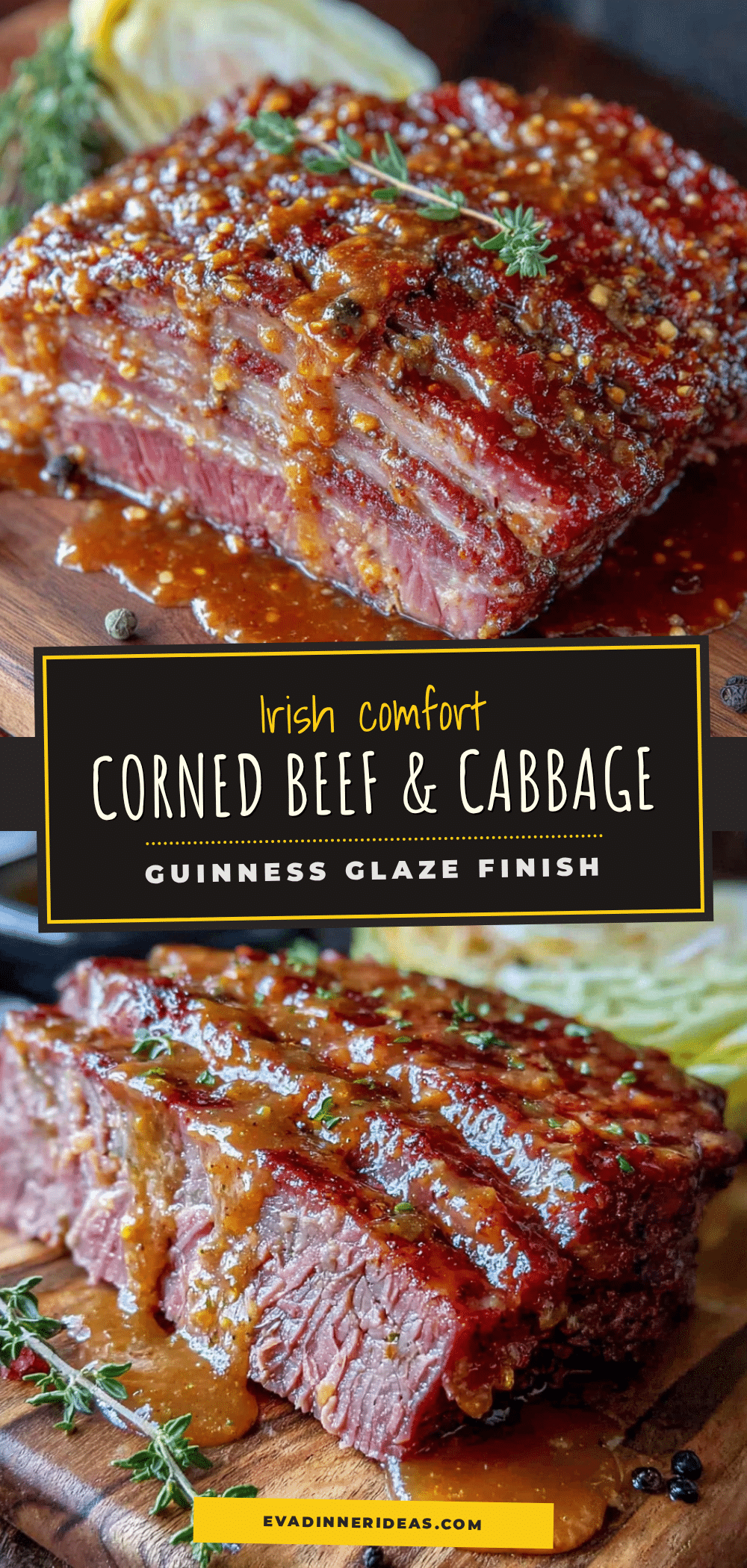
Easy Slow Cooker Corned Beef & Cabbage with Guinness Glaze
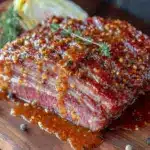
This easy slow cooker corned beef and cabbage with Guinness glaze is fork-tender, flavorful, and requires minimal effort. The Guinness glaze adds a sweet and slightly bitter coating that elevates the dish, making it perfect for St. Patrick’s Day or any busy weeknight.
- Prep Time: 10 minutes
- Cook Time: 8 hours 30 minutes
- Total Time: 8 hours 40 minutes
- Yield: 6 servings 1x
- Category: Main Course
- Cuisine: Irish
Ingredients
- 1 (3-4 pound) corned beef brisket with seasoning packet
- 1 large yellow onion, sliced into thick rings
- 3 cloves garlic, smashed
- 1 tablespoon whole black peppercorns
- 2 bay leaves
- 4 cups low-sodium beef broth
- 1 cup Guinness Draught stout
- 1/2 cup Guinness Draught stout
- 1/4 cup packed brown sugar
- 2 tablespoons Dijon mustard
- 1 tablespoon apple cider vinegar
- 1 small head green cabbage, cut into 8 wedges
- 1 pound baby potatoes (Yukon Gold or red)
- 4 large carrots, peeled and cut into 2-inch chunks
- Fresh parsley, chopped (for garnish)
Instructions
- Rinse the corned beef brisket under cold water and pat dry with paper towels.
- Spread sliced onion rings across the bottom of a 6-quart slow cooker. Add smashed garlic cloves, whole peppercorns, and bay leaves.
- Place the brisket fat-side up on top of the onions. Sprinkle the seasoning packet evenly over the top.
- Pour beef broth and 1 cup Guinness around the brisket (not directly on top). The liquid should come about halfway up the sides of the meat.
- Cover and cook on LOW for 8-10 hours or on HIGH for 4-5 hours, until the brisket is fork-tender.
- About 30 minutes before the brisket is done, combine the remaining 1/2 cup Guinness, brown sugar, Dijon mustard, and apple cider vinegar in a small saucepan. Bring to a boil, then simmer for 8-10 minutes until thickened to a syrupy consistency. Set aside.
- Carefully remove the cooked brisket from the slow cooker and transfer to a cutting board. Tent loosely with foil.
- Add baby potatoes and carrot chunks to the hot broth in the slow cooker. Nestle cabbage wedges cut-side down among the vegetables. Cover and cook on HIGH for 30-45 minutes until tender.
- While vegetables cook, brush or spoon the Guinness glaze over the brisket. For a thicker coating, broil for 3-4 minutes.
- Slice the brisket against the grain into 1/2-inch thick slices.
- Arrange sliced brisket on a platter with potatoes, carrots, and cabbage wedges. Spoon some cooking broth over the vegetables and garnish with fresh parsley.
Notes
Don’t skip rinsing the brisket to reduce saltiness. Cook on LOW for best texture. Add cabbage during the last 30-45 minutes to avoid mushiness. Let brisket rest before slicing against the grain. The glaze can burn quickly, so watch it closely.
Nutrition
- Serving Size: 1 serving (about 6 o
- Calories: 485
- Sugar: 12
- Sodium: 980
- Fat: 22
- Saturated Fat: 8
- Carbohydrates: 38
- Fiber: 6
- Protein: 32
Keywords: slow cooker corned beef, corned beef and cabbage, Guinness glaze, St. Patrick's Day, easy dinner, one-pot meal