My husband claimed to hate cooked carrots for thirty-seven years. Thirty-seven years. He’d pick them out of stews, push them to the side of pot roasts, and politely decline any dish where a carrot had been subjected to heat. I believed him. I mean, the man is stubborn about his dislikes in a way that’s almost admirable. So when I pulled a sheet pan of these honey dijon roasted carrots and parsnips out of the oven last Tuesday, I made a small batch. Just for me. A little side dish to go with my roasted chicken while he had his usual plain broccoli.
I was standing at the counter, eating one straight off the pan—because honestly, that’s when they’re best—when I heard footsteps behind me. I turned around, and there he was. Reaching over my shoulder. Grabbing a parsnip. Then another. Then a carrot. Without a word. I just watched him eat three pieces before I finally said, “I thought you hated cooked carrots.” He shrugged, chewed, and muttered something about how these were different. That was it. He finished the entire pan. I had to make another batch just to have some for myself.
That’s the thing about this recipe, you know? It has a quiet way of changing minds without even trying. Maybe you’ve got someone at your table who claims to dislike root vegetables, or maybe you’re just looking for a side dish that actually gets eaten instead of pushed around the plate. Either way, these honey dijon roasted carrots and parsnips have a way of surprising people. The honey brings out their natural sweetness, the dijon adds a little tangy kick, and roasting at high heat gives them those caramelized edges that make vegetables taste like candy. I’ve been making them ever since that night, and honestly, I don’t think I’ll ever go back to plain roasted veggies again.
Why You’ll Love This Recipe
Let me tell you why this recipe has become my go-to side dish for pretty much everything. I’ve tested it at least a dozen times—sometimes with different veggie combinations, sometimes adjusting the roasting time, and once accidentally when I ran out of honey and used maple syrup instead (spoiler: that worked great too). Through all those trials, I’ve landed on a version that’s practically foolproof and genuinely kid-approved.
- Quick & Easy: Twenty minutes from start to finish. That’s it. These honey dijon roasted carrots and parsnips come together faster than you can convince a picky eater to try a bite. Perfect for those weeknights when you need something on the table fast.
- Simple Ingredients: You probably already have honey, dijon mustard, and olive oil in your kitchen. The only things you might need to grab are the carrots and parsnips themselves, and those are cheap and available year-round at any grocery store.
- Perfect for Family Meals: This side dish goes with almost everything—roasted chicken, pork chops, steak, fish, or even a simple pasta dinner. It’s versatile enough for Sunday supper or a Tuesday night scramble.
- Crowd-Pleaser: I’ve served these at holiday dinners, potlucks, and regular family meals, and they disappear every single time. Kids love the sweetness, adults love the savory kick from the mustard, and everyone loves the caramelized edges.
- Unbelievably Delicious: The combination of honey and dijon creates this glaze that’s sweet, tangy, and slightly sharp all at once. When it hits the hot oven, it caramelizes into these sticky, golden edges that are honestly addictive. I’ve caught myself eating them cold from the fridge the next day.
What makes these honey dijon roasted carrots and parsnips different from other recipes is the balance. A lot of recipes go too sweet or too tangy, but this one hits that perfect middle ground. The parsnips add a subtle peppery note that the carrots don’t have, and together they create a more interesting flavor than either vegetable alone. Plus, roasting at 425°F gives you that perfect texture—tender inside, crispy and caramelized on the outside. It’s comfort food that feels a little fancy without any extra effort.
What Ingredients You Will Need
This recipe uses simple, wholesome ingredients to deliver bold flavor and satisfying texture without any fuss. Most of these are pantry staples, and the fresh vegetables are easy to find and budget-friendly.
- Carrots (1 pound, peeled and cut into 3-inch sticks): Look for medium-sized carrots that are firm and bright orange. I prefer regular carrots over baby carrots because they roast better and have more flavor. If your carrots are thick, cut them in half lengthwise so they cook evenly.
- Parsnips (1 pound, peeled and cut into 3-inch sticks): Parsnips look like pale carrots and have a slightly sweet, earthy, and peppery flavor. Choose ones that are firm and not too thick. Smaller parsnips tend to be less woody in the center.
- Honey (3 tablespoons): Use a good-quality honey for the best flavor. I like local honey when I can find it, but any plain honey works. If you’re vegan, you can substitute maple syrup or agave nectar.
- Dijon Mustard (2 tablespoons): This is where the tangy kick comes from. I recommend Grey Poupon or Maille for the best flavor, but any dijon mustard works. Don’t use yellow mustard—it’s too sharp and not as smooth.
- Olive Oil (2 tablespoons): Extra virgin olive oil gives the best flavor, but regular olive oil works too. You can also use avocado oil if you prefer a neutral taste.
- Garlic (2 cloves, minced): Fresh garlic is best here. It adds a savory depth that balances the sweetness of the honey. Pre-minced garlic from a jar works in a pinch, but fresh is noticeably better.
- Salt (1/2 teaspoon, or to taste): I use fine sea salt. Kosher salt works too, but you might need a little more since the crystals are larger.
- Black Pepper (1/4 teaspoon, freshly ground): Freshly ground pepper has more flavor than pre-ground. It’s a small detail that makes a difference.
- Fresh Thyme (1 teaspoon, chopped, optional but recommended): Thyme adds an earthy, slightly floral note that pairs beautifully with the honey and dijon. If you don’t have fresh, use 1/2 teaspoon dried thyme.
- Fresh Parsley (for garnish, optional): A sprinkle of fresh parsley adds color and a fresh finish. It’s not necessary, but it makes the dish look prettier.
One thing I’ve learned through testing is that the quality of your honey really matters here. Cheap honey tends to be thinner and less flavorful, and it can make the glaze watery. A good, thick honey will coat the vegetables better and caramelize more nicely in the oven. Also, if your parsnips are on the larger side, check the center for woodiness. Sometimes big parsnips have a tough, fibrous core that you’ll want to cut out before roasting.
For substitutions, you can swap the honey with maple syrup for a slightly different sweetness, or use whole-grain mustard instead of dijon for a more textured glaze. If you’re avoiding oil, you can use melted butter or ghee instead of olive oil—it adds a rich, nutty flavor that’s absolutely delicious.
Equipment Needed
You don’t need much fancy equipment for these honey dijon roasted carrots and parsnips, which is part of why I love this recipe so much. Here’s what you’ll need:
- Sheet Pan (half-sheet size, about 13×18 inches): A good sheet pan is worth its weight in gold. I recommend a heavy-duty one with rimmed edges so nothing drips off. Avoid nonstick pans if you can—they don’t brown as well. My favorite is a simple aluminum half-sheet pan from a restaurant supply store. It cost me about twelve dollars and has lasted for years.
- Parchment Paper (optional but helpful): Lining your pan makes cleanup a breeze. I use unbleached parchment paper. You can also use a silicone baking mat, though it won’t get quite as crispy on the bottom.
- Chef’s Knife: A sharp chef’s knife makes cutting the carrots and parsnips into uniform sticks much easier and safer. Dull knives are more dangerous than sharp ones, trust me.
- Cutting Board: Any sturdy cutting board works. I prefer wood because it’s gentler on knife blades.
- Vegetable Peeler: A good peeler saves time. I like the Y-shaped peelers—they’re faster and more comfortable to use than straight ones.
- Mixing Bowl: A medium bowl for tossing the vegetables with the glaze. Any bowl works, but a wide one makes mixing easier.
- Measuring Spoons: For measuring the honey, mustard, oil, and seasonings. Honey is sticky, so lightly spray your measuring spoon with cooking spray first—it’ll slide right off.
- Small Bowl or Jar: For whisking together the glaze ingredients before pouring them over the vegetables.
- Spatula or Wooden Spoon: For tossing everything together. I use a silicone spatula because it’s flexible and doesn’t scratch my bowl.
If you don’t have a sheet pan, you can use a large baking dish or even a cast-iron skillet. Just make sure the vegetables are in a single layer so they roast instead of steam. And if you’re short on time, you can skip the parchment paper—just oil the pan directly. It’ll still work, just with a little more scrubbing afterward.
Preparation Method
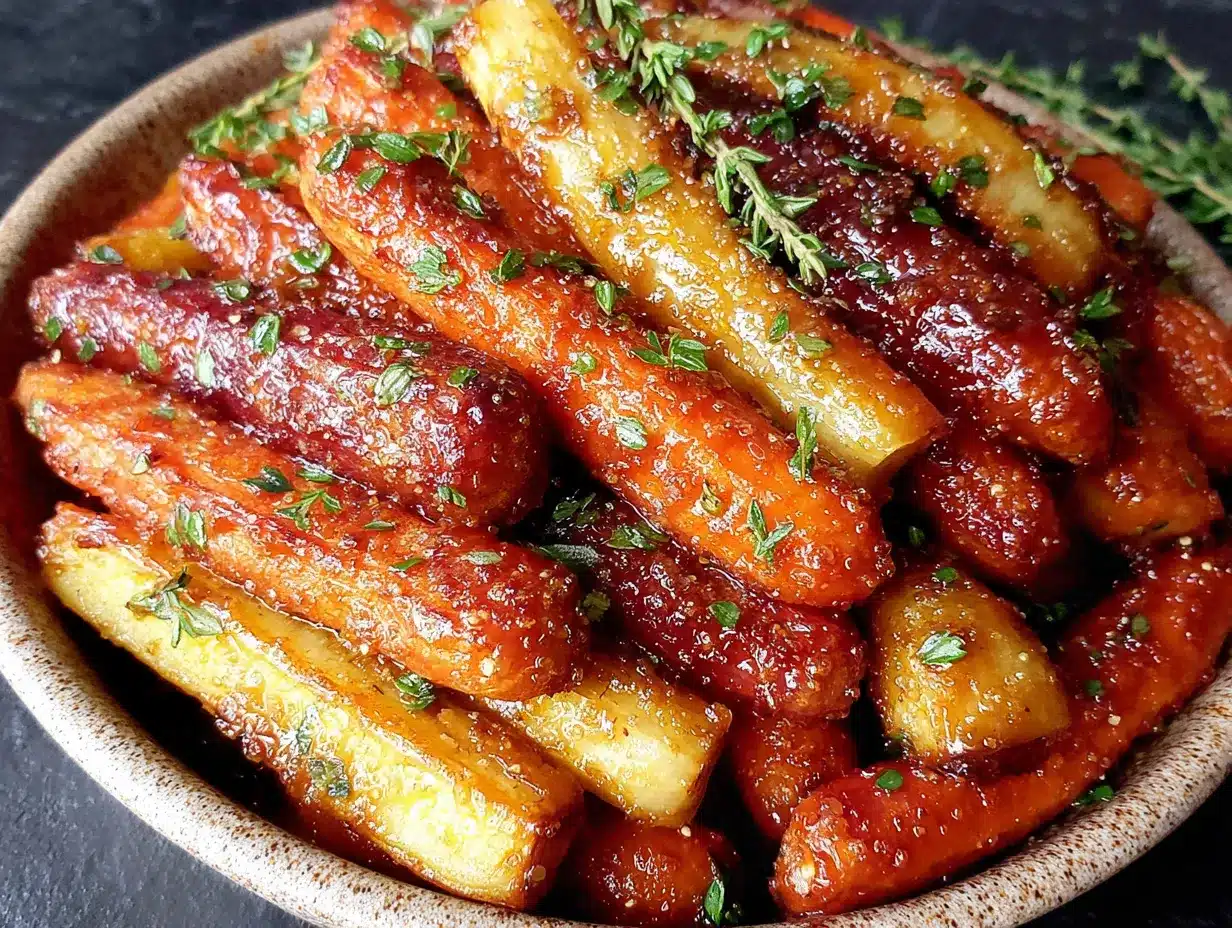
Let me walk you through making these honey dijon roasted carrots and parsnips step by step. I’ve included all the little details I’ve learned from making this recipe dozens of times, so you get perfect results on your first try.
- Preheat your oven to 425°F (220°C). This high heat is crucial for getting those caramelized edges. While the oven heats up, position the rack in the middle. Give it a full 15-20 minutes to reach temperature—a properly hot oven makes all the difference.
- Prepare your vegetables. Peel 1 pound of carrots and 1 pound of parsnips. Trim off the tops and the thin root ends. Cut them into sticks about 3 inches long and roughly 1/2 inch thick. If any pieces are particularly thick, cut them in half lengthwise so everything cooks evenly. Try to keep the pieces similar in size—this is the most important step for even cooking. I usually aim for pieces that are about the thickness of my index finger.
- Make the glaze. In a small bowl or jar, whisk together 3 tablespoons honey, 2 tablespoons dijon mustard, 2 tablespoons olive oil, 2 minced garlic cloves, 1/2 teaspoon salt, and 1/4 teaspoon black pepper. If you’re using thyme, add 1 teaspoon chopped fresh thyme (or 1/2 teaspoon dried) now. Whisk until everything is well combined. The mixture should be smooth and slightly thick. Give it a taste—it should be sweet, tangy, and savory all at once. Adjust salt or honey to your preference.
- Toss the vegetables. Place the carrot and parsnip sticks in a large mixing bowl. Pour the glaze over them and toss well with a spatula or your hands. Make sure every piece is coated. I like to use my hands for this—it’s faster and I can feel if any pieces are sticking together. Don’t be shy about really coating them.
- Arrange on the sheet pan. Line a rimmed sheet pan with parchment paper (or lightly oil it). Spread the glazed vegetables in a single, even layer. Make sure they’re not crowded—if they’re touching too much, they’ll steam instead of roast. If your pan is too small, use two pans or cook in batches. A little space between pieces is what gives you those crispy edges.
- Roast for 15-20 minutes. Place the pan in the preheated oven. Roast for 10 minutes, then remove the pan and flip the vegetables with a spatula. Return to the oven and roast for another 5-10 minutes. The vegetables are done when they’re tender enough to pierce easily with a fork and the edges are golden brown and caramelized. Some pieces might have darker spots—that’s good, those are the best parts.
- Check for doneness. The cooking time can vary depending on how thick you cut your vegetables and how hot your oven runs. Start checking at 15 minutes. The carrots should be tender but not mushy, and the parsnips should be soft with a slight bite. If you want them more caramelized, give them an extra 2-3 minutes, but watch carefully so they don’t burn.
- Finish and serve. Remove the pan from the oven. If you’re using fresh parsley, sprinkle it over the top now. Let the vegetables rest on the pan for 2-3 minutes before transferring to a serving dish. This lets the glaze set a little. Serve warm, straight from the oven.
A few things I’ve learned the hard way: Don’t skip the flipping step. I once forgot, and the bottoms got too dark while the tops stayed pale. Also, if your vegetables are very thick, cut them smaller rather than roasting longer—longer roasting can dry them out. And here’s a pro tip: if you want extra caramelization, brush a little extra honey on the vegetables during the last 5 minutes of roasting. It creates a beautiful sticky glaze.
Cooking Tips & Techniques
After making these honey dijon roasted carrots and parsnips more times than I can count, I’ve picked up a few tricks that make a real difference. Let me share them with you.
Cut vegetables uniformly. This is the number one tip I give everyone. If some pieces are thicker than others, the thin ones will burn while the thick ones are still raw. Take the extra minute to make them all roughly the same size. I aim for pieces that are about 1/2 inch thick and 3 inches long. It doesn’t have to be perfect, but close counts.
Don’t overcrowd the pan. I know it’s tempting to cram everything onto one pan to save dishes, but overcrowding leads to steaming instead of roasting. The vegetables release moisture as they cook, and if they’re packed tight, that moisture has nowhere to go. Give them space. Use two pans if you need to, or cook in batches. The caramelization is worth the extra pan.
Use hot oven, hot pan. For the best caramelization, make sure your oven is fully preheated before the vegetables go in. Some people even preheat their sheet pan for 5 minutes before adding the vegetables—the sizzle when they hit the hot pan gives you better browning. I do this when I remember, and it really does help.
Flip halfway through. This ensures even cooking and browning on all sides. I set a timer for 10 minutes, flip everything, and then check again at 15 minutes. If you forget to flip, don’t panic—just flip them and add a few extra minutes. They’ll still be good.
Watch the honey. Honey can burn faster than other sweeteners because it has a lower smoke point. If you notice the glaze getting too dark before the vegetables are tender, tent the pan loosely with foil for the last few minutes. This slows down browning while the vegetables finish cooking.
Use room temperature ingredients. This is a small detail, but if your honey and mustard are cold, they won’t mix as smoothly with the oil. Let them sit on the counter for 10-15 minutes before making the glaze. It makes for a smoother, more emulsified coating.
One mistake I made early on was using too much honey. I thought more sweetness would be better, but it actually made the glaze runny and the vegetables soggy. Stick to the measurements—they’re balanced for a reason. Another time, I forgot to peel the parsnips, and the skins got tough and chewy. Always peel them. It makes a difference.
Variations & Adaptations
One of the best things about this recipe is how easy it is to adapt. I’ve tried several variations over the years, and they’ve all been delicious in their own way. Here are some of my favorites.
Maple Balsamic Version: Swap the honey for maple syrup and the dijon for balsamic vinegar. The result is a deeper, more complex sweetness with a tangy finish. This version is especially good in the fall or with roasted pork. I discovered this variation when I ran out of honey mid-recipe, and honestly, I might like it just as much as the original.
Spicy Honey Version: Add 1/4 teaspoon of cayenne pepper or red pepper flakes to the glaze. The heat balances the sweetness beautifully and gives the dish a little kick. My kids actually love this version—the heat is mild enough to be exciting without being overwhelming. Start with less and add more to taste.
Herb Garden Version: Add 1 tablespoon of fresh rosemary or sage (finely chopped) along with the thyme. These heartier herbs hold up well to roasting and add a lovely aromatic quality. I make this version when I have fresh herbs from my garden, and it always feels a little more special.
Roasted Vegetable Medley: Add other root vegetables like sweet potatoes, beets, or turnips. Just cut them to the same size as the carrots and parsnips and adjust the roasting time as needed. Beets will stain everything pink, so keep that in mind if you’re serving them to kids who might be put off by the color.
Air Fryer Version: Cook at 375°F (190°C) for 12-15 minutes, shaking the basket halfway through. The air fryer gives you even crispier edges in less time. You might need to work in batches depending on the size of your air fryer. This is my go-to method when I’m only making a small batch.
Garlic Lovers Version: Double the garlic and add 1/2 teaspoon of garlic powder to the glaze. Roasted garlic becomes sweet and mellow, and extra garlic never hurts. My husband, the former carrot hater, requests this version every time now.
For dietary adaptations, this recipe is naturally gluten-free and dairy-free. To make it vegan, simply swap the honey for maple syrup or agave. To make it low-FODMAP, use garlic-infused oil instead of fresh garlic and omit the garlic cloves.
Serving & Storage Suggestions
These honey dijon roasted carrots and parsnips are best served warm, straight from the oven, when the edges are still crispy and the glaze is sticky. But they’re also surprisingly good at room temperature, which makes them perfect for potlucks and holiday buffets.
Serving Temperature: Serve them hot or warm. If they’ve cooled down, you can reheat them in a 350°F oven for 5-7 minutes, or in the microwave for 1-2 minutes. The microwave won’t give you back the crispy edges, but it’ll warm them through just fine.
Presentation: Transfer the roasted vegetables to a warm serving platter. Sprinkle with fresh parsley or chives for color, and add a few cracks of black pepper on top. If you want to get fancy, drizzle a little extra honey over the top just before serving. It adds a nice sheen and a pop of sweetness.
Complementary Dishes: These vegetables pair beautifully with roasted chicken, grilled steak, pan-seared fish, or pork chops. They’re also great alongside a simple pasta dish or a hearty grain bowl. For holidays, they’re a wonderful addition to the Thanksgiving or Christmas table—they bring color and sweetness to balance out all the rich, savory dishes.
Beverage Pairings: A crisp white wine like Sauvignon Blanc or a dry Riesling complements the sweetness of the honey and the tang of the dijon. For non-alcoholic options, sparkling water with a squeeze of lemon or a light herbal tea works well.
Storage: Store leftover roasted vegetables in an airtight container in the refrigerator for up to 4 days. They’ll soften a bit as they sit, but the flavor actually improves. I’ve been known to eat them cold straight from the fridge as a snack.
Reheating: For best results, reheat in a 350°F oven for 5-7 minutes. This restores some of the crispy edges. The microwave works in a pinch—just don’t expect the same texture. If you’re reheating a large batch, spread them in a single layer on a sheet pan and warm them in the oven.
Freezing: These vegetables freeze surprisingly well. Let them cool completely, then transfer to a freezer-safe container or bag. They’ll keep for up to 3 months. To reheat, thaw in the refrigerator overnight, then warm in a 350°F oven until heated through. The texture won’t be quite as crisp as fresh, but the flavor will still be excellent.
One thing I love about this recipe is that the flavors actually get better after a day or two in the fridge. The honey and mustard meld together, and the garlic mellows out. I often make a double batch on purpose so I have leftovers for lunch the next day.
Nutritional Information & Benefits
These honey dijon roasted carrots and parsnips aren’t just delicious—they’re also packed with nutrients. Here’s a rough breakdown per serving (about 1 cup, based on 4 servings):
- Calories: Approximately 180-200
- Carbohydrates: 30-35g
- Fiber: 6-8g
- Sugar: 18-22g (mostly natural sugars from the vegetables and honey)
- Fat: 7-9g (mostly from olive oil)
- Protein: 2-3g
- Vitamin A: Over 200% of the daily value (from carrots)
- Vitamin C: 15-20% of the daily value
- Potassium: 10-15% of the daily value
Health Benefits: Carrots are famous for their beta-carotene content, which supports eye health and immune function. Parsnips are rich in fiber, folate, and vitamin C, which aids in collagen production and iron absorption. The olive oil provides healthy monounsaturated fats, while honey offers antioxidants and natural antibacterial properties. Together, these ingredients create a side dish that’s as good for you as it is tasty.
Dietary Considerations: This recipe is naturally gluten-free, dairy-free, and nut-free. To make it vegan, substitute the honey with maple syrup or agave. It’s also relatively low in calories for a vegetable dish, making it a great option for anyone watching their intake.
Potential Allergens: This recipe is free of the top eight allergens (milk, eggs, fish, shellfish, tree nuts, peanuts, wheat, and soy). However, if you have a mustard allergy, substitute the dijon with a mixture of apple cider vinegar and a pinch of turmeric for color.
I love that I can serve this dish to my family knowing it’s packed with nutrients they need. The kids get their vegetables without complaint, and I get the satisfaction of knowing they’re eating something genuinely healthy. It’s a win-win.
Conclusion
These honey dijon roasted carrots and parsnips have earned a permanent spot in my weekly dinner rotation. They’re quick enough for a busy Tuesday, fancy enough for a holiday table, and affordable enough to make any night feel special. The combination of sweet honey, tangy dijon, and caramelized roasted vegetables is simple but somehow magical—the kind of dish that makes you close your eyes after the first bite.
What I love most about this recipe is how adaptable it is. You can tweak the flavors, swap in different vegetables, or adjust the sweetness to your liking. It’s forgiving and flexible, which is exactly what a busy home cook needs. Whether you’re feeding picky eaters, impressing dinner guests, or just treating yourself to something delicious, these roasted vegetables deliver every time.
I’d love to hear how they turn out for you. Did your kids gobble them up? Did you try a variation that blew your mind? Drop a comment below and let me know—I read every single one and I love hearing about your kitchen wins. And if you snap a photo, tag me on social media so I can see your beautiful creation. Happy cooking, friends!
Frequently Asked Questions
Can I make these honey dijon roasted carrots and parsnips ahead of time?
Yes! You can prep the vegetables and make the glaze up to 24 hours in advance. Store them separately in the refrigerator, then toss and roast when you’re ready. You can also fully cook them and reheat later, though the texture won’t be quite as crispy.
Why are my roasted vegetables soggy instead of caramelized?
The most common culprit is overcrowding the pan. If the vegetables are too close together, they steam instead of roast. Make sure they’re in a single layer with space between each piece. Also, make sure your oven is fully preheated to 425°F before the pan goes in.
Can I use baby carrots instead of regular carrots?
You can, but I don’t recommend it. Baby carrots are already peeled and cut, but they have less flavor and tend to release more water as they roast, which can make the dish soggy. If you use them, pat them dry before tossing with the glaze and roast for a few minutes less.
How do I get the glaze to stick better to the vegetables?
Make sure your vegetables are completely dry before adding the glaze. Any moisture on the surface will prevent the glaze from adhering. Also, toss them thoroughly—I use my hands to make sure every piece is coated. If your glaze seems too thin, add a tiny bit more honey to thicken it.
Can I add other vegetables to this recipe?
Absolutely! Sweet potatoes, beets, turnips, and even Brussels sprouts work well. Just cut them to the same size as the carrots and parsnips so they cook evenly. Keep in mind that different vegetables have different cooking times, so you might need to adjust the roasting time slightly.
Pin This Recipe!
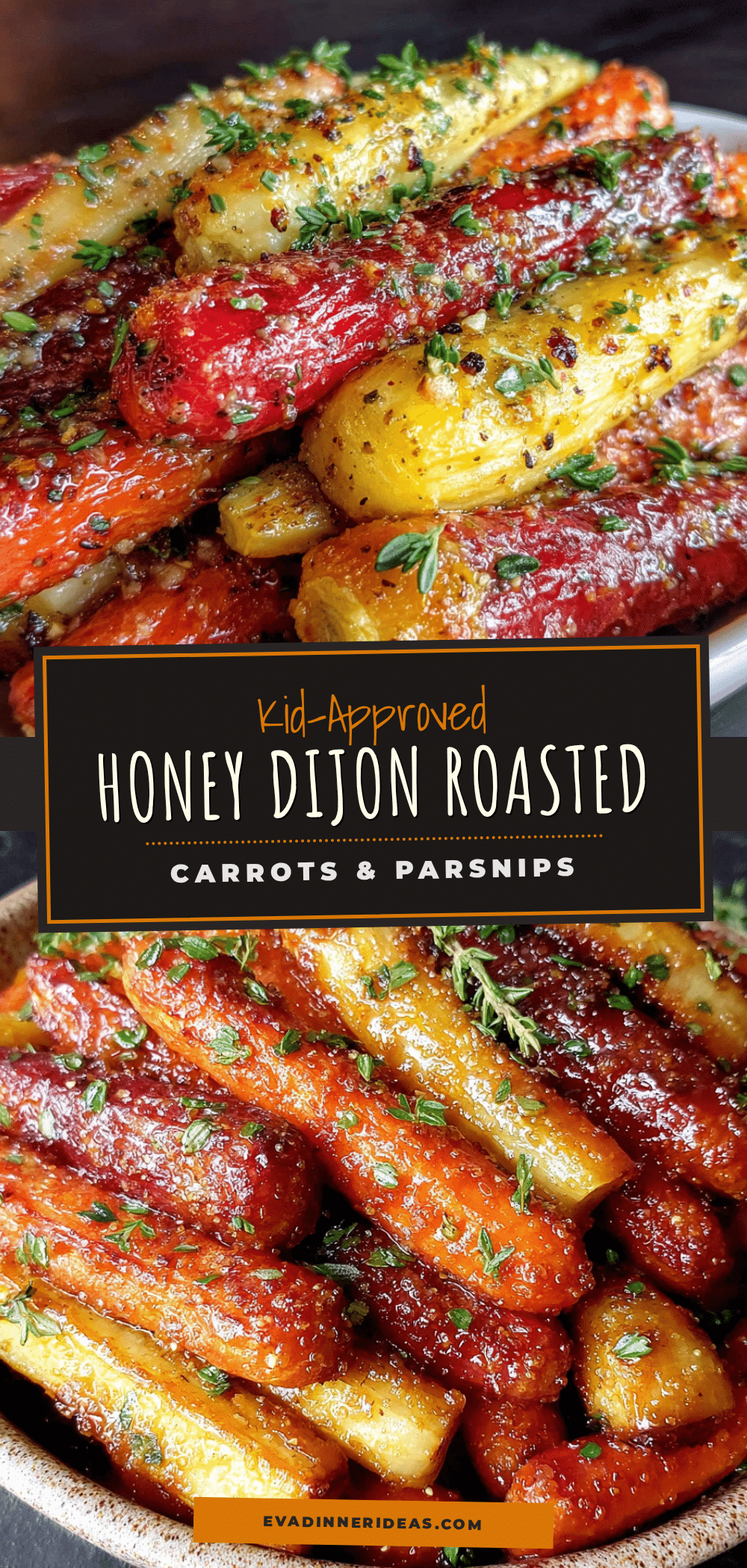
Kid-Approved Honey Dijon Roasted Carrots and Parsnips: Easy 20-Min Side

These honey dijon roasted carrots and parsnips are a quick and easy side dish that even picky eaters love. The honey brings out natural sweetness, dijon adds a tangy kick, and roasting at high heat creates caramelized edges that make vegetables taste like candy.
- Prep Time: 5 minutes
- Cook Time: 15-20 minutes
- Total Time: 20-25 minutes
- Yield: 4 servings 1x
- Category: Side Dish
- Cuisine: American
Ingredients
- 1 pound carrots, peeled and cut into 3-inch sticks
- 1 pound parsnips, peeled and cut into 3-inch sticks
- 3 tablespoons honey
- 2 tablespoons Dijon mustard
- 2 tablespoons olive oil
- 2 cloves garlic, minced
- 1/2 teaspoon salt
- 1/4 teaspoon black pepper, freshly ground
- 1 teaspoon fresh thyme, chopped (optional)
- Fresh parsley for garnish (optional)
Instructions
- Preheat your oven to 425°F (220°C). Position the rack in the middle and allow the oven to fully preheat.
- Prepare the vegetables: Peel 1 pound of carrots and 1 pound of parsnips. Trim off the tops and thin root ends. Cut into sticks about 3 inches long and roughly 1/2 inch thick. If any pieces are particularly thick, cut them in half lengthwise so everything cooks evenly.
- Make the glaze: In a small bowl or jar, whisk together 3 tablespoons honey, 2 tablespoons Dijon mustard, 2 tablespoons olive oil, 2 minced garlic cloves, 1/2 teaspoon salt, and 1/4 teaspoon black pepper. If using thyme, add 1 teaspoon chopped fresh thyme (or 1/2 teaspoon dried) now. Whisk until well combined.
- Toss the vegetables: Place the carrot and parsnip sticks in a large mixing bowl. Pour the glaze over them and toss well with a spatula or your hands until every piece is coated.
- Arrange on the sheet pan: Line a rimmed sheet pan with parchment paper (or lightly oil it). Spread the glazed vegetables in a single, even layer, making sure they are not crowded.
- Roast for 15-20 minutes: Place the pan in the preheated oven. Roast for 10 minutes, then remove the pan and flip the vegetables with a spatula. Return to the oven and roast for another 5-10 minutes. The vegetables are done when tender enough to pierce easily with a fork and the edges are golden brown and caramelized.
- Check for doneness: Start checking at 15 minutes. The carrots should be tender but not mushy, and the parsnips should be soft with a slight bite. If you want more caramelization, give them an extra 2-3 minutes, but watch carefully so they don’t burn.
- Finish and serve: Remove the pan from the oven. If using fresh parsley, sprinkle it over the top now. Let the vegetables rest on the pan for 2-3 minutes before transferring to a serving dish. Serve warm.
Notes
For best caramelization, ensure vegetables are in a single layer and not overcrowded. If using larger parsnips, check for a woody core and remove it. Honey can burn faster than other sweeteners; if glaze gets too dark before vegetables are tender, tent pan loosely with foil. Leftovers can be stored in an airtight container in the refrigerator for up to 4 days. Reheat in a 350°F oven for 5-7 minutes to restore crispiness.
Nutrition
- Serving Size: 1 cup
- Calories: 180200
- Sugar: 1822
- Sodium: 300400
- Fat: 79
- Saturated Fat: 1
- Carbohydrates: 3035
- Fiber: 68
- Protein: 23
Keywords: honey dijon roasted carrots and parsnips, roasted carrots and parsnips, honey dijon vegetables, easy side dish, kid-approved vegetables, quick side dish, roasted root vegetables