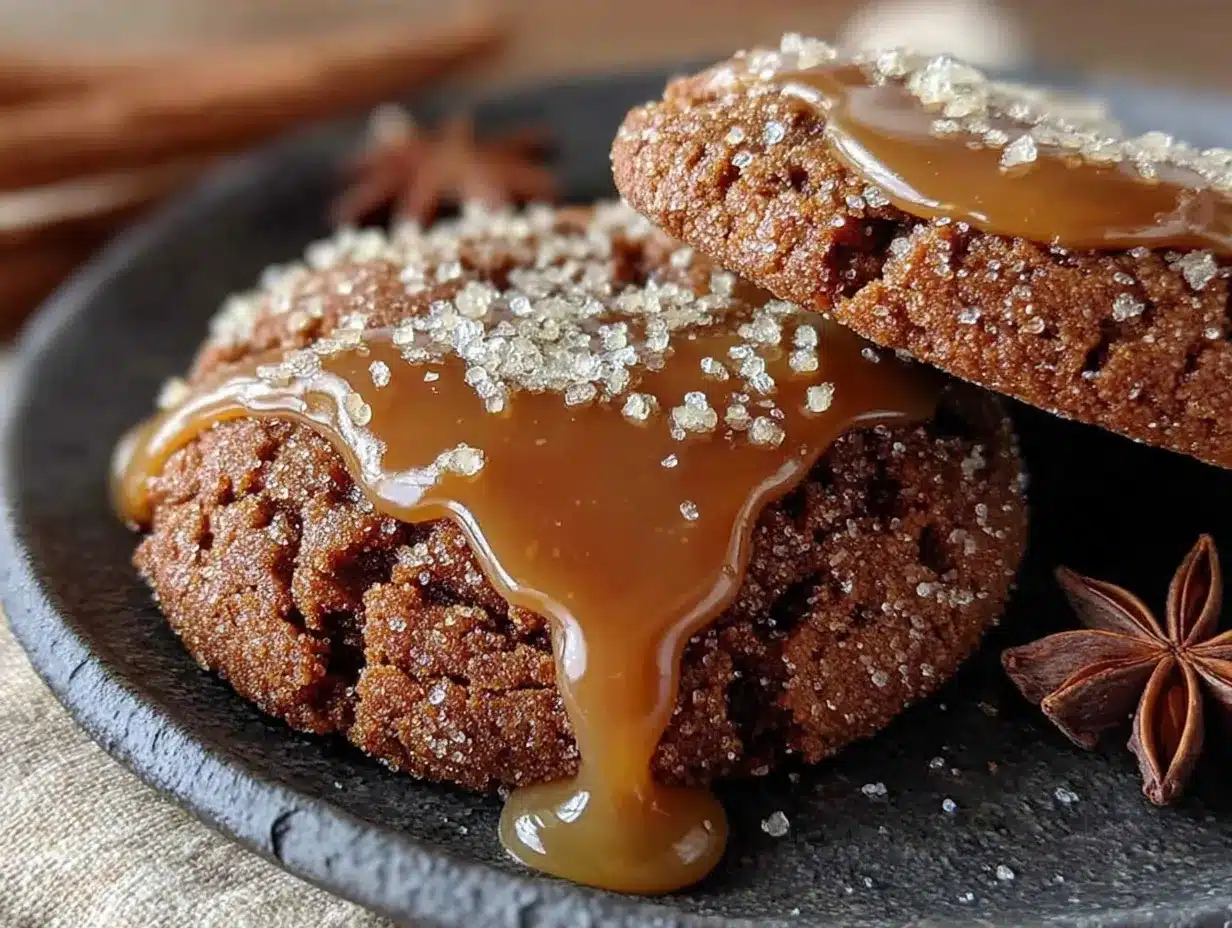
There used to be a tiny bakery tucked into a brick storefront on the corner of Maple and 3rd that made the most incredible gingerbread cookies. When they closed their doors two years ago—a “For Lease” sign went up, and my heart genuinely sank—I knew I had lost access to my favorite winter treat. After twelve tries—including one batch that came out so hard I could have used them as hockey pucks—I finally cracked the code. These cozy chewy molasses gingerbread cookies with orange glaze are the exact replica of what I used to buy every Friday afternoon in December. The woman behind the counter, whose name I never learned but whose face I’ll never forget, would wrap three cookies in brown paper and hand them over with a wink. I honestly think about her every time I pull a tray out of the oven.
Let me tell you, getting that perfect chewy texture was no accident. The first few batches were either too cakey or too crisp—nothing like the soft, almost fudgy interior I was chasing. I mean, I spent an embarrassing amount of time researching the science of molasses and sugar ratios. But you know what? It was worth every failed attempt. The secret, I discovered, is in how you handle the dough and the specific balance of brown sugar to molasses. These cookies have that classic deep, spiced flavor with a hint of orange that just screams “holiday season” without being overwhelming. Maybe you’ve been there—searching for that one specific taste that takes you right back to a happy moment.
These cozy chewy molasses gingerbread cookies with orange glaze are now my go-to for cookie exchanges, holiday gatherings, or just a quiet afternoon with a cup of tea. They stay soft for days, the glaze adds a bright pop of citrus, and honestly, they make the whole house smell like Christmas morning. I keep making them because they remind me that sometimes the best things in life require a little persistence—and a lot of butter.
Why You’ll Love This Recipe
I’ve tested this recipe more times than I care to admit, and I can say with confidence—these are not your average gingerbread cookies. Here’s why they stand out:
- Perfectly Chewy Texture: Unlike the crunchy versions that snap in half, these cookies have a soft, tender center with just a slight crispness on the edges. The texture is honestly addictive.
- Simple Pantry Ingredients: You probably have most of what you need already—flour, sugar, butter, eggs, and spices. No weird specialty items required.
- Perfect for Holiday Baking: Whether you’re making them for a cookie swap, a cozy night in, or to gift to neighbors, these cookies fit every winter occasion.
- That Orange Glaze: The citrusy glaze cuts through the deep molasses flavor beautifully. It’s the kind of combination that makes you close your eyes after the first bite.
- Crowd-Pleaser Guaranteed: I’ve brought these to three different gatherings now, and every single time, someone asks for the recipe. Kids love them, adults love them—they’re universally adored.
What makes this recipe different from the dozens of other gingerbread recipes out there? It’s the method. I use a specific chilling technique and a precise ratio of molasses to brown sugar that prevents the cookies from spreading too thin or turning cakey. Plus, the orange glaze isn’t an afterthought—it’s a bright, zesty finish that transforms a simple cookie into something memorable. This isn’t just another version of gingerbread; it’s the version that makes you wonder why you ever settled for less.
These cookies are comfort food reimagined—familiar enough to feel nostalgic, but elevated just enough to feel special. They’re perfect for impressing guests without any stress, or turning a regular Tuesday into something worth celebrating.
What Ingredients You Will Need
This recipe uses simple, wholesome ingredients that work together to create that deep, spiced flavor and irresistibly chewy texture. Most of these are pantry staples, which makes this recipe perfect for spontaneous baking sessions.
For the Cookies
- 2 ¼ cups all-purpose flour (280g) – Spoon and level for accuracy; too much flour makes dry cookies
- 1 teaspoon baking soda – Helps the cookies spread just the right amount
- 2 teaspoons ground ginger – The star spice here; I use a fresh jar for the best punch
- 1 teaspoon ground cinnamon – Adds warmth without overpowering
- ½ teaspoon ground cloves – Just enough for that classic holiday aroma
- ½ teaspoon salt – Balances the sweetness and enhances the spices
- ½ cup unsalted butter (113g), softened to room temperature – I prefer Land O’Lakes for consistent results
- ½ cup packed dark brown sugar (100g) – Dark brown sugar has more molasses content, which adds moisture and depth
- ½ cup unsulphured molasses (170g) – Not blackstrap! Use regular or mild molasses for the right sweetness and texture
- 1 large egg, room temperature – Cold egg can seize the butter mixture
- 1 teaspoon vanilla extract – Pure, not imitation, for the best flavor
For the Orange Glaze
- 1 ½ cups powdered sugar (180g), sifted – Sifting prevents lumps in the glaze
- 3 tablespoons fresh orange juice (about 1 medium orange) – Fresh juice makes a huge difference here
- 1 teaspoon orange zest – Adds that bright, aromatic citrus note
- Pinch of salt – Balances the sweetness
Ingredient Tips: For the molasses, I recommend Grandma’s or Brer Rabbit mild molasses. Avoid blackstrap—it’s too bitter and will make your cookies taste harsh. When selecting oranges for the glaze, look for ones that feel heavy for their size—they’ll be juicier. If you’re in a pinch, you can substitute the orange juice with 2 tablespoons of milk and ½ teaspoon of orange extract, but honestly, fresh is best here. For a dairy-free version, use vegan butter—I’ve had good results with Earth Balance sticks.
One more thing—make sure your spices aren’t ancient. I learned this the hard way after making a batch with year-old ginger that tasted like nothing. Fresh spices are essential for that bold, cozy flavor these cookies are known for.
Equipment Needed
You don’t need a fancy kitchen to make these cookies, but having the right tools makes the process smoother. Here’s what you’ll need:
- Mixing bowls: One large bowl for dry ingredients, one medium bowl for wet ingredients
- Electric mixer: A hand mixer or stand mixer works great for creaming the butter and sugar. I’ve made these by hand with a wooden spoon too—it’s a good arm workout!
- Baking sheets: Two rimmed baking sheets work best so you can bake multiple trays. I use Nordic Ware aluminum sheets—they heat evenly and don’t warp
- Parchment paper or silicone baking mats: Silpat mats are my preference because they prevent sticking and help cookies bake evenly
- Cooling rack: Essential for letting the cookies cool completely before glazing
- 2-inch cookie scoop or tablespoon: For uniform cookie sizes. I love my OXO Good Grips scoop
- Zester or microplane: For getting that fine orange zest without the bitter white pith
- Whisk: For mixing the glaze until smooth
- Plastic wrap: For chilling the dough—don’t skip this step!
If you don’t have a cookie scoop, just use a regular tablespoon and shape the dough balls with your hands. The scoop just makes things faster and more consistent. And honestly, a cheap zester from the grocery store works fine—no need to spend a fortune.
Preparation Method
Let’s get baking! This recipe takes about 30 minutes of active prep time, plus at least 2 hours of chilling. Trust me, the chilling is non-negotiable for that perfect chewy texture.
- Whisk the dry ingredients: In a large bowl, whisk together the flour, baking soda, ginger, cinnamon, cloves, and salt. Set this aside while you work on the wet ingredients.
- Cream the butter and sugar: In a separate large bowl, beat the softened butter and dark brown sugar together on medium speed for about 2-3 minutes, until light and fluffy. Scrape down the sides of the bowl halfway through. The mixture should look pale and slightly increased in volume.
- Add the molasses, egg, and vanilla: Pour in the molasses, crack in the egg, and add the vanilla extract. Beat on medium speed until everything is fully combined—about 1 minute. The mixture will look a bit loose and dark, which is totally normal. Scrape the bowl again to make sure everything’s incorporated.
- Combine wet and dry ingredients: Gradually add the dry ingredient mixture to the wet ingredients, mixing on low speed. I add it in three additions, mixing just until the flour disappears. Overmixing at this stage will make the cookies tough. The dough will be soft and slightly sticky—that’s exactly what you want.
- Chill the dough: This is the most important step. Cover the bowl with plastic wrap and refrigerate for at least 2 hours, or up to 3 days. The dough needs to firm up so the cookies don’t spread into flat puddles in the oven. I’ve made the mistake of skipping this step before—don’t be like me. The dough should be firm enough to roll into balls without sticking to your hands.
- Preheat the oven: When you’re ready to bake, preheat your oven to 350°F (175°C). Line two baking sheets with parchment paper or silicone mats.
- Shape the cookies: Using a 2-inch cookie scoop or a tablespoon, scoop rounded balls of dough (about 1.5 tablespoons each). Roll them between your palms to form smooth balls. Place them on the prepared baking sheets, spacing them about 2 inches apart—they will spread slightly.
- Bake: Bake for 10-12 minutes, rotating the pans halfway through. The cookies should look puffed and set around the edges but still soft in the center. They will continue to set as they cool. For chewier cookies, bake for 10 minutes. For slightly crisper edges, go for 12 minutes. My sweet spot is 11 minutes.
- Cool on the pan: Let the cookies rest on the baking sheet for 5 minutes. This allows them to firm up enough to transfer without breaking. Then, move them to a wire cooling rack to cool completely—at least 20 minutes.
- Make the glaze: While the cookies cool, whisk together the sifted powdered sugar, fresh orange juice, orange zest, and a pinch of salt in a small bowl. The glaze should be thick but drizzle-able—if it’s too thick, add more orange juice a teaspoon at a time. If it’s too thin, add more powdered sugar.
- Glaze the cookies: Once the cookies are completely cool, drizzle the glaze over them using a spoon or a piping bag with the tip snipped off. I like to do zigzag patterns, but a simple drizzle works beautifully too. Let the glaze set for about 30 minutes before serving or stacking.
Sensory cues: When you cream the butter and sugar, it should look like wet sand—pale and fluffy. When you add the molasses, the kitchen will smell deeply sweet and warm. The dough should feel soft but not sticky after chilling. During baking, the cookies will puff up slightly and the edges will look set while the centers remain soft. The glaze should be thick enough to hold its shape but thin enough to drizzle smoothly.
Cooking Tips & Techniques
I’ve made this recipe more times than I can count, and I’ve learned a few things the hard way. Here are my best tips for perfect cookies every time:
Don’t skip the chilling time. I know it’s tempting to rush, but cold dough is the secret to chewy cookies. If you bake the dough while it’s still warm, the cookies will spread too thin and turn crisp. I once tried to speed things up by only chilling for 30 minutes—the cookies spread into flat, lacy discs. Still tasty, but not what we’re going for here.
Use a cookie scoop for uniform sizes. This isn’t just about aesthetics—uniform cookies bake evenly. If some are bigger than others, you’ll end up with a tray of half-burnt, half-raw cookies. A 2-inch scoop is perfect for this recipe.
Watch the baking time closely. Ovens vary wildly. My oven runs a bit hot, so I start checking at 9 minutes. The cookies should look puffed and slightly cracked on top, with edges that are just starting to brown. They’ll look underdone in the center—that’s good. They’ll continue to set as they cool.
Room temperature ingredients matter. Cold butter won’t cream properly with the sugar, and a cold egg can seize the mixture. Take the butter and egg out of the fridge about 30 minutes before you start baking. If you forgot, you can soften the butter in the microwave for 10-second bursts—just watch it carefully so it doesn’t melt.
Line your baking sheets. I’ve made these cookies directly on ungreased baking sheets, and they stuck like glue. Parchment paper or silicone mats make cleanup a breeze and ensure the cookies release easily.
Glaze at the right time. The cookies must be completely cool before you add the glaze. If they’re even slightly warm, the glaze will melt and slide right off. I learned this after glazing a batch that was still a bit warm—the glaze turned into a sticky mess that pooled around the cookies.
Variations & Adaptations
One of the best things about this recipe is how adaptable it is. Here are some variations I’ve tried and loved:
Spice it up: Add ¼ teaspoon of black pepper or cayenne for a subtle heat that pairs beautifully with the molasses. I tried this on a whim last winter, and it was surprisingly addictive—the warmth lingers in the best way.
Citrus swap: If you don’t have oranges, use lemon juice and zest instead. The lemon glaze gives the cookies a brighter, tarter finish that’s equally delicious. I’ve also tried lime, which works but is a bit more unusual.
Gluten-free version: Substitute the all-purpose flour with a 1:1 gluten-free baking flour blend. I’ve used King Arthur’s Measure for Measure blend with great results. The cookies might be slightly more delicate, but the flavor is spot on.
Vegan adaptation: Use vegan butter (I like Earth Balance buttery sticks) and a flax egg (1 tablespoon ground flaxseed mixed with 3 tablespoons water, let sit for 5 minutes). The texture is slightly less chewy but still delicious. I made these for a vegan friend’s holiday party, and they disappeared within minutes.
Add mix-ins: Fold in ½ cup of chopped crystallized ginger for extra chew and spice, or ½ cup of white chocolate chips for a sweeter contrast. My personal favorite is a handful of toasted pecans—the crunch is wonderful against the soft cookie.
Make them sandwich cookies: Once glazed, sandwich two cookies together with a dollop of cream cheese frosting or orange buttercream. It’s indulgent but absolutely worth it for special occasions.
Serving & Storage Suggestions
These cookies are best served at room temperature, which lets the glaze set and the flavors meld. I love arranging them on a pretty plate with fresh orange slices and a sprig of rosemary for a festive look. They pair beautifully with a hot cup of spiced chai, black coffee, or a glass of cold milk. For a dessert board, arrange them alongside dark chocolate, dried figs, and roasted nuts.
Storage: Store the cookies in an airtight container at room temperature for up to 5 days. Place a sheet of parchment paper between layers to prevent sticking. The cookies actually get better after a day—the spices deepen and the texture softens even more.
Freezer instructions: You can freeze the baked cookies (unglazed) for up to 3 months. Wrap them tightly in plastic wrap and place them in a freezer-safe bag. When you’re ready to serve, thaw them at room temperature and add the glaze fresh. I’ve also frozen the unbaked dough balls—just scoop them, place them on a baking sheet, freeze until solid, then transfer to a freezer bag. Bake from frozen, adding 2-3 minutes to the baking time.
Reheating tip: If you want that just-baked warmth, pop a cookie in the microwave for 10 seconds. It softens the cookie and makes the glaze slightly gooey—heavenly.
Flavor development: The flavors in these cookies continue to develop over time. Day one is good, but day three is incredible. The molasses and spices meld together, and the orange glaze infuses the cookie with citrusy goodness. If you can resist eating them all at once, you’ll be rewarded.
Nutritional Information & Benefits
Here’s the estimated nutritional breakdown per cookie (based on 24 cookies):
| Nutrient | Amount |
|---|---|
| Calories | 165 |
| Total Fat | 5g |
| Saturated Fat | 3g |
| Cholesterol | 20mg |
| Sodium | 115mg |
| Total Carbohydrates | 28g |
| Dietary Fiber | 0.5g |
| Sugars | 18g |
| Protein | 2g |
While these are definitely a treat, there are some redeeming qualities. Molasses is a good source of iron, calcium, and magnesium—it’s actually one of the more nutrient-dense sweeteners out there. The ginger in this recipe has anti-inflammatory properties and can aid digestion, which is why a warm ginger cookie after a heavy meal feels so satisfying. The orange zest provides a small amount of vitamin C. That said, these are cookies—enjoy them in moderation as part of a balanced diet. I personally see them as a seasonal indulgence that’s worth every calorie.
Dietary considerations: This recipe contains gluten, dairy, and eggs. For gluten-free and vegan adaptations, see the variations section above. The cookies are nut-free as written, making them safe for school events or parties.
Conclusion
These cozy chewy molasses gingerbread cookies with orange glaze are more than just a recipe—they’re a little piece of joy that I’m genuinely excited to share with you. After all those failed attempts and that one hockey puck incident, I can honestly say this version is everything I hoped for and more. The deep molasses flavor, the warm spices, the bright citrus glaze—every bite takes me right back to that little bakery on Maple Street.
I’d love for you to make these your own. Maybe you’ll add extra ginger, swap in lemon, or turn them into sandwich cookies. Whatever you do, I hope they bring you the same warmth and comfort they’ve brought me. If you try them, please come back and let me know how they turned out—share your tweaks, your successes, your happy cookie moments. And if you have a story about a bakery that closed too soon, I’d love to hear that too.
Happy baking, friend. May your kitchen smell like gingerbread and your heart feel full.
Frequently Asked Questions
Can I use blackstrap molasses instead of regular molasses?
I wouldn’t recommend it. Blackstrap molasses is much more bitter and less sweet than regular molasses. It will make your cookies taste harsh and dark. Stick with mild or regular molasses for the best flavor and texture.
Why did my cookies spread too much?
This usually happens for one of three reasons: the dough wasn’t chilled long enough, the butter was too soft, or the baking soda is old. Make sure you chill the dough for at least 2 hours, use room temperature butter (not melted), and check that your baking soda is fresh—it should fizz when mixed with vinegar.
Can I make the dough ahead of time?
Absolutely! The dough can be refrigerated for up to 3 days before baking. You can also freeze the unbaked dough balls for up to 3 months. Just bake from frozen, adding a couple of extra minutes to the baking time.
How do I get the glaze to set properly?
Make sure the cookies are completely cool before glazing. The glaze should be thick but pourable—if it’s too thin, it will run off. Let the glazed cookies sit at room temperature for about 30 minutes, and the glaze will firm up nicely. If it’s a humid day, it might take a bit longer.
Can I double this recipe?
Yes, this recipe doubles beautifully. Just make sure your mixing bowl is large enough to handle the extra volume. You might need to chill the dough in two separate bowls to ensure it cools evenly. The baking time remains the same.
Pin This Recipe!
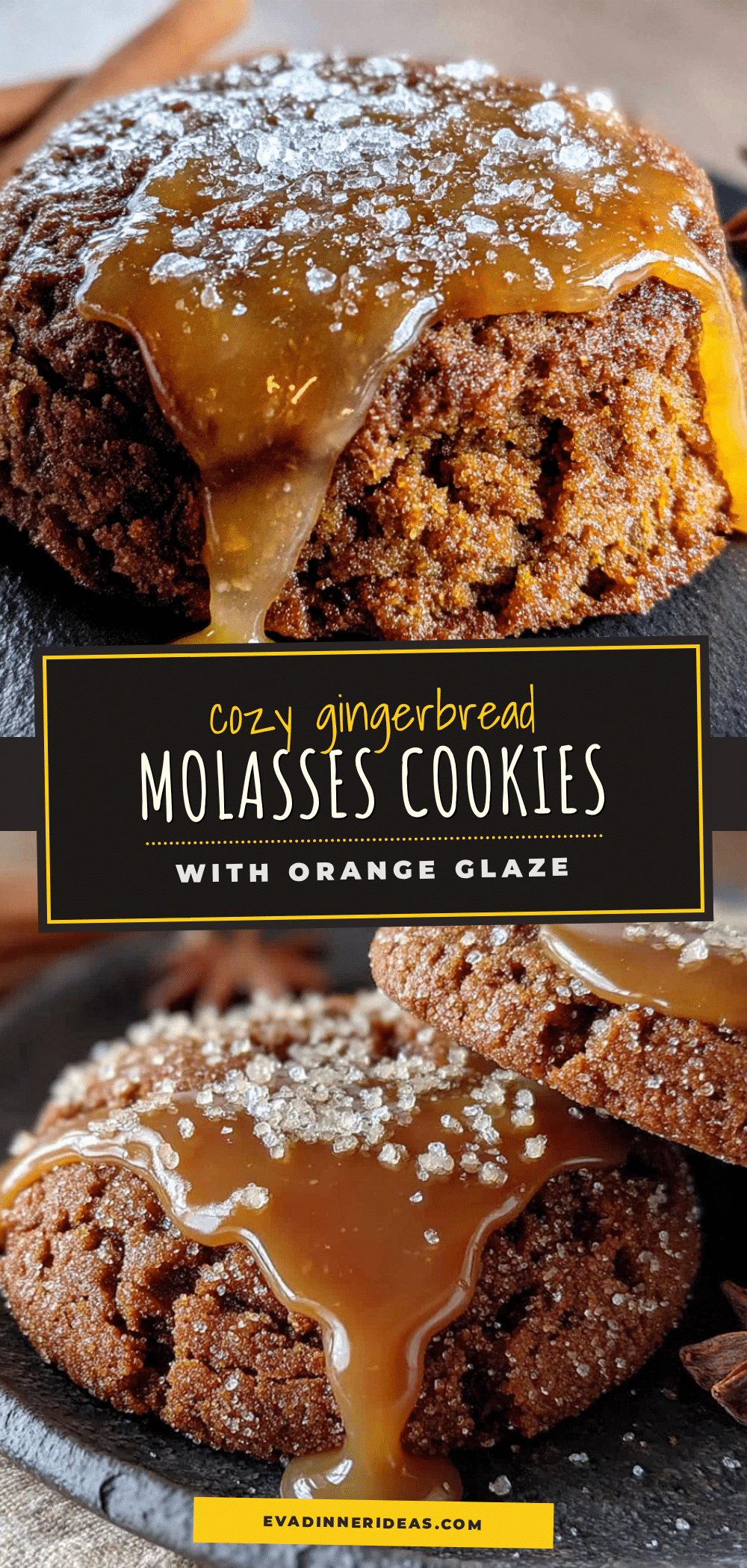
Cozy Chewy Molasses Gingerbread Cookies with Orange Glaze
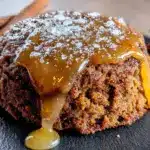
These cozy chewy molasses gingerbread cookies with orange glaze are the perfect holiday treat—soft, tender, and bursting with warm spices and bright citrus. They’re a nostalgic replica of a beloved bakery cookie, made with simple pantry ingredients and a foolproof method.
- Prep Time: 30 minutes
- Cook Time: 11 minutes
- Total Time: 2 hours 41 minutes
- Yield: 24 cookies 1x
- Category: Dessert
- Cuisine: American
Ingredients
- 2 ¼ cups all-purpose flour (280g)
- 1 teaspoon baking soda
- 2 teaspoons ground ginger
- 1 teaspoon ground cinnamon
- ½ teaspoon ground cloves
- ½ teaspoon salt
- ½ cup unsalted butter (113g), softened to room temperature
- ½ cup packed dark brown sugar (100g)
- ½ cup unsulphured molasses (170g)
- 1 large egg, room temperature
- 1 teaspoon vanilla extract
- 1 ½ cups powdered sugar (180g), sifted
- 3 tablespoons fresh orange juice (about 1 medium orange)
- 1 teaspoon orange zest
- Pinch of salt
Instructions
- Whisk the dry ingredients: In a large bowl, whisk together the flour, baking soda, ginger, cinnamon, cloves, and salt. Set aside.
- Cream the butter and sugar: In a separate large bowl, beat the softened butter and dark brown sugar together on medium speed for about 2-3 minutes, until light and fluffy. Scrape down the sides of the bowl halfway through.
- Add the molasses, egg, and vanilla: Pour in the molasses, crack in the egg, and add the vanilla extract. Beat on medium speed until fully combined—about 1 minute. Scrape the bowl again.
- Combine wet and dry ingredients: Gradually add the dry ingredient mixture to the wet ingredients, mixing on low speed in three additions, just until the flour disappears. The dough will be soft and slightly sticky.
- Chill the dough: Cover the bowl with plastic wrap and refrigerate for at least 2 hours, or up to 3 days.
- Preheat the oven: When ready to bake, preheat oven to 350°F (175°C). Line two baking sheets with parchment paper or silicone mats.
- Shape the cookies: Using a 2-inch cookie scoop or a tablespoon, scoop rounded balls of dough (about 1.5 tablespoons each). Roll them between your palms to form smooth balls. Place on prepared baking sheets, spacing about 2 inches apart.
- Bake: Bake for 10-12 minutes, rotating the pans halfway through. Cookies should look puffed and set around the edges but still soft in the center.
- Cool on the pan: Let cookies rest on the baking sheet for 5 minutes, then transfer to a wire cooling rack to cool completely—at least 20 minutes.
- Make the glaze: While cookies cool, whisk together sifted powdered sugar, fresh orange juice, orange zest, and a pinch of salt in a small bowl. The glaze should be thick but drizzle-able.
- Glaze the cookies: Once cookies are completely cool, drizzle the glaze over them using a spoon or piping bag. Let the glaze set for about 30 minutes before serving or stacking.
Notes
Chilling the dough is non-negotiable for chewy texture. Use mild or regular molasses, not blackstrap. Fresh spices are essential. Cookies can be stored in an airtight container at room temperature for up to 5 days. Baked (unglazed) cookies can be frozen for up to 3 months. Unbaked dough balls can be frozen and baked from frozen, adding 2-3 minutes to baking time.
Nutrition
- Serving Size: 1 cookie
- Calories: 165
- Sugar: 18
- Sodium: 115
- Fat: 5
- Saturated Fat: 3
- Carbohydrates: 28
- Fiber: 0.5
- Protein: 2
Keywords: gingerbread cookies, molasses cookies, orange glaze, chewy cookies, holiday cookies, Christmas cookies, soft gingerbread