My roommate Sarah asked why I couldn’t just skip the béchamel and use the squash puree as the sauce instead. I was mid-way through explaining that a traditional lasagna needs that creamy white sauce layer to balance the acidity of the tomatoes. She just shrugged and said, “But you’re not using tomatoes.” She had a point. I stood there holding a whisk, feeling the weight of every lasagna I had ever made. I started to explain why that wouldn’t work—then stopped.
Honestly, I almost kept going with my plan. I had already roasted the butternut squash and browned the sage butter. The kitchen smelled like a cozy November afternoon. But something about her simple logic made me pause. Why was I clinging to a béchamel when the squash itself was creamy, sweet, and begging to be the star? I scraped the béchamel plan, blended half the roasted squash with a splash of milk, and used it as the base layer. Let me tell you—it was the best kitchen accident I’ve ever had.
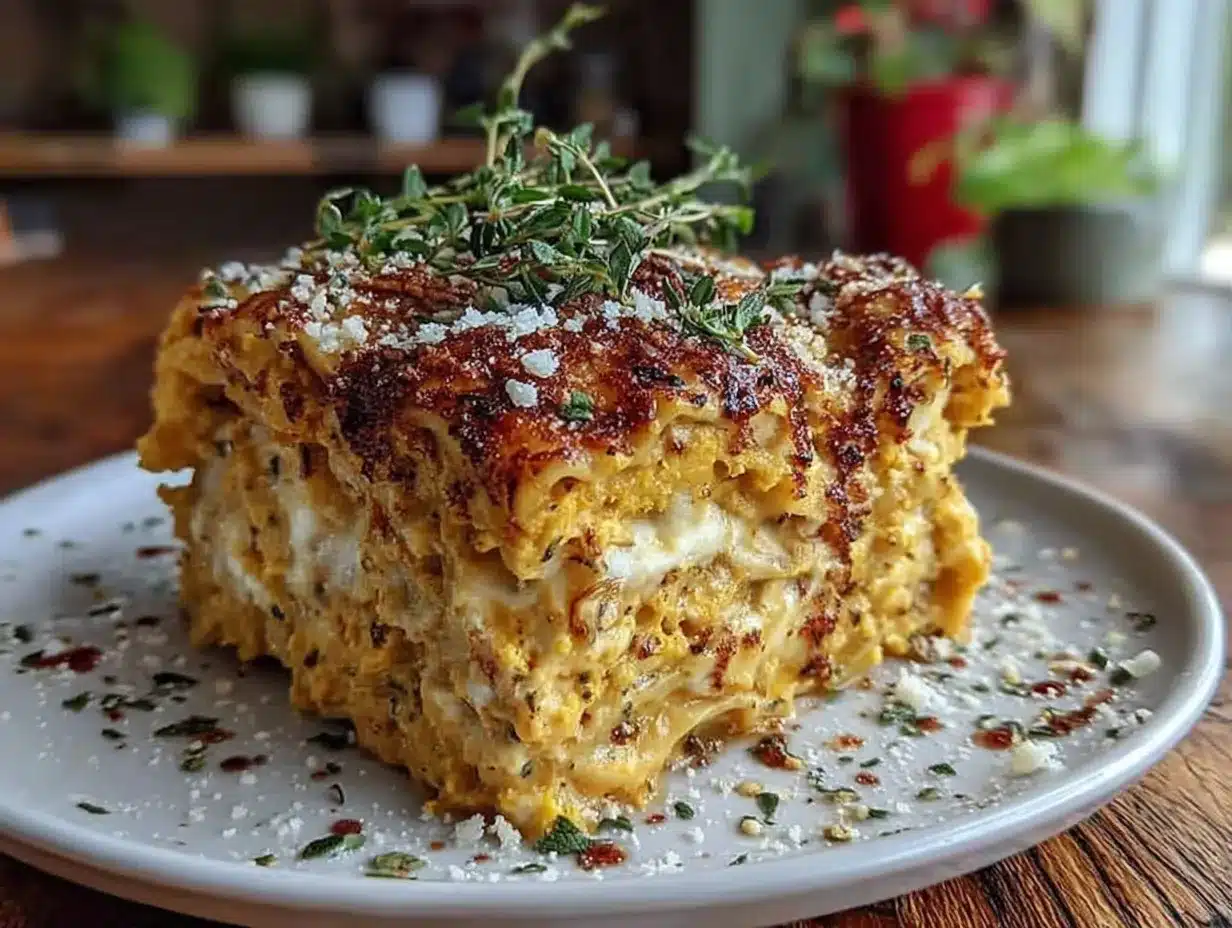
The lasagna came out of the oven looking like a golden, bubbling masterpiece. The edges were crispy, the center was perfectly set, and that sage brown butter had seeped into every nook and cranny. Sarah took one bite and said, “Told you.” I mean, she was right. I’ve been making lasagna for over a decade, and this version—the one where I let a beginner’s instinct guide me—is the one I keep coming back to. Maybe you’ve been there, too, where a simple suggestion from someone who doesn’t overthink things ends up changing how you cook forever. That’s this recipe for me.
Why You’ll Love This Recipe
This cozy butternut squash lasagna with sage brown butter isn’t just another pasta dish. It’s the kind of meal that makes you close your eyes after the first bite. I’ve tested this recipe six times to get the texture just right—no soggy layers, no bland spots, just pure comfort in every forkful.
- Quick & Easy: Comes together in about an hour, with most of that being hands-off oven time. Perfect for a Sunday dinner or a weeknight when you need something special.
- Simple Ingredients: No fancy grocery trips needed. Butternut squash, sage, butter, lasagna noodles, and a few pantry staples are all you need.
- Perfect for Cozy Gatherings: Great for fall dinners, holiday side dishes, or when you want to impress without spending all day in the kitchen.
- Crowd-Pleaser: Even my picky nephew asked for seconds. The sweetness of the squash and the nutty sage butter win over everyone.
- Unbelievably Delicious: The texture is creamy without being heavy, and the flavor is next-level comfort food.
What makes this recipe different from the rest is the double use of sage brown butter. Half gets drizzled between the layers, and the rest goes on top for a crispy, aromatic finish. It’s not just another butternut squash lasagna—it’s your best version. The kind that makes you feel good about eating vegetables for dinner while still getting that indulgent, cheesy satisfaction.
What Ingredients You Will Need
This recipe uses simple, wholesome ingredients to deliver bold flavor and satisfying texture without the fuss. Most of these are pantry staples or easy to find at any grocery store.
- For the Roasted Squash:
- 1 medium butternut squash (about 2 pounds), peeled, seeded, and cubed into 1-inch pieces
- 2 tablespoons olive oil (I prefer California Olive Ranch for its mild flavor)
- ½ teaspoon salt
- ¼ teaspoon black pepper
- For the Sage Brown Butter:
- ½ cup unsalted butter (1 stick)
- 12-15 fresh sage leaves (adds that earthy, aromatic depth)
- For the Cheese Mixture:
- 2 cups whole milk ricotta cheese (I recommend Calabro for its creamy texture)
- 2 cups shredded mozzarella cheese (low-moisture, part-skim works best)
- 1 cup grated Parmesan cheese (freshly grated, not the stuff in a can)
- 1 large egg, lightly beaten
- ½ teaspoon nutmeg, freshly grated if possible (it really wakes up the squash)
- ¼ teaspoon salt
- ⅛ teaspoon black pepper
- For Assembly:
- 12 no-boil lasagna noodles (I use Barilla; they hold up well without getting mushy)
- 2 cups fresh spinach leaves (optional, but adds a nice pop of green and extra nutrients)
Ingredient Selection Tips: Look for a butternut squash that feels heavy for its size with a matte, beige skin. Avoid any with soft spots or green patches. For the sage, fresh is non-negotiable here—dried sage won’t give you that same aromatic punch when it hits the hot butter. If you’re dairy-free, you can use a high-quality vegan butter and dairy-free ricotta, but the texture will be slightly different.
Equipment Needed
You don’t need a fancy kitchen to pull this off. Here’s what you’ll need:
- 9×13-inch baking dish (glass or ceramic works best for even heat distribution)
- Baking sheet for roasting the squash
- Large skillet for making the sage brown butter
- Medium mixing bowl for the cheese mixture
- Small saucepan if you want to warm the milk for the squash puree (optional but helpful)
- Immersion blender or food processor for pureeing half the roasted squash
- Chef’s knife and cutting board for prepping the squash and sage
Personal Note: I used to skip roasting the squash and just boil it, but honestly, roasting brings out so much more sweetness. It’s worth the extra 20 minutes. Also, if you don’t have an immersion blender, a potato masher works in a pinch—just expect a chunkier texture.
Preparation Method
- Preheat and Prep: Preheat your oven to 400°F (200°C). Line a baking sheet with parchment paper. Place the cubed butternut squash on the sheet, drizzle with olive oil, and sprinkle with salt and pepper. Toss to coat evenly. Roast for 25-30 minutes, flipping halfway, until the squash is tender and lightly caramelized on the edges. You want it fork-tender but not mushy.
- Make the Sage Brown Butter: While the squash roasts, melt the butter in a large skillet over medium heat. Once melted, add the sage leaves. Cook, swirling the pan occasionally, until the butter turns a deep golden brown and smells nutty—about 4-5 minutes. The sage leaves will crisp up. Watch closely; brown butter can go from perfect to burnt in seconds. Remove from heat and set aside. The sage leaves will continue to crisp as they cool.
- Prepare the Squash Puree: Once the squash is done, let it cool for 5 minutes. Transfer half of the roasted squash to a bowl and mash or blend until smooth. Add a splash of milk (about ¼ cup) if needed to reach a creamy consistency. Set aside. Reserve the remaining roasted squash chunks for layering.
- Mix the Cheese Filling: In a medium bowl, combine the ricotta, 1 cup of the mozzarella, ½ cup of the Parmesan, the beaten egg, nutmeg, salt, and pepper. Stir until well combined. Taste a tiny bit—it should be creamy and slightly nutty from the nutmeg.
- Assemble the Lasagna: Reduce oven temperature to 375°F (190°C). Spread a thin layer of the squash puree (about ½ cup) on the bottom of your 9×13 baking dish. This prevents the noodles from sticking. Layer 3 no-boil lasagna noodles on top, breaking them if needed to fit. Spread ⅓ of the ricotta mixture over the noodles. Add ⅓ of the roasted squash chunks. Drizzle with 2 tablespoons of the sage brown butter (leave the crispy sage leaves for the top). Sprinkle ⅓ of the remaining mozzarella and a tablespoon of Parmesan. Repeat layers two more times: noodles, ricotta, squash chunks, brown butter, mozzarella, Parmesan. For the final layer, top with noodles, the remaining squash puree (if any), the remaining mozzarella and Parmesan, and the crispy sage leaves. Drizzle any remaining brown butter over the top.
- Bake: Cover the dish with foil (spray the foil with cooking spray to prevent sticking) and bake for 30 minutes. Remove the foil and bake for another 15-20 minutes, until the top is golden and bubbly and the edges are crispy. Let it rest for 10-15 minutes before slicing. This is crucial—if you cut too soon, it will fall apart.
Sensory Cues: When you pull the foil off, you should see the sauce bubbling around the edges. The top should be a deep golden brown with crispy bits of cheese. The sage leaves will be dark and papery—crunchy and delicious. Let it rest until the pan is just warm to the touch, not hot.
Cooking Tips & Techniques
I’ve made this lasagna more times than I can count, and I’ve learned a few things the hard way. Here are my best tips:
- Don’t skip the resting time. I know it’s tempting to dig in right away, but letting the lasagna rest for at least 10 minutes allows the layers to set. Cut too soon, and you’ll have a sloppy mess.
- Watch the brown butter like a hawk. It goes from golden to burnt in about 30 seconds. I once got distracted by a phone call and ended up with black butter and acrid smoke. Start over if that happens—it’s not worth salvaging.
- Use no-boil noodles for convenience. They absorb moisture from the sauce and squash puree during baking, so you don’t have to boil them first. Just make sure your puree isn’t too thick—add a splash of milk if needed.
- Toast the sage leaves for extra crunch. After making the brown butter, remove the sage leaves and let them drain on a paper towel. They’ll crisp up beautifully and make a stunning garnish.
- Double the recipe and freeze one. This lasagna freezes beautifully. Assemble it in a disposable foil pan, cover tightly with foil, and freeze for up to 3 months. Bake from frozen, adding 20 minutes to the covered baking time.
Mistake I Made: The first time I made this, I used too much squash puree between the layers, and the lasagna turned out soupy. Now I stick to a thin layer of puree on the bottom and use the chunks for texture. Trust me, less is more here.
Variations & Adaptations
This recipe is flexible, so feel free to make it your own. Here are a few ways I’ve adapted it:
- Vegetarian (already is!) but you can add sautéed mushrooms or caramelized onions for extra depth.
- Gluten-Free: Use gluten-free lasagna noodles. I’ve tried the brown rice ones and they work well—just be careful not to overcook them.
- Vegan Option: Swap the ricotta for a cashew-based ricotta (soak 1 cup cashews overnight, blend with lemon juice, nutritional yeast, and salt). Use vegan butter and dairy-free mozzarella. It’s not exactly the same, but it’s still delicious.
- Add Protein: Layer in some cooked Italian sausage or shredded rotisserie chicken between the squash layers. My neighbor swears by adding crumbled bacon on top.
- Seasonal Twist: In summer, swap the butternut squash for roasted zucchini and yellow squash. You’ll need to roast them less—about 15 minutes—and pat them dry to avoid excess moisture.
Personal Variation: I once added a layer of caramelized onions and it was incredible. The sweetness of the onions played perfectly with the sage and squash. I’ve also tried it with a sprinkle of red pepper flakes for a little heat.
Serving & Storage Suggestions
Serve this lasagna warm, straight from the oven. I like to let it rest for 10 minutes, then slice it into generous squares. A sprinkle of flaky sea salt and a few fresh sage leaves on top make it look restaurant-worthy.
What to Serve With It: A simple arugula salad with lemon vinaigrette cuts through the richness perfectly. Roasted Brussels sprouts or a crusty loaf of bread are also great choices. For drinks, a dry white wine like Sauvignon Blanc or a sparkling water with lemon works beautifully.
Storage: Leftovers keep in the fridge for up to 4 days. Cover the dish tightly with foil or transfer individual portions to airtight containers. The flavors actually get better after a day or two as they meld together.
Reheating: For best results, reheat in a 350°F oven for 15-20 minutes, covered with foil. The microwave works in a pinch, but the noodles can get a bit soft. If you’re reheating from frozen, thaw overnight in the fridge first, then bake as directed.
Freezing: Assemble the lasagna completely but don’t bake it. Wrap tightly in plastic wrap, then foil, and freeze for up to 3 months. When ready to bake, thaw overnight in the fridge, then bake as directed, adding 10-15 minutes to the covered baking time.
Nutritional Information & Benefits
Per serving (based on 8 servings):
| Nutrient | Amount |
|---|---|
| Calories | 485 |
| Protein | 22g |
| Carbohydrates | 38g |
| Fat | 28g |
| Fiber | 5g |
| Vitamin A | 280% DV |
| Calcium | 35% DV |
Butternut squash is packed with vitamin A, which supports eye health and immunity. The sage in the brown butter has anti-inflammatory properties, and the ricotta provides a good dose of calcium and protein. This lasagna is a great way to get your veggies in a way that feels indulgent. It’s also lower in carbs than traditional lasagna since the squash replaces some of the noodles. If you’re watching your sodium, use low-sodium cheeses and skip the extra salt.
Conclusion
This cozy butternut squash lasagna with sage brown butter is proof that sometimes the best recipes come from letting go of what you think you know. I was so sure I needed that béchamel, but Sarah’s simple suggestion opened the door to something far better. Now, this lasagna is my go-to for fall gatherings, cozy nights in, and anytime I want to feel like I’m wrapped in a warm blanket.
I hope you give this recipe a try and make it your own. Maybe you’ll add caramelized onions or swap in a different squash. Whatever you do, don’t skip the sage brown butter—it’s the heart of this dish. Let me know in the comments how it turns out! I’d love to hear about your own kitchen accidents that turned into happy discoveries. Until next time, happy cooking!
Frequently Asked Questions
Can I use frozen butternut squash instead of fresh?
Yes, you can use frozen cubed butternut squash. Just thaw it first and pat it dry with paper towels to remove excess moisture. Roast it a little longer—about 35-40 minutes—to get that caramelization.
Do I have to use no-boil lasagna noodles?
No, you can use regular lasagna noodles. Just boil them according to package directions until al dente, then drain and lay them flat on a baking sheet to prevent sticking. You might need to reduce the covered baking time by 5 minutes.
Can I make this lasagna ahead of time?
Absolutely! Assemble the lasagna up to 24 hours in advance, cover it tightly with foil, and refrigerate. When ready to bake, add 10-15 minutes to the covered baking time since it’s starting from cold.
What if I don’t have fresh sage?
Fresh sage is strongly recommended for the brown butter, but in a pinch, you can use 1 teaspoon of dried sage. Add it to the butter after it’s browned, and let it infuse for a minute before using. The flavor won’t be as bright, but it’ll still be tasty.
How do I prevent the lasagna from being watery?
Make sure your roasted squash is well-drained and not too wet. If your squash puree seems thin, cook it in a saucepan over medium heat for 3-4 minutes to thicken it. Also, let the lasagna rest for 10-15 minutes after baking to allow the layers to set.
Pin This Recipe!
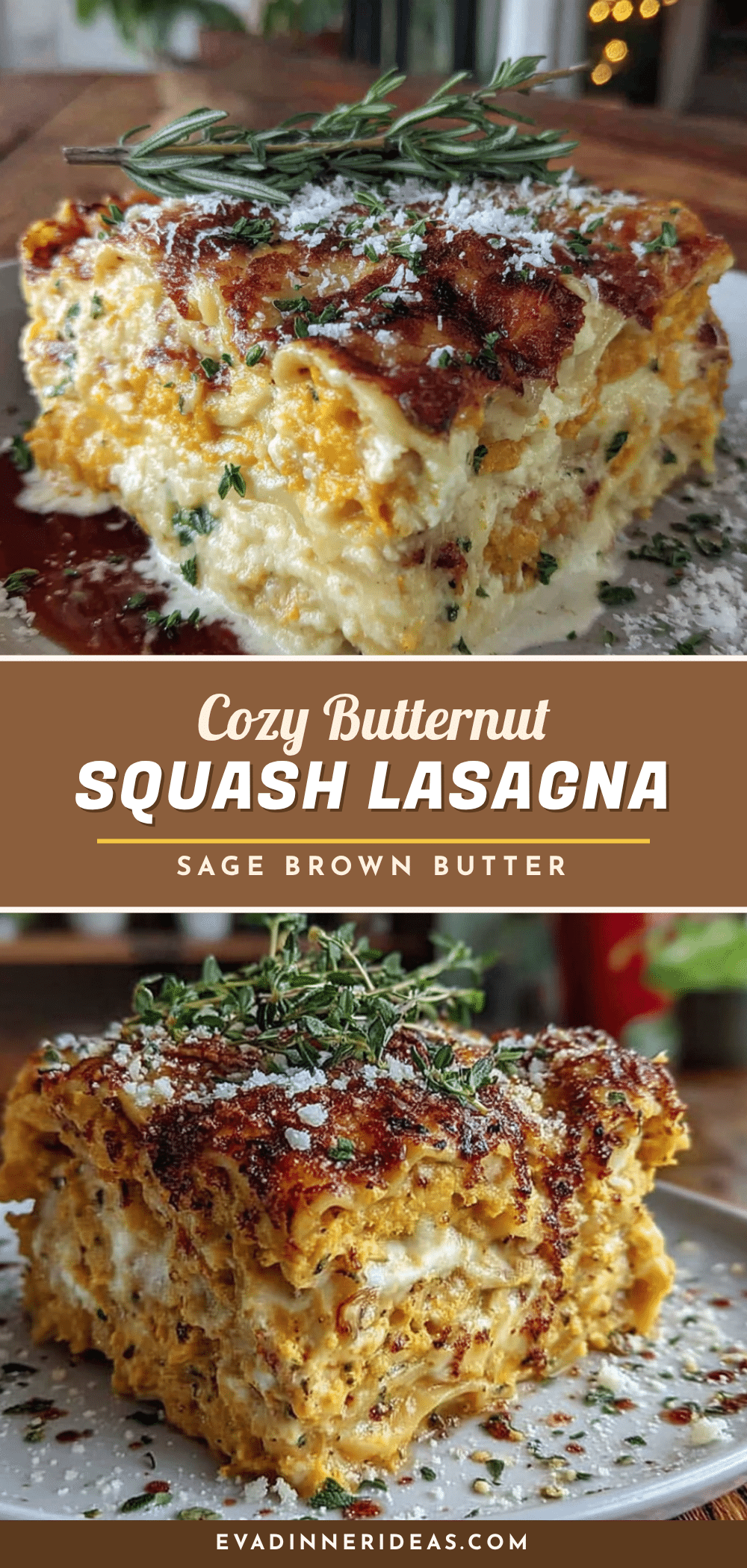
Cozy Butternut Squash Lasagna with Sage Brown Butter
A creamy, comforting lasagna where roasted butternut squash replaces the traditional béchamel, layered with sage brown butter, ricotta, mozzarella, and Parmesan. Perfect for fall dinners and cozy gatherings.
- Prep Time: 20 minutes
- Cook Time: 1 hour 10 minutes
- Total Time: 1 hour 30 minutes
- Yield: 8 servings 1x
- Category: Main Course
- Cuisine: American
Ingredients
- 1 medium butternut squash (about 2 pounds), peeled, seeded, and cubed into 1-inch pieces
- 2 tablespoons olive oil
- ½ teaspoon salt
- ¼ teaspoon black pepper
- ½ cup unsalted butter (1 stick)
- 12–15 fresh sage leaves
- 2 cups whole milk ricotta cheese
- 2 cups shredded mozzarella cheese (low-moisture, part-skim)
- 1 cup grated Parmesan cheese
- 1 large egg, lightly beaten
- ½ teaspoon nutmeg, freshly grated
- ¼ teaspoon salt
- ⅛ teaspoon black pepper
- 12 no-boil lasagna noodles
- 2 cups fresh spinach leaves (optional)
Instructions
- Preheat oven to 400°F (200°C). Line a baking sheet with parchment paper. Place cubed butternut squash on sheet, drizzle with olive oil, sprinkle with salt and pepper, and toss to coat. Roast for 25-30 minutes, flipping halfway, until tender and lightly caramelized.
- While squash roasts, melt butter in a large skillet over medium heat. Add sage leaves and cook, swirling occasionally, until butter turns deep golden brown and smells nutty (about 4-5 minutes). Remove from heat; sage leaves will crisp as they cool.
- Let roasted squash cool for 5 minutes. Transfer half to a bowl and mash or blend until smooth, adding a splash of milk (about ¼ cup) if needed. Set aside. Reserve remaining squash chunks.
- In a medium bowl, combine ricotta, 1 cup mozzarella, ½ cup Parmesan, beaten egg, nutmeg, salt, and pepper. Stir until well combined.
- Reduce oven temperature to 375°F (190°C). Spread a thin layer of squash puree (about ½ cup) on bottom of a 9×13-inch baking dish. Layer 3 no-boil lasagna noodles on top. Spread ⅓ of ricotta mixture over noodles. Add ⅓ of roasted squash chunks. Drizzle with 2 tablespoons sage brown butter (reserve crispy sage leaves for top). Sprinkle ⅓ of remaining mozzarella and 1 tablespoon Parmesan. Repeat layers two more times. For final layer, top with noodles, remaining squash puree, remaining mozzarella a…
- Cover dish with foil (spray foil with cooking spray to prevent sticking) and bake for 30 minutes. Remove foil and bake another 15-20 minutes until top is golden and bubbly. Let rest 10-15 minutes before slicing.
Notes
Don’t skip the resting time—it allows layers to set. Watch brown butter closely as it can burn quickly. Use no-boil noodles for convenience. Toast sage leaves for extra crunch. Double recipe and freeze one for later.
Nutrition
- Serving Size: 1 slice (1/8 of lasa
- Calories: 485
- Sugar: 6
- Sodium: 720
- Fat: 28
- Saturated Fat: 16
- Carbohydrates: 38
- Fiber: 5
- Protein: 22
Keywords: butternut squash lasagna, sage brown butter, fall lasagna, vegetarian lasagna, cozy dinner